

Ezoic
Ezoic is a reliable AdSense alternative for bloggers that uses AI to test ad layouts and consistently lift RPM for growing sites, especially between 10K–100K pageviews.
It’s a good balance of higher earnings, transparent reporting, and long‑term support.
Mediavine
Mediavine is one of the highest-paying AdSense alternatives for qualifying lifestyle and content‑rich sites with strong US/UK traffic, known for excellent RPMs and strict focus on site speed and user experience. Once you meet their entry requirements, they can become a stable, long‑term ad partner
Raptive
Raptive (formerly AdThrive) is a premium publisher network that has paid over $4B to sites in niches like food, home, parenting, and tech, making it a very trusted best AdSense alternative for established blogs with large, engaged audiences. Their managed ad stack and category expertise often unlock top‑tier earnings.
In my experience, the blogs that grow fastest rarely rely on a single ad network—and that includes Google AdSense. Best AdSense Alternatives in 2026 can easily outperform AdSense on CPM, RPM, and overall stability, especially for bloggers in the USA and India.
If you’ve been rejected by AdSense, got hit by a sudden account suspension, or simply feel your earnings don’t match your traffic, you’re not alone.
I’ve tested multiple ad networks across different niches and traffic levels, and there are now plenty of high-paying AdSense alternatives that support display ads, header bidding, native ads, and even push notifications without compromising user experience.
In this guide, I’ll walk you through the best AdSense alternatives for high-traffic sites, growing blogs, and brand-new publishers.
You’ll see which networks work best for Tier 1 traffic like the US, UK, and Canada, and which ones are more friendly for Indian traffic and small websites.
I’ll also share traffic requirements, payout terms, and real-world use cases so you can choose the right mix of networks for your blog and start increasing your ad revenue confidently.
What is Google AdSense?

Google AdSense is a powerful advertising program managed by Google that allows website and blog owners to monetize their content with targeted display ads.
Advertisers pay to show their banners, text, and video creatives, and publishers earn a share of the revenue for each valid impression or click.
AdSense supports multiple basic ad formats, including responsive display banners, in‑content units, in‑feed native‑style blocks, and video ads.
These ads are automatically matched to your site’s niche, content type, and audience behavior, so visitors see relevant offers, which is why AdSense remains a popular choice before moving to the best AdSense alternatives or other CPM and CPC ad networks.
The platform mainly uses a pay‑per‑click (PPC) model—your earnings depend on the number of valid clicks, the CPC bid, and your traffic quality, though some campaigns also pay on a CPM basis.
Because AdSense is free to join and easy to integrate, it’s often the first step into website monetization before exploring higher-paying AdSense alternatives and best Google AdSense alternatives 2026.
Getting started is straightforward: you apply via the official AdSense site and ensure your blog meets Google’s latest content and policy standards.
For a smoother approval process, I recommend reviewing your updated AdSense approval guide and the official AdSense policies so you can fix issues before submitting; once approved, you just place the ad code on your site, and Google begins serving ads automatically.
AdSense is an excellent monetization solution for many types of publishers, especially:
- Blogs: Regularly updated blogs with high‑quality articles can generate consistent revenue from contextual display ads.
- Forums and communities: Active discussions attract engagement and pageviews, which often convert well with display ads.
- Free online tools and utilities: Tools, calculators, and generators typically see strong ad performance and are good candidates before you test website monetization without AdSense or mix in other display ad networks like AdSense alternatives.
To boost your traffic and earnings from AdSense, focus on improving content quality, testing ad placements, and targeting high CPC keywords in your articles.
As your blog grows, that same optimization work also makes it much easier to qualify for premium AdSense alternatives for bloggers and AdSense alternatives for small websites that can pay more for the same traffic
Why Publishers Need AdSense Alternatives in 2026
In 2026, Google AdSense pay is still popular, but many bloggers and publishers now feel its limits more clearly.
Strict approval rules, policy checks, and limited control over layouts push a lot of sites to explore the best AdSense alternatives instead of relying on a single network.
Unlike AdSense, many higher-paying AdSense alternatives and display ad networks like AdSense give you greater control over ad formats, placements, and demand partners.
You can mix standard display, native, video, and even push ads, which makes it easier to build a custom monetization strategy that fits your niche and audience.
Publishers also complain about declining CPMs in some niches, sudden account suspensions, and long response times from support.
By shifting part of your inventory to CPM and CPC ad networks, best programmatic ad networks, or AdSense alternatives for bloggers, you reduce the risk of losing all income if one account goes down and often unlock better RPMs at the same time.
Exploring AdSense alternatives pay is not just about adding more ads—it’s about diversification. Multiple networks let you:
- Access premium advertisers through header bidding and programmatic auctions.
- Test engaging formats like video, native, in‑page push, and interactive units.
- Balance performance between AdSense alternatives for small websites and premium stacks for high‑traffic sites.
- Improve user experience by choosing cleaner, better‑targeted creatives.
Direct and managed ad partners also help you implement advanced optimization strategies, from layout testing to yield management, which most bloggers cannot do with standard AdSense alone.
In 2026, running a mix of the best Google AdSense alternatives 2026 across at least two or three networks has become essential for serious publishers who want stable income, better control, and protection against future policy or algorithm shifts
15 Best AdSense Alternatives for Publishers
If your blog is getting between 10,000 and 100,000 pageviews per month, you’re in the sweet spot to move beyond basic AdSense and test some of the best AdSense alternatives for growing sites.
These mid‑tier ad networks usually offer better RPMs, smarter optimization, and stronger support than entry‑level platforms, while still being accessible to serious bloggers who haven’t yet hit premium thresholds.
This is also the stage where AdSense alternatives for bloggers in the USA and India can outperform standard AdSense, especially when you mix contextual ads, header bidding, and hybrid CPM and CPC ad networks.
- Best AdSense Alternatives for Medium Sites (10K–100K Monthly)
- Best AdSense alternatives for small websites and Beginners
- Best AdSense Alternatives for High-Traffic Sites (Premium)
Best AdSense Alternatives for Medium Sites (10K–100K Monthly)
If your blog is getting between 10K and 100K pageviews per month, you’re ready to move beyond basic AdSense and test more advanced AdSense alternatives for bloggers.
At this stage, networks like Ezoic, Media.net, and Sovrn can often deliver better RPM, smarter optimization, and stronger support, especially for search‑driven content and Tier 1 traffic.
1. Ezoic – AI Driven testing for growing blogs
Ezoic is one of the best AdSense alternatives for medium‑sized blogs that want data‑driven optimization instead of guessing ad placements.
It sits between your site and demand partners like Google AdSense, AdX, and other CPM and CPC ad networks, then uses AI to test thousands of layouts and ad combinations automatically.
For bloggers in the USA and India with 10K–100K pageviews, Ezoic is often the first serious step beyond basic AdSense, with strong potential to increase RPM and overall display ad revenue.
Features of Ezoic
- AI‑powered ad layout and placement testing
- Support for multiple demand sources (AdSense, AdX, header bidding)
- Detailed revenue and UX analytics in a single dashboard
- Tools to monitor Core Web Vitals and page speed
- Easy integration via nameservers, Cloudflare, or a WordPress plugin
Pros of the Ezoic
- Can significantly increase earnings vs Google AdSense on the same traffic
- Works well as a bridge between AdSense and the best programmatic ad networks
- Good fit for AdSense alternatives for bloggers with Tier 1 traffic
- Strong reporting to compare experiments and see real RPM gains
Cons of Ezoic
- Learning curve for beginners; initial setup can feel technical
- Results depend on letting the AI test enough variations over time
- Some layouts may feel aggressive if you don’t fine‑tune ad density
Ad formats in Ezoic
- Standard display banners, in‑content units, sticky ads
- Native and video units, with options for mobile‑optimized placements
If your blog is past the “small site” stage and you’re serious about testing the best Google AdSense alternatives 2026, Ezoic is a strong mid‑tier choice. It’s especially effective when you want to move beyond basic Auto Ads and treat your site like a real ad business rather than a single‑network setup.
2. Media.net – Contextual ads for US/UK traffic

Media.net is one of the best AdSense alternatives for bloggers with strong English‑speaking audiences, especially from the US, UK, and Canada. Powered by the Yahoo–Bing network, it focuses on contextual targeting, showing ads closely related to the content on your page.
For sites in the 10K–100K pageviews range, Media.net can outperform standard AdSense in certain niches by delivering higher CPMs on Tier 1 traffic and cleaner layouts, making it a solid choice among display ad networks like AdSense and other CPM and CPC ad networks.
Features of Media.Net
- Contextual ad engine tuned for English content
- Dedicated account managers for qualified sites
- Native, in‑content, and in‑feed ad units
- Custom styling options to match your theme
- Real‑time reporting and optimization tools
Pros of Media.Net
- Strong performance for ad networks for publishers USA and other Tier 1 geos
- Clean, content‑driven layouts that blend with blog articles
- Works alongside AdSense and other best AdSense alternatives
- Reliable payouts and brand‑safe advertiser pool
Cons of Media.Net
- Can be harder to get approved for very small or mixed‑language sites
- Works best when the majority of traffic is US/UK; weaker for some Indian traffic segments
- Earnings depend heavily on niche and search‑driven content
Ad formats of Media.Net
- Contextual display banners, native in‑content units, and in‑feed blocks
- Responsive ad sizes optimized for desktop and mobile layouts
If your audience is primarily from the US or UK and you publish long‑form, search‑focused content, Media.net is one of the best Google AdSense alternatives 2026 to test. It pairs well with AdSense, Ezoic, or other AdSense alternatives for bloggers that focus on Tier 1 traffic monetization.
3. Sovrn – Hybrid display + commerce monetization

Sovrn (formerly VigLink) is a hybrid monetization platform that combines display ads with automated commerce and affiliate monetization.
Instead of relying only on standard banners, it scans your content for product mentions and turns them into monetized links while also serving programmatic display ads.
For publishers in review, deals, and shopping niches with 10K–100K pageviews, Sovrn is a handy AdSense alternative for bloggers who want both ad and affiliate income without managing everything manually.
Features of Sovrn
- Automatic affiliate link insertion for commerce content
- Programmatic display ad demand and header bidding support
- Real‑time analytics for both ad and commerce revenue
- Integrations with major ecommerce and affiliate programs
- Flexible setup that works with small and medium sites
Pros of Sovrn
- Dual revenue streams (display + affiliate) from the same content
- Great fit for review, product roundup, and buying‑guide content
- More accessible than many premium best AdSense alternatives
Cons of Sovrn
- Works best only if you already have commerce‑friendly content
- Display CPMs may be lower than top premium networks
- Affiliate earnings can vary a lot by niche and season
Ad formats of Sovrn
- Standard display units plus in‑text and in‑content commerce links and widgets.
If you publish shopping guides or product reviews and want more than pure display, Sovrn is a smart best Google AdSense alternative 2026 that lets you layer affiliate monetization on top of your existing traffic.
4. AdPushup – Layout optimization for higher RPM
AdPushup is a Google Certified Publishing Partner that focuses on ad layout optimization and header bidding rather than acting as a simple ad network.
It sits on top of your existing demand sources (AdSense, AdX, and other CPM and CPC ad networks) and uses automated A/B testing to improve viewability, CTR, and RPM.
For medium and high‑traffic blogs, AdPushup can be a powerful best AdSense alternative when you’re happy with your traffic but feel your display ad earnings are stuck.
Features of AdPushup
- Automated A/B testing for ad layouts and placements
- Header bidding wrapper connecting multiple premium demand partners
- Viewability and RPM optimization tools
- Detailed reporting and revenue analytics
- Google Certified Publishing Partner support
Pros of AdPushup
- Can lift RPM without changing your content strategy
- Works with existing AdSense and other display ad networks
- Strong fit for AdSense alternatives for bloggers with growing traffic
Cons of AdPushup
- Not suitable for very low‑traffic or brand‑new sites
- Requires some technical integration and cooperation with their team
- Performance depends on traffic volume and quality
Ad formats of AdPushup
- Standard display, native, and video units optimized via header bidding and layout testing.
If you’re already using AdSense and want to increase revenue without switching networks completely, AdPushup is a smart best Google AdSense alternative 2026 to test as an optimization layer on top of your existing stack
5. Monetag – Flexible multi-format ads for tiny sites

Monetag (often mentioned alongside PropellerAds) is a flexible AdSense alternative for small websites that accept low‑traffic blogs and international publishers.
It focuses on easy setup, fast approval, and multiple ad formats, including in‑page push and classic display units, so you can start earning even when you’re still under 10K pageviews per month.
For beginners who need something simpler than premium CPM and CPC ad networks, Monetag can be a practical early step before moving to higher‑tier best AdSense alternatives.
Features of Monetag
- Very low or no strict minimum traffic requirement
- Global advertiser base covering many verticals
- Self‑serve dashboard with basic optimization tools
- Low payout threshold (often around 5–10 USD)
- Multiple payout options suitable for small publishers
Pros of Monetag
- Ideal for brand‑new or low‑traffic blogs
- Quick approval and straightforward integration
- Works well with international and mixed‑geo traffic
Cons of Monetag
- Some formats can be intrusive if you don’t configure them carefully
- RPM is generally lower than mid‑tier and premium best Google AdSense alternatives 2026
- Best used as a stepping‑stone while you grow traffic
Ad formats of Monetag
- In‑page push, push notifications, standard display, and some interstitial options.
If your site is still small and you’re looking for a low‑barrier AdSense alternative for bloggers in the early stage, Monetag is a realistic option to test alongside or instead of AdSense while you build up to networks like Ezoic or Media.net.
Best AdSense Alternatives for Small Websites and Beginners
When you’re just starting out, strict policies and traffic requirements make it hard to rely only on AdSense.
That’s where beginner‑friendly AdSense alternatives for small websites like Adsterra, PropellerAds, Infolinks, and Bidvertiser come in, giving you low‑threshold ways to monetize early traffic from the USA, India, and other regions while you grow.
6. Adsterra – Global reach for small and medium sites
Adsterra is a flexible AdSense alternative for small websites and medium‑sized blogs that want fast approval and global coverage.
With low entry barriers and a wide range of formats, it works well for publishers in both Tier 1 regions and countries like India that often see lower AdSense CPMs.
For many beginners comparing AdSense alternatives for bloggers, Adsterra is a practical way to start monetizing traffic before qualifying for stricter premium or programmatic networks.
Features of Adsterra
- Quick approval and low minimum traffic requirements
- Global fill with strong coverage for multiple geos
- Anti‑fraud and brand‑safety systems
- Detailed statistics and flexible payment options
- Multiple ad formats suited for blogs, downloads, and tools sites
Pros of Adsterra
- Very beginner‑friendly compared to AdSense and premium stacks
- Good option for AdSense alternatives pay when you have mixed or non‑Tier‑1 traffic
- Works as a backup or side network while you build up to higher-paying AdSense alternatives
- Supports frequent payouts with several payment methods
Cons of Adsterra
- Some aggressive formats (if not filtered) can hurt user experience
- Requires manual tuning to avoid intrusive placements
- RPM may be lower than the top best programmatic ad networks on high‑quality Tier 1 traffic
Ad formats of Adsterra
- Display banners, leaderboards, and skyscrapers
- pop-ups, social bar, and in‑page push ads
- Native widgets for softer integration when needed
For new and growing blogs looking for AdSense alternatives for small websites, Adsterra is a flexible option to test. Used carefully with cleaner formats, it can help you monetize global traffic while you work toward mid‑tier and premium AdSense alternatives.
7. PropellerAds – Multi-format ads for fast monetization

PropellerAds is another popular AdSense alternative for bloggers who want fast monetization with a wide range of ad formats, particularly for international and mobile traffic.
With easy approval and self‑service controls, it suits small and medium sites that may not yet qualify for stricter networks but still want to move beyond basic AdSense.
For many publishers in India and emerging markets, PropellerAds is one of the more accessible CPM and CPC ad networks to start earning with display, in‑page push, and other high‑visibility formats.
Features of PropellerAds
- Self‑serve platform with quick setup and approval
- Automatic optimization for geos, devices, and formats
- Anti-AdBlock solutions to recover lost impressions
- Conversion and event tracking for campaigns
- Global advertiser base across many verticals
Pros of PropellerAds
- Very low entry barriers, making it ideal as an AdSense alternative for small websites
- Strong coverage for non‑Tier‑1 and mobile traffic
- Multiple ad options let you test what works for your audience
- Useful when you need a backup to AdSense or other display ad networks
Cons of PropellerAds
- Some formats (like pop-ups) can be intrusive if overused
- Needs careful placement to avoid hurting bounce rate and session time
- Not the best choice for ultra‑premium or brand‑sensitive niches
Ad formats of PropellerAds
- Display banners and interstitials
- In‑page push and push notifications
- pop-ups and direct‑link ads
If you’re building traffic and want quick, flexible monetization, PropellerAds is a realistic best AdSense alternative to test early. Use its cleaner formats first, then mix in other best Google AdSense alternatives 2026 as your traffic, authority, and RPM goals grow.
8. Infolinks – In-text ads that work with AdSense

Infolinks is a lightweight AdSense alternative for small websites that prefer non‑intrusive monetization. Instead of filling your layout with banners, it turns relevant keywords inside your content into in‑text ad units that show contextual offers when users hover or click.
Because it has no strict minimum traffic requirement and works smoothly alongside AdSense, Infolinks is popular with new bloggers who want an extra revenue stream without redesigning their entire site.
Features of Infolinks
- In‑text, in‑frame, in‑fold, and in‑tag ad units
- Simple JavaScript integration; works with most CMS platforms
- No or very low minimum traffic requirements
- Real‑time reporting and easy control of intensity and styling
- Compatible with other display ad networks like AdSense
Pros of Infolinks
- Non‑intrusive and easy to blend with content
- Beginner‑friendly and quick to approve
- Good for long‑form, text‑heavy blogs in any niche
Cons of Infolinks
- Typically lower earnings than high‑impact display units
- Relies heavily on having enough written content on each page
- Some users may still find hover ads distracting
Ad formats of Infolinks
- In‑text keyword links plus related in‑frame and in‑tag units around content.
For small blogs and content sites that want a gentle AdSense alternative for bloggers, Infolinks is a simple way to start monetizing text without hurting layout or user experience.
9. Bidvertiser
Bidvertiser and similar PPC‑focused networks offer straightforward AdSense alternatives that pay based primarily on clicks rather than impressions.
They’re accessible to smaller publishers because there are usually no strict traffic requirements, and setup is quick.
While CPMs may not match premium networks, these platforms can still provide useful additional income for beginners testing different CPM and CPC ad networks and learning which formats their audience responds to.
Features of Bidvertiser
- Pay‑per‑click focused monetization model
- Contextual and behavioral targeting to match ads with users
- Multiple banner and text ad sizes for blogs and tools sites
- Simple signup and fast approval process
- Low payout threshold suitable for new publishers
Pros of Bidvertiser
- Easy entry for small and new sites
- Clear performance focus on clicks and CTR
- Good testing ground before moving to higher‑end best AdSense alternatives
Cons of Bidvertiser
- Lower overall CPMs than premium or programmatic stacks
- Revenue can fluctuate heavily with traffic quality and CTR
- Ads may look generic or less “premium” in some niches
Ad formats of Bidvertiser
- Standard display banners, text ads, and mobile‑friendly units.
If you’re just starting and want to experiment with AdSense alternatives for small websites, Bidvertiser‑style PPC networks give you quick, low‑barrier monetization while you build traffic and work toward mid‑tier solutions
Best AdSense Alternatives for High-Traffic Sites (Premium)
Once your site consistently attracts 100K+ pageviews per month, you can unlock premium best AdSense alternatives such as Setupad, Raptive, Mediavine, MonetizeMore, Snigel, and Amazon Publisher Services.
These managed and programmatic platforms use header bidding, AdX, and direct deals to maximize CPM and CPC ad network revenue for established publishers with strong audiences.
10. Setupad – Header bidding for 100K+ pageviews
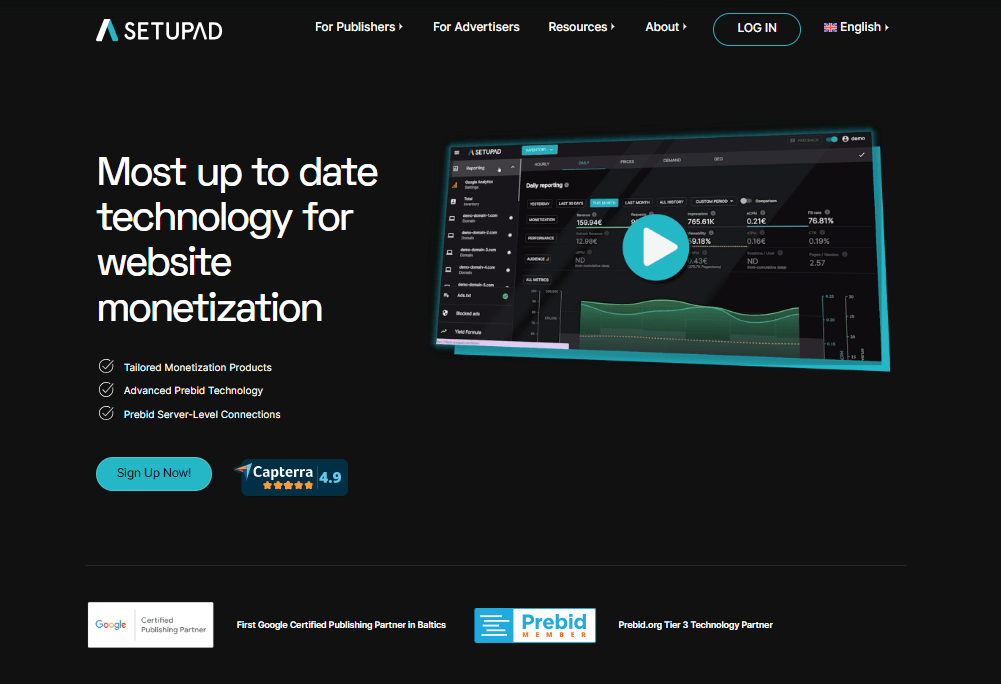
Setupad is a premium header bidding platform and one of the best AdSense alternatives for high‑traffic publishers.
It connects your site to 30+ top SSPs and exchanges (including Google AdX, OpenX, Magnite) through a unified header bidding setup, which increases competition for each impression and boosts CPMs.
If you consistently get 100K+ pageviews per month and want to move from basic AdSense to serious programmatic monetization, Setupad is a strong option among best Google AdSense alternatives 2026 for both US and global traffic.
Features of Setupad
- Header bidding wrapper connecting to 30+ premium demand partners
- AI‑assisted ad layout and price‑floor optimization
- Lightweight, privacy‑compliant scripts (GDPR/CCPA support)
- Real‑time reporting dashboard with granular metrics
- Dedicated account manager and custom setup for each publisher
Pros of Setupad
- Significantly higher CPMs than standard AdSense for high‑quality traffic
- Access to premium brand advertisers beyond Google alone
- Strong support and done‑for‑you optimization
- Great fit for high‑traffic sites wanting best programmatic ad networks
Cons of Setupad
- Requires around 100K+ monthly pageviews
- Not suitable as an AdSense alternative for small websites
- Some technical setup and testing are needed at the beginning
Ad formats of Setupad
- Display, native, and video ads served via header bidding, with options for sticky and in‑content placements.
If your site has serious traffic and you want to push beyond AdSense RPMs, Setupad is one of the strongest best AdSense alternatives for premium publishers, especially when you’re ready for full programmatic and header bidding.
11. Raptive – Premium Publisher Network (formerly AdThrive)

Raptive (formerly AdThrive) is a premium ad management platform built for established publishers that want maximum earnings and hands‑on support.
Known for its strong presence in food, home/DIY, parenting, and lifestyle verticals, Raptive runs a fully managed ad stack with header bidding, direct deals, and data‑driven optimization.
By 2026, Raptive has paid over $4 billion to publishers and lowered its entry threshold compared to earlier years, making it a top‑tier best AdSense alternative for serious content sites.
Features of Raptive
- Enterprise‑level ad stack with header bidding and premium brand demand
- Deep category expertise across lifestyle, family, travel, tech, and more
- Strong audience data and insights to improve monetization
- Dedicated account management and strategic support
- Network of 6,500+ premium sites and 200M+ unique monthly visitors
Pros of Raptive
- Very high earning potential for qualifying publishers
- Trusted, performance‑driven platform with a long track record
- Ideal for ad networks for publishers USA with large, engaged audiences
Cons of Raptive
- Requires solid traffic and content quality; not for new or very small sites
- Vetting process is strict, with checks on traffic, content, and policy history
- Best suited to sites ready to commit fully to a managed ad partner
Ad formats of Raptive
- High‑quality display, native, and video ads, delivered via header bidding and direct campaigns, optimized for viewability and revenue.
If your site is already a serious business and you want a trusted partner to maximize ad revenue, Raptive stands out as one of the strongest, highest-paying AdSense alternatives and premium best AdSense alternatives for US‑heavy, content‑rich blogs in 2026.
12. Mediavine – Lifestyle Content Specialist

Mediavine is a full‑service ad management company and one of the best AdSense alternatives for content‑heavy lifestyle blogs with strong US/UK traffic.
Instead of just giving you ad code, Mediavine manages your entire display ad stack, including header bidding, viewability optimization, and Core Web Vitals.
In 2026, they require around 50,000 sessions per month and a minimum annual ad revenue level, making Mediavine a strong fit once your site has moved beyond beginner and mid‑tier CPM and CPC ad networks.
Features of Mediavine
- Full‑service ad management with header bidding and AdX access
- Premium demand from top brands in food, home, parenting, travel, and lifestyle
- Focus on Core Web Vitals, CLS control, and page speed
- Transparent dashboard with RPM, session RPM, and content‑level reporting
- Revenue‑based tiers with a higher revenue share at higher earnings levels
Pros of Mediavine
- Often delivers much higher RPM than AdSense for qualifying lifestyle sites
- Strong support and education for independent bloggers
- Excellent for ad networks for publishers USA and other Tier 1 traffic
Cons of Mediavine
- Requires at least ~50,000 sessions per month and solid content quality
- Primarily suited to English‑language lifestyle niches
- Not an AdSense alternative for small websites or brand‑new blogs
Ad formats of Mediavine
- Display, native, and video ads are placed throughout content, sidebar, and sticky positions, all optimized for viewability and user experience.
If you run a fast‑growing lifestyle blog with mostly US/UK traffic and want a trusted, high‑RPM partner, Mediavine is one of the best Google AdSense alternatives 2026 once you meet the traffic and revenue requirements
13. MonetizeMore – Managed ad ops to 10X revenue

MonetizeMore is a managed ad operations partner rather than a basic ad network, built for publishers who already earn from ads and want to scale further.
As a Google Certified Publishing Partner, it focuses on header bidding, Google AdX, and yield optimization to grow display ad revenue—sometimes by 50–300% compared to running AdSense alone.
It’s a strong fit if your site already generates around $1,000+ per month in ad revenue and you’re ready for a best programmatic ad network style setup.
Features of MonetizeMore
- Full ad ops management and policy compliance support
- Custom header bidding wrapper and AdX access
- Advanced A/B testing for layouts, floor prices, and partners
- Real‑time analytics and revenue reporting
- Dedicated specialists and strategic optimization calls
Pros of MonetizeMore
- Can dramatically increase CPMs and RPMs for qualified sites
- Takes over technical and compliance headaches
- Strong E‑E‑A‑T signal as a certified Google partner
Cons of MonetizeMore
- Requires meaningful existing ad revenue; not for small blogs
- The revenue-share model may not suit everyone
- Onboarding and technical setup take time
Ad formats of MonetizeMore
- Display, native, and video ads are typically implemented via header bidding and direct connections to major exchanges.
If you’re already earning well from ads and want expert help to push further, MonetizeMore is one of the most powerful best AdSense alternatives for scaling publishers in 2026.
14. Publisher Collective – Snigel tech for premium publishers

Publisher Collective is a premium monetization partner that now includes the ad technology previously known as Snigel.
Instead of acting as a simple ad network, it offers a managed header bidding and yield‑optimization stack tailored for high‑traffic publishers.
The Snigel platform now powers Publisher Collective’s solutions, combining proven programmatic tech with deeper category expertise and audience insights. If your site has strong traffic and high‑value content, Publisher Collective is a serious best AdSense alternative to consider in 2026
Features of Publisher Collective
- Snigel’s header bidding and optimization tech integrated into Publisher Collective
- Access to premium demand partners and direct deals
- Vertical and audience expertise to improve RPM and fill rate
- Dedicated account management and custom implementation
- Transparent reporting and ongoing optimization support
Pros of Publisher Collective
- Enterprise‑level setup for high‑traffic, quality publishers
- Combines strong tech (Snigel) with deeper audience insights
- Good fit for sites ready to move beyond standard CPM and CPC ad networks
Cons of Publisher Collective
- Not suitable for small sites or beginners; minimum traffic applies
- Requires technical integration and collaboration with their team
- Best results in specific content verticals where they have strong demand
Ad formats of Publisher Collective
- High‑quality display, native, and video inventory served via header bidding and premium programmatic channels.
If you’re an established publisher looking for a managed, data‑driven upgrade from AdSense, Publisher Collective (powered by Snigel tech) is one of the strongest Google AdSense alternatives 2026 in the premium programmatic category. You can learn more or apply at Publisher‑Collective.com.
15. Taboola – Native recommendation widgets at scale
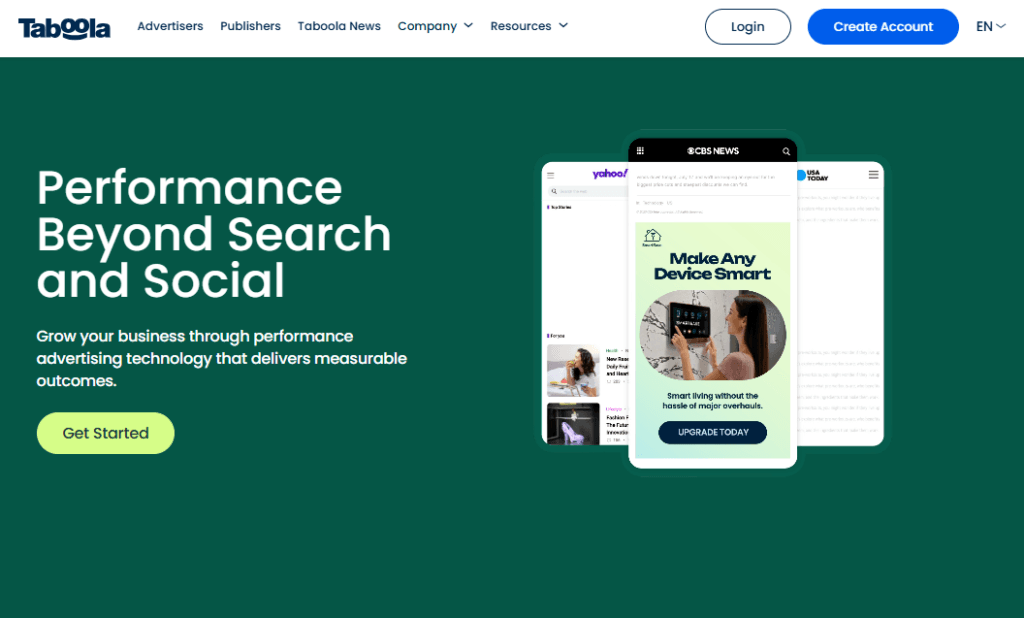
Taboola is one of the biggest native advertising platforms, known for its “recommended stories” and content widgets that appear at the end or alongside articles.
Instead of standard banners, it promotes content‑style ads that match the look and feel of your site, making it a strong AdSense alternative once you reach higher traffic.
For news sites, magazines, and large blogs, Taboola can generate substantial native ad revenue, especially when combined with display‑focused best AdSense alternatives.
Features of Taboola
- Native recommendation widgets that blend with editorial content
- Access to a huge pool of advertisers and content marketers
- Advanced targeting based on interest, behavior, and context
- In‑depth analytics on RPM, engagement, and widget performance
- Dedicated account management for qualifying publishers
Pros of Taboola
- High earning potential for large, content‑heavy sites
- More integrated look than traditional banners, improving engagement
- Works alongside other display ad networks like AdSense and header bidding stacks
Cons of Taboola
- Usually requires significant monthly traffic (often hundreds of thousands of visits)
- Native “sponsored content” style may not suit every brand or niche
- Needs careful filtering to keep ad quality and relevance high
Ad formats of Taboola
- Native content recommendation widgets (thumbnail + headline) are placed below or beside articles.
For high‑traffic publishers, Taboola is a strong best AdSense alternative on the native side that can complement your existing CPM and CPC ad networks and unlock an additional monetization channel
How I Evaluated the Best AdSense Alternatives in 2026
When I shortlist the best AdSense alternatives in 2026, I don’t just look at hype or single-case RPM screenshots. I focus on practical factors that matter to real bloggers: how easy it is to get approved, how consistently the network pays, and how ads impact user experience across devices and locations like the USA and India.
Below is the simple framework I use to compare AdSense alternatives for bloggers, from premium header bidding stacks to AdSense alternatives for small websites and beginners.
1. Traffic and approval requirements
Before anything else, I check whether a network realistically fits your current traffic level.
- Low or no minimum traffic
- Accessible networks for new blogs: Adsterra, PropellerAds, Infolinks, Bidvertiser.
- Best when you’re under 10K pageviews/month and need something more forgiving than AdSense.
- Moderate requirements (10K–100K visits/month)
- Mid‑tier AdSense alternatives for bloggers include Ezoic, Media.net, and Sovrn.
- Often better for Tier 1 traffic and niche sites with consistent content.
- High traffic/premium requirements
- Networks like Setupad, Mediavine, Raptive, and MonetizeMore.
- Typically expect 50K–100K+ sessions/month or a minimum monthly ad revenue before approval.
- Geo and niche fit
- I look at whether the network performs best with US/UK traffic, ad networks for publishers in the USA, or ad networks for Indian bloggers, and whether it supports your niche (lifestyle, tech, finance, etc.).
2. CPM, RPM, and payment terms
Next, I compare how each network actually pays and how predictable those payments are over time.
- CPM and RPM potential
- Premium header bidding and best programmatic ad networks usually offer higher CPMs than standard AdSense by connecting you to multiple SSPs and Google AdX.
- For entry‑level CPM and CPC ad networks, I look at realistic ranges, not just “up to” numbers, and how they perform in both Tier 1 and Indian traffic.
- Payout threshold and methods
- I prioritize networks with lower minimum payouts (5–50 USD) and flexible payment methods like PayPal, wire, Payoneer, or Wise—especially important for small sites testing AdSense alternatives for small websites.
- Payment schedule and reliability
- Net‑30 or Net‑45 is standard; some premium stacks pay on Net‑60 but with stronger RPM.
- I pay close attention to publisher feedback on delayed payments or clawbacks; in 2026, you can’t afford a “high RPM” network that pays late or inconsistently.
- Revenue model transparency
- Clear revenue‑share terms, honest dashboards, and access to real‑time reporting matter more than headline “highest paying AdSense alternatives” claims.
3. Ad formats and user experience
Finally, I evaluate how each network balances monetization with UX, which directly affects SEO, engagement, and long‑term earnings.
- Supported ad formats
- Standard display ads (banners, in‑content, sticky units).
- Native ads and recommendation widgets.
- Video and out‑stream ads.
- Extras like push notifications, in‑page push, and pop-ups (I treat these carefully).
- Layout control and customization
- I prefer networks that let you choose placements, devices, and limits so you can keep UX clean while testing display ad networks like AdSense.
- For AI‑driven platforms like Ezoic or MonetizeMore, I check how much manual override you still have.
- Impact on Core Web Vitals
- Lazy loading, lightweight scripts, and minimal layout shift are must‑haves now.
- Networks that overload pages with heavy JS or intrusive formats, especially on mobile, get downgraded no matter how attractive their short‑term RPM looks.
- Policy and brand safety
- I look for invalid‑traffic protection, decent ad quality, and controls to block sensitive categories so your brand and users stay safe.
Using this framework, it becomes much easier to match your blog to the best Google AdSense alternatives 2026 for your traffic level, geography, and UX standards, instead of just copying someone else’s ad stack.
Highest Paying AdSense Alternatives in 2026
When you’re shortlisting the best AdSense alternatives in 2026, it helps to quickly see which networks pay the most, what traffic they need, and which ad formats they support.
The table below compares some of the highest-paying AdSense alternatives for different traffic levels, including options for the USA and India.
Note: CPM ranges are indicative and can vary by niche, country (USA vs India), device, and season. Use this as a quick filter, then test 1–2 networks at a time.
| Network (Type) | Best for (Traffic & Geo) | Min traffic requirement | Main ad formats | Typical CPM/RPM tendency* | Payout terms & methods |
|---|---|---|---|---|---|
| Setupad | Among the highest-paying AdSense alternatives for qualifying niches and US traffic | ~100K+ pageviews/month | Display, native, video via header bidding | Often higher CPM than AdSense on Tier 1 traffic (premium CPM and CPC ad network) | Net‑30/45, bank transfer, others (revenue‑share managed stack) |
| Raptive / Mediavine | Lifestyle blogs with US/UK traffic | ~50K–100K+ sessions/month | Display, native, video | Net‑30/45; revenue share, wire/PayPal, and others | Net‑30/Net‑65, various methods; revenue share model |
| MonetizeMore | Established sites wanting managed ad ops | Typically based on minimum ad revenue (not small sites) | Display, native, video (header bidding + AdX) | Can significantly increase RPM vs AdSense when traffic is strong | Net‑30/45; revenue share, wire/PayPal and others |
| Ezoic | Growing blogs 10K–100K+ pageviews, global | ~10K+ visits/month recommended | Display, native, video, sticky | Often higher RPM than standard AdSense after AI testing (AdSense alternatives for bloggers) | Net‑30; PayPal, Payoneer, bank |
| Media.net | US/UK search traffic, contextual ads | Recommended: consistent organic traffic | Contextual display and native units | Strong CPM for US/UK niche content (best Google AdSense alternatives 2026 for Tier 1) | Net‑30; wire, PayPal (varies by account) |
| Adsterra | Small–medium sites, global; good for mixed traffic | No or very low minimum | Display, native, pop, in‑page push | Competitive for international traffic, better than AdSense in some non‑Tier‑1 regions (AdSense alternatives for small websites) | Multiple methods (PayPal, BTC, Paxum, wire), low thresholds |
| PropellerAds | Small–medium sites, strong on mobile & global | No or very low minimum | Push, in‑page push, display, interstitials | Good CPM on push/mobile in some geos; varies by format (display ad networks like AdSense) | Flexible payouts, low thresholds, many methods |
| Infolinks | Small content sites, text‑heavy pages | Very low/no minimum | In‑text, in‑frame, in‑tag units | Modest but steady; best as a complement to other networks | Net‑45; PayPal, bank (limits vary) |
| Bidvertiser | New/small sites needing PPC focus | Very low/no minimum | Display and text PPC ads | Earnings depend heavily on CTR; lower CPM than premium networks | Low payout threshold; PayPal and other options |
| Sovrn | Review/commerce content, US and global | Low–medium traffic; stronger with commerce content | Display + commerce/affiliate links | RPM mix from display + affiliate; can outperform pure display in buying niches | Standard net terms; various payment methods |
“Typical CPM/RPM tendency” is directional, based on publisher reports and how these AdSense alternatives pay compared to standard AdSense; actual numbers vary by niche, traffic quality, and location (USA vs India).
In my experience, the best way to use this quick table is to match your current traffic level and main country (for example, ad networks for publishers in the USA vs ad networks for Indian bloggers), shortlist 2–3 networks from the relevant rows, and then run real A/B tests against your existing AdSense setup.
How to Choose the Right AdSense Alternative for Your Blog
Choosing the best AdSense alternatives in 2026 is less about chasing the “highest RPM screenshot” and more about finding a network that fits your traffic level, niche, and audience location (especially if your readers are mainly from the USA or India).
Below is a simple way to decide which AdSense alternatives for bloggers make sense for your current stage.
1. Match network to traffic level and niche
Start by matching where your blog is today, not where you hope it will be.
- Small websites and beginners
- Under ~10K–20K pageviews/month.
- Test AdSense alternatives for small websites like Adsterra, PropellerAds, Infolinks, and Bidvertiser.
- Good for early monetization while you build traffic and content.
- Medium sites (10K–100K pageviews/month)
- Use mid‑tier best AdSense alternatives like Ezoic, Media.net, and Sovrn.
- Especially effective for search‑driven blogs and niche content in English.
- High‑traffic sites (100K+ pageviews/month)
- Move into the best programmatic ad networks and premium stacks: Setupad, Raptive, Mediavine, MonetizeMore, Snigel, APS.
- Ideal if you want serious header bidding, AdX access, and managed ad ops.
- Match by niche and geo
- US/UK lifestyle and food: consider Raptive, Mediavine, Media.net.
- Tech, downloads, or mixed global traffic: consider Ezoic, Adsterra, and PropellerAds.
- Review and commerce sites: Sovrn plus affiliate programs.
2. Balancing revenue vs user experience
Higher RPM is useless if your users stop visiting.
- Start with cleaner formats
- Prefer standard display, native, and light video units first.
- Use aggressive formats (pop-ups, heavy interstitials) sparingly, if at all.
- Watch Core Web Vitals and speed
- Too many tags from multiple CPM and CPC ad networks can slow pages.
- Use lazy loading, limited ad slots, and regular speed checks.
- Test one change at a time
- Add or switch a network, then monitor RPM, bounce rate, session duration, and scroll depth for at least 2–4 weeks.
- This makes it easier to see whether a display ad network like AdSense is really helping.
- Think long term
- For blogs targeting the USA and India, sustainable growth comes from mixing a few best Google AdSense alternatives 2026 with high‑quality content, not from overloading pages with ads.
- Prioritize networks that respect policies, pay on time, and let you stay in control of placements.
Recommended networks for serious bloggers
Ezoic
Ezoic is a reliable AdSense alternative for bloggers that uses AI to test ad layouts and consistently lift RPM for growing sites, especially between 10K–100K pageviews.
It’s a good balance of higher earnings, transparent reporting, and long‑term support.
Mediavine
Mediavine is one of the highest-paying AdSense alternatives for qualifying lifestyle and content‑rich sites with strong US/UK traffic, known for excellent RPMs and strict focus on site speed and user experience. Once you meet their entry requirements, they can become a stable, long‑term ad partner
Raptive
Raptive (formerly AdThrive) is a premium publisher network that has paid over $4B to sites in niches like food, home, parenting, and tech, making it a very trusted best AdSense alternative for established blogs with large, engaged audiences. Their managed ad stack and category expertise often unlock top‑tier earnings.
Using Multiple Ad Networks Safely (My Framework)
In my experience, the bloggers who earn the most from the best AdSense alternatives don’t rely on a single network—they use a small, controlled stack. The key is to combine a few CPM and CPC ad networks without breaking policies, slowing your site, or ruining user experience, especially if you’re targeting readers in the USA and India.
1. Portfolio diversification and A/B testing
Instead of jumping from one network to another, treat your ad setup like a portfolio.
- Mix by traffic level
- Small sites: AdSense plus AdSense alternatives for small websites like Adsterra, PropellerAds, Infolinks, or Bidvertiser.
- Medium sites: AdSense (or AdX) + Ezoic or Media.net + one extra native/commerce option like Sovrn.
- High‑traffic sites: Replace basic AdSense with header bidding via Setupad, MonetizeMore, Raptive, Mediavine, Snigel, or APS.
- Diversify by format
- Use a mix of display, native, and light video units from different display ad networks like AdSense, rather than stacking only one format.
- If you test push or pop formats, do it in a limited way and monitor how they affect metrics.
- Run structured A/B tests
- Test one change at a time: for example, AdSense vs a best Google AdSense alternative 2026, like Ezoic, on a portion of traffic.
- Compare RPM, CTR, bounce rate, and session duration over 2–4 weeks before deciding.
- Respect policies
- Always check network rules to ensure you can run them alongside AdSense.
- Avoid overlapping ad units and keep ad density reasonable, especially above the fold.
2. Technical setup tips (lazy load, CLS, site speed)
Multiple ad tags can easily hurt Core Web Vitals if you don’t optimize the technical side.
- Lazy load ad units
- Enable lazy loading for most display ads so they load as users scroll.
- This helps control Largest Contentful Paint (LCP) and improves UX on slower connections.
- Reserve space to prevent CLS
- Always set fixed heights or use responsive containers so ad slots don’t jump when they load.
- This reduces Cumulative Layout Shift (CLS), which Google now uses as a ranking signal.
- Limit scripts and wrappers
- Avoid stacking too many separate CPM and CPC ad networks and wrappers on the same page.
- Prefer one main header bidding or optimization layer (Ezoic, Setupad, MonetizeMore, etc.) plus one or two lighter additions like Infolinks.
- Monitor performance regularly
- Use tools like PageSpeed Insights and Core Web Vitals reports in Search Console.
- If a particular AdSense alternative for bloggers adds a lot of JS weight or layout shifts, reduce its placements or remove it.
- Balance revenue and UX
- Remember that a slightly lower RPM with better UX can lead to more traffic and higher total earnings over time.
- For both the USA and India audiences, a clean layout plus a smart mix of the best AdSense alternatives usually beats an aggressive setup that annoys visitors.
Frequently Asked Questions (FAQs)
What are the best AdSense alternatives in 2026 for bloggers?
The best AdSense alternatives in 2026 include premium header bidding stacks like MonetizeMore and Setupad, mid-tier options such as Ezoic and Media.net, and beginner-friendly networks like Adsterra, PropellerAds, and Infolinks, depending on your traffic and niche.
Which AdSense alternative pays the highest CPM?
For established sites with strong traffic, managed programmatic platforms like MonetizeMore, Raptive, and Mediavine can deliver some of the highest CPMs by combining header bidding, Google AdX, and direct deals with premium advertisers.
What are the best AdSense alternatives for small websites?
Small websites typically do better with low-barrier networks such as Adsterra, PropellerAds, Infolinks, and Bidvertiser, because they have no or very low minimum traffic requirements and flexible ad formats you can test quickly.
Can I use AdSense and AdSense alternatives together?
In most cases, you can run AdSense alongside alternatives like Media.net, Infolinks, and some programmatic stacks, as long as you respect each network’s policies, avoid overlapping ad code, and keep total ad density within Google’s guidelines.
What traffic do I need before moving to premium AdSense alternatives?
Premium networks usually look for at least 50,000 sessions per month for Mediavine or Snigel and around 100,000 pageviews or more for networks like Raptive, while managed stacks like MonetizeMore may require a minimum monthly ad revenue level.
Are AdSense alternatives safe for SEO and Core Web Vitals?
AdSense alternatives are safe for SEO if you control layout shift, lazy-load ads, and avoid overly aggressive formats; many premium networks now support lightweight tags and optimization to keep Core Web Vitals healthy.
How do I choose the right AdSense alternative for my blog?
Start by matching your traffic level and geography to the network’s strengths, compare CPM and payout terms, test 1–2 networks at a time, and monitor RPM, session duration, and bounce rate before committing to a long-term setup.
What are the best AdSense alternatives in India for bloggers?
In India, the best AdSense alternatives for bloggers usually combine global and India‑friendly ad networks. Media.net works well if you have strong English search traffic, while Adsterra and PropellerAds are good for mixed and low‑traffic blogs. Infolinks can add extra in‑text monetization, and once your site grows, you can also test Ezoic or other CPM and CPC ad networks that support Indian traffic.
What are the best AdSense alternatives in the USA for publishers?
For US-heavy traffic, the highest-paying AdSense alternatives are usually premium and mid-tier networks. Raptive and Mediavine are top choices for lifestyle and content-rich sites that meet their traffic requirements, while Ezoic and Media.net work well for growing blogs in the 10K–100K pageview range. High‑traffic publishers can also look at Setupad, MonetizeMore, and Publisher Collective as the best programmatic ad networks to maximize RPM.
Conclusion on the Best Google Adsense Alternatives in 2026
When you step back, you’ll see that Google AdSense is just one monetization option—not the destination.
In 2026, relying only on Google AdSense is rarely the best way to grow stable, high‑earning ad revenue.
The smartest bloggers and publishers combine a few best AdSense alternatives—matched to their traffic level, niche, and geography—to unlock higher CPMs, better support, and more control over user experience.
Here’s how I recommend you move forward from this guide:
- If you’re a beginner or low‑traffic blogger: Start with beginner‑friendly AdSense alternatives for small websites such as Adsterra, PropellerAds, Infolinks, or Monetag, and keep your layouts clean while you grow to 10K+ pageviews.
- If you’re in the 10K–100K pageviews range: Test mid‑tier networks like Ezoic, Media.net, and Sovrn alongside AdSense and track RPM, Core Web Vitals, and user engagement for each setup. This is often where you’ll see the biggest uplift versus AdSense alone.
- If you’re a high‑traffic publisher: Look seriously at premium partners such as Mediavine, Raptive, Setupad, MonetizeMore, Amazon Publisher Services, and Publisher Collective (Snigel tech). These best programmatic ad networks and managed stacks can unlock the highest paying AdSense alternatives for US and global audiences.
- If you want to diversify beyond display ads: Layer in direct‑sale marketplaces like BuySellAds, affiliate options such as Amazon Associates and Skimlinks, and text‑based networks like Infolinks to add extra monetization without overwhelming your layout.
- For bloggers targeting the USA and India: Use a geo‑aware mix: Ezoic, Mediavine, Raptive, Setupad, and Media.net for strong US/UK traffic; Adsterra, PropellerAds, Infolinks, and India‑friendly ad networks for Indian and mixed‑geo audiences.
If this guide helped you choose your next AdSense alternatives in 2026, I recommend testing one or two new networks over the next 30 days, watching RPM and UX closely, and then scaling the combination that works best for your blog.



Hello Satish sir,
Nice article, I’ve been struggling for Google ads for God knows when but they keep turning down my request, I don’t know what exactly that I’m not doing right in my blog, please help me and check if everything is normal. I also tried applying for Yahoo ads (media.net) and they turned me down as well. Maybe I’ll try out the other ones you listed but not propellers ads because I dislike it.
Hello Gabriel,
I was checked your site. Few of the articles are violating to AdSense program policies.
1. Remove software download links and posts.
2. Remove VPN tools links.
3. Check this link to know the Adsense program policies: https://support.google.com/adsense/answer/48182?hl=en
Check your blog before applying to AdSense by following the AdSense program policies.
All the best
Hi Satish Sir,
Great post about Adsense alternative, I am a new blogger. I have created my blog on google blogger and published 3 original posts. now can I apply for Google Adsense please suggest me sir.
Hello Prosanta Mondal,
Getting Adsense approval is not an easy task. Write more quality articles like useful tutorials, reviews, lists, etc. Add Privacy Policy, Terms of services pages, and add more information in About page and Contact page (Your complete details). If your blog has more than 15 unique articles and minimum traffic, Google will enable an AdSense account.
All the best
Hi sathish.Thanks for the amazing article.My viewers are mostly frm US and UK ..which affiliate is best?
Hello MuthuKrishnan,
I checked your blog. It is good, clean, and responsive. The choosing of an affiliate program is completely your choice. What type of products you are willing to promote. Try ShareASale, Amazon.com, and ClickBank, these programs are working well for my blogs. These marketplaces are completely free. Just signup – activate your account and choose one or more products and promote on your blog.
Wish you all the best
Great, This is pretty Good, I was only aware of infolinks other than google adsense. And yes the problem you mention about google adsense is correct they do not approve each request. I tried a lot of times for my websites but i didnot get any success.
But now I ll try these alternatives lets see any success or not.
Thanks
Recently my blog got Adsense approval. But I am not getting good traffic.
Hello Prem,
Getting traffic to the blog is the biggest game in the blogging journey. Do not worry.
1. Write good and quality content,
2. post articles frequently
3. Share your post in relevant groups and communities
4. Do Off-SEO in a proper way like Blog commenting (daily 2-3), Guest post submission (1 post per month) and Participate forum activities.
5. inform about your latest posts to your readers through Email, messengers (Whatsapp and Facebook messengers).
You will get good traffic instantly.
All the best