Businesses today have a massive opportunity to grow traffic, leads, and sales by using a well-planned content marketing strategy instead of random content publishing.
When you consistently provide useful, meaningful content tailored to your audience’s needs, you boost online credibility, build a loyal community, and turn readers into brand advocates.
Successful content marketing, however, is more than just producing and promoting articles, videos, or social posts; it is a documented content marketing plan designed to attract and keep the attention of a specific target audience and ultimately deliver measurable ROI from your content efforts.
A strong content marketing strategy framework aligns your goals, buyer personas, content pillars, and distribution channels so every piece of content has a clear purpose.
If you follow the steps outlined in this guide, you’ll have all the details you need to create a practical, results-driven content marketing strategy in 2026 for your company, whether you run a blog, SaaS product, or small business.

Content marketing has evolved significantly over the years and is now a mainstream, high-ROI marketing approach for most online businesses worldwide.
You must prepare a strong, long-term content marketing strategy when you start your online business or want to increase sales this year, instead of relying only on paid ads or one-off campaigns.
In the next sections, you’ll discover a foolproof, step-by-step content marketing strategy guide that is updated for 2026 and built to perform like magic for your brand when you follow and implement each step consistently.
What Is Content Marketing?
Content marketing is a strategic content marketing strategy and approach that focuses on creating and distributing valuable, relevant, and consistent content to attract and retain a clearly defined audience and ultimately drive profitable customer action.
Instead of pushing direct sales messages, you publish content that helps your ideal customers solve real problems, make better decisions, and move closer to your products or services.
In a modern content marketing strategy framework, you don’t simply try to sell your products or services to prospects; you use educational blog posts, videos, emails, and resources that answer their questions and guide them through the buyer’s journey.
By doing this consistently, you build trust, authority, and long-term relationships that lead to repeat business and higher lifetime value.
What Is the Importance of Content Marketing?
Content marketing is one of the most effective ways to attract, nurture, and grow a specific group of customers who genuinely care about your brand and the solutions you offer.
A strong content marketing strategy positions your business as a trusted advisor, not just another advertiser, by consistently delivering useful content that answers real questions.
Key Reasons Content Marketing Matters
- Builds trust and authority: When you regularly provide useful, actionable information that aligns with audience needs and search intent, people begin to trust your recommendations and rely on your expertise.
- Improves content marketing ROI: Helpful, targeted content keeps customers engaged for longer, increases repeat visits, and leads to more conversions, which directly strengthens your overall content marketing ROI.
- Outperforms random publishing in 2026: In 2026, brands with a documented content marketing plan and clear content pillars consistently outperform those that publish content without any strategy or structure.
- Wins in competitive niches: In crowded industries, content wins when it is high‑quality, relevant, and created specifically for your target audience. Every piece should fit into a thoughtful content marketing strategy and content distribution plan, not stand alone.
- Supports data‑driven decisions and scaling: For advanced workflows, SEO‑driven topic research, and optimization, tools like the SEMrush Content marketing platform help you plan, audit, and refine a data‑driven content marketing strategy so you can scale what works and stop what doesn’t.
Ready to Audit & Optimize Your Content with Semrush?
The Semrush Content Toolkit helps you run content audits, find keyword gaps, and build SEO-ready content marketing strategy templates for 2026. It’s the same toolkit I use for BloggingDen and client projects.
Best Methods to Create a Content Marketing Strategy
Wouldn’t it be great to start your content marketing strategy confident that everything will go as planned, from content creation to distribution and measurement? When you know exactly what you’re doing, you can offer a unique perspective, publish content that captivates your audience, and steadily grow a loyal following around your brand.
At first, building a solid content marketing strategy framework can feel overwhelming because it takes time, thought, and preparation to map out all the details.
You can’t just copy someone else’s content marketing plan and expect it to work for your niche, business model, and target audience.
Instead, you need a step‑by‑step, documented content marketing plan tailored to your goals, audience, and content pillars.
1. Pillar–Cluster Content Model
A powerful way to structure your content marketing strategy is to use the pillar–cluster content model, which organizes your content around a few core topics supported by detailed subtopics.
First, choose 3–5 high‑value content pillars, such as “Content Marketing Strategy,” “Content Distribution Strategy,” “Content Marketing KPIs,” and “Content Audit.”
Each pillar becomes a comprehensive guide that covers the topic broadly, while cluster articles dive deep into specific subtopics (for example, landing pages, buyer personas, email marketing, native ads, or content types).
Every cluster page links back to its pillar, and the pillar links to all clusters, creating a strong internal linking structure that helps search engines and AI systems understand your topical authority.
By mapping your content marketing plan to this pillar–cluster model, you avoid duplicate coverage, fill content gaps, and build a site architecture that supports better rankings, AI citations, and user navigation in 2026 and beyond.
Next Steps: Build Your Content Marketing Cluster
Strengthen your content marketing strategy with supporting guides from BloggingDen. These articles help you build topic clusters around SEO, keywords, and content optimization.
2. Audit Your Content

Routine, well-run content audits help you identify existing content that needs to be updated, merged, repurposed, or removed so it fits your 2026 content marketing strategy.
A content audit is the systematic process of collecting, reviewing, and evaluating all of your website’s content against specific performance criteria such as traffic, engagement, conversions, and search visibility.
In practice, website content auditing is one of the major aspects of search engine optimization and sits at the foundation of a strong SEO‑driven content marketing strategy.
During the audit, you can uncover technical issues like duplicate content, broken links, thin pages, and page speed problems that may be limiting your organic reach and content marketing ROI.
The final aim of a content audit is to reveal how your current content marketing efforts are performing, highlight strengths and weaknesses, and then adjust your content marketing plan to match your current business and marketing objectives.
If you are new to content auditing, you can start with proven site audit tools; personally, I use the Semrush Audit tool to keep my blogs perfect from a technical SEO perspective, and Website Auditor is another favorite tool to run deeper content audits and support a long-term content marketing strategy.
3. Set Clear Goals for Your Content Strategy

Because a content audit can be difficult and time‑consuming, it only becomes powerful when connected to clear, realistic goals in your content marketing strategy.
Start by defining a straightforward, narrow primary objective: for example, “Increase organic blog traffic by 30% in the next 6 months” or “Generate 100 qualified leads per month through content.”
Next, connect these goals to your broader business outcomes. Ask yourself what benefits a content audit and content marketing plan will provide and what you’re aiming to achieve with your efforts: more organic traffic, higher engagement, better conversions, or improved brand authority.
Goal 1: Use the SMART Goals Framework
To make your content marketing strategy goals actionable, use the SMART framework: Specific, Measurable, Achievable, Relevant, and Time‑bound.
For example, instead of saying “increase traffic,” define a goal like “Increase organic blog traffic by 30% in the next 6 months from content marketing campaigns.”
- Specific: Clearly describe the outcome (organic traffic, leads, sales).
- Measurable: Attach numbers you can track (30% growth, 100 leads/month).
- Achievable: Make sure the target is realistic based on resources and current performance.
- Relevant: Align goals with your overall business and content marketing plan.
- Time‑bound: Set a deadline so you can evaluate success and adjust your strategy.
Using SMART goals turns your content marketing objectives into practical targets you can monitor with KPIs and analytics, instead of vague wishes.
Goal 2: Boost Your SEO Performance
- Identify which web pages have strong SEO potential and can rank on the first page with better optimization and content updates.
- Determine which content on your website needs to be refreshed, consolidated, or removed to avoid cannibalization and improve your SEO‑driven content marketing strategy.
- Check and optimize internal links to strengthen your topic clusters and content pillar strategy.
Goal 3: Boost Audience Engagement
- Find the content types and topics that are most appealing to your target audience and keep them on your site longer.
- Identify topics that your visitors are interested in based on search data, comments, and social media interactions.
- Determine which formats (blog posts, videos, emails, social posts) and subjects are most popular on social media to feed your content distribution strategy.
Goal 4: Enhance Conversion Rate
- Identify the pages that provide the best visitor experience and convert readers into leads or customers.
- Find the content that generates the most leads, signups, or product inquiries, and replicate those elements in your content marketing strategy.
- Map which content formats and topics work best at each stage of the buyer’s journey (awareness, consideration, decision) to support a more effective buyer persona content strategy.
Once you have set your goals, you should track the appropriate content marketing metrics and KPIs, such as organic traffic, engagement, conversions, and assisted revenue, to see whether your content marketing strategy is working or needs refinement.
4. Find and Understand Your Audience

By deeply understanding your audience, you can create content tailored to each stage of the customer journey and build a more precise content marketing strategy.
That means delivering the right information at the right time—whether through newsletters, emails, blog posts, or product pages—to help your readers move from awareness to purchase and beyond.
If your audience loves cooking videos, for example, you can design a content marketing funnel that starts with short recipe videos for awareness, more detailed tutorials for consideration, and downloadable meal plans or product recommendations at the decision stage.

The first step is always to plan your content marketing strategy, but it’s equally important to publish relevant content consistently across all your online platforms so your audience sees you as a reliable resource.
Today’s users have high expectations; they want personalization, real engagement, and transparent communication from brands.
Marketers who fail to deliver value and relevance to potential customers in a compelling way risk losing followers, organic reach, and ultimately, sales—even if they publish a lot of content.
A strong content marketing strategy grounded in buyer personas, audience research, and behavioral data helps you avoid this trap and focus on content that truly matters.
5. Create an Editorial Plan for Your Content Marketing Strategy

A practical editorial plan is the backbone of any successful content marketing strategy because it turns ideas into a consistent publishing schedule across all your channels.
At first, planning an editorial calendar can feel intimidating—just like creating templates for your content marketing strategy—but it quickly becomes your best tool for staying organized, focused, and consistent.
To design a useful editorial calendar, you need to think about multiple content formats and campaigns so each piece works on its own while still supporting your strategic goals and content pillars.
Your editorial plan should also leave room for flexibility, because your content marketing strategy will need to adapt to changing audience tastes, new technology, market shifts, and fresh keyword opportunities over time.
A simple way to keep your editorial plan manageable is to divide it into three core areas so your activities are clearly focused and the process becomes more sustainable:
- Guidelines and governance: Editorial quality expectations, preferred practices, and guiding principles that define and differentiate your brand’s content.
- Processes and tools: Tasks, workflows, routing methods, and productivity techniques that keep your content engine running smoothly.
- Team resources: Roles for each task, required skills, and systems to keep your team motivated and efficient.
Guidelines and Governance
Governance should sit at the core of every editorial plan within your content marketing strategy, because it ensures that all content follows the same communication standards and brand principles.
Decisions about topics, formats, and publishing frequency should be clearly documented before you start creating content, so your team knows exactly how to represent your brand across all channels.
This governance layer shapes your brand’s overall content experience by aligning every article, video, email, and social post with a single set of editorial and communication guidelines.
It supports tactical decisions and helps you make better choices about which content to prioritize, which campaigns to run, and how each piece fits into your long‑term content marketing plan.
Content Tone, Voice, and Style
Defining your content tone, voice, and style is a critical part of your editorial plan and content marketing strategy framework. When you decide how your brand should sound—formal or friendly, educational or conversational—you make your content more distinctive and memorable than your competitors’.
Clear, well‑structured content written in a consistent tone and style will encourage your audience to stay longer, read more, and return for future updates.
Over time, this consistency strengthens your brand, supports your content pillar strategy, and improves the overall performance of your content marketing strategy.
6. Pick the Perfect Content Channels

Once you’ve set your goals and identified your target audience, the next step in your content marketing strategy is to pick the most effective content channels—or distribution channels—for execution.
A strong content distribution strategy typically combines multiple content marketing channels to uncover new opportunities, build brand awareness, and grow your reputation.
Start by researching where your audience spends time online and what type of information they are actively searching for.
This helps you understand both your audience’s behavior and the content marketing strategy your competitors use, including which platforms, formats, and topics they focus on.
Many brands watch competitors closely but ignore independent content creators; treating both brands and creators as part of your competitive landscape will give you a more complete picture.
When you choose to focus on owned media—like your own blog, newsletter, and social profiles, you gain better control over your publishing schedule and messaging, which is vital for any long‑term content marketing strategy.
At the same time, you should monitor relevant publishers, online magazines, industry blogs, and YouTube content creators in your niche as part of ongoing competitor and opportunity research.
When it comes to picking the perfect content channels such as your blog, online magazines, industry blogs, email, or YouTube, you need to evaluate how each channel fits into your content distribution strategy and supports your business goals.
It is equally important to understand the purpose, strengths, and limitations of each channel, because different platforms can bring very different impacts to your business.
Ultimately, where content is shared matters—but what you say and how relevant it is to your audience matters even more.
With so many options, selecting the right content marketing channels is considered the backbone of every worthwhile B2C or B2B content marketing strategy.
Your brand’s blog may be a treasure, but as more people join apps, communities, and niche platforms, your company should thoughtfully branch out to other channels that make sense for your audience and objectives, rather than relying only on one publishing outlet.
7. Decide the Right Content Types

When you start planning a content marketing strategy, you’ll hear people list dozens or even hundreds of possible content formats—blogs, videos, emails, podcasts, webinars, and more.
Choosing content marketing as a growth channel is easy; the difficult part is deciding which specific content types make the most sense for your company and audience.
In practice, you need to focus on content formats that matter most to your target audience and support your product or service promotions without feeling overly salesy.
Some content types are ideal for awareness (educational blog posts, infographics), while others work better for consideration or decision stages (case studies, webinars, product reviews).
The goal of your content marketing strategy is to match content types to buyer intent and stage in the buyer’s journey.
It can be challenging to know exactly which content formats your audience consumes regularly, because there is no single content marketing tool that can guarantee where every segment spends their time online.
Instead, you should combine analytics, keyword research, social listening, and audience feedback to understand whether your readers prefer detailed guides, step‑by‑step tutorials, short tips, or big‑picture insights.
Thinking about the tactical vs. strategic continuum is a useful way to decide what content mix your audience will enjoy most.
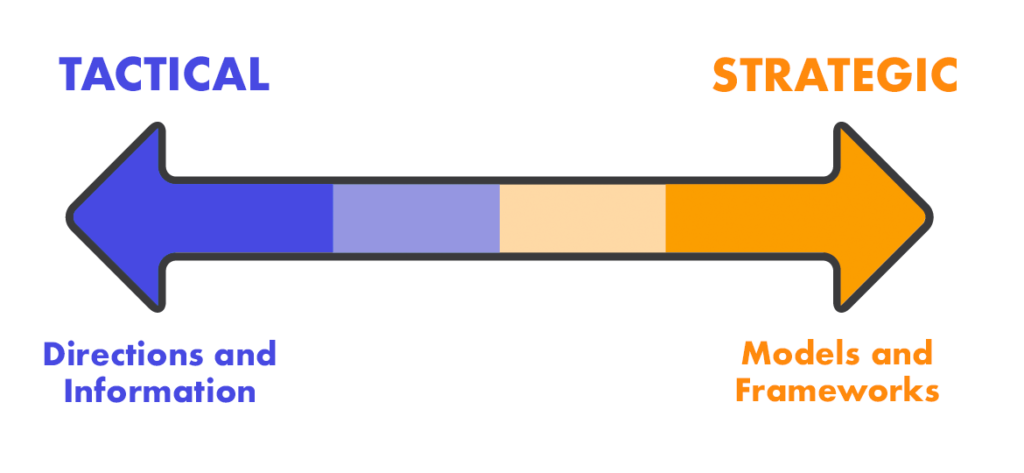
Tactical content includes how‑to posts, checklists, and templates your readers can apply immediately, while strategic content explores trends, frameworks, and high‑level ideas in your niche. A balanced content marketing strategy usually includes both.
With that in mind, here are ten proven content types you can use in 2026 to serve different audience segments and stages of the buyer’s journey:
- Long‑form blog posts (in‑depth analysis or step‑by‑step guides).
- Short‑form blog posts (built around a single “big idea” or insight).
- Original research and data studies.
- Video tutorials and screen‑share demos.
- Short social media videos (for quick, time‑sensitive promotion).
- Partner webinars and live training sessions.
- Case studies that show real‑world results.
- Practical checklists and worksheets.
- Infographics and visual data stories.
- Podcasts or audio episodes for existing audiences.
These formats can form the core of your content pillar strategy (for example, a pillar page supported by blogs, videos, and case studies), making your overall content marketing strategy more robust and easier to scale.
8. Match Content Types to Buyer Journey Stages
A modern content marketing strategy works best when each content type supports a specific stage of the buyer’s journey: awareness, consideration, and decision. Instead of publishing content randomly, map formats deliberately:
- Awareness stage: Educational blog posts, infographics, intro videos, and social posts that help people understand their problem and discover your brand.
- Consideration stage: In‑depth guides, comparison posts, webinars, and checklists that explore solutions and show how you can help.
- Decision stage: Case studies, product demos, landing pages, and testimonials that build trust and remove final objections.
By aligning content types with buyer intent at each stage, your content marketing strategy becomes more effective at moving people from discovering your brand to becoming paying customers. This also makes it easier to plan your editorial calendar and measure content marketing ROI for each stage.
9. Identify Resources to Prepare Content

Once you know which content types you want to create and where you plan to publish them, the next step in your content marketing strategy is to ensure you have the right resources to deliver them consistently.
This is where your content marketing strategy template and editorial calendar become practical tools, not just documents.
You need to answer key resource questions such as the following:
- Who is responsible for creating and updating each content asset?
- What human, physical, or digital resources are required for content creation?
- What will your publishing process and content scheduling workflow look like?
Who Is Responsible for Content Creation?
This is essentially a question of roles and responsibilities within your content marketing strategy framework. You need clarity about who owns each part of the process—from ideation to writing, editing, design, and publishing—and who approves final content before it goes live.
The exact setup will depend on the size of your business and your content team, as well as whether you produce content in‑house or outsource content development to freelancers or agencies. A simple example structure might look like this:
- The CEO or Chief Marketing Officer approves the overall content marketing plan and content strategy direction.
- A brand or content marketing manager collaborates with the content team and is responsible for executing the content marketing strategy on a regular basis.
- Individual creators (writers, designers, video editors) produce content based on their areas of expertise and assigned topics.
You may also rely on tools like the Semrush Content Toolkit or AI‑assisted writing platforms to streamline briefs, outlines, and optimization, which saves time and supports a scalable content marketing strategy.
10. Start Developing Content

Content development is one of the most critical parts of your content marketing strategy, and it involves several steps you don’t want to skip.
Let’s walk through each stage so your content plan is grounded in clear goals, audience understanding, and buyer personas.
Step 1: Define Your Content Marketing Goal
Before you decide what to create, you must define why you are creating it. Every piece of content within your content marketing strategy should start with a specific goal. Ask yourself how you will measure success:
- Is the goal to increase organic traffic?
- Grow your email subscriber list?
- Generate app downloads or trial signups?
- Improve conversions on key landing pages?
- Increase social shares, comments, and engagement?
- Drive video views, podcast downloads, or direct sales?
Clearly connecting content to goals makes it easier to track content marketing KPIs and optimize your strategy over time.
Step 2: Research and Understand Your Audience
After clarifying why you’re creating content, the next step in developing your content marketing strategy is to understand who will read, watch, or listen to it. Use tools like analytics, keyword research, surveys, and social listening to learn:
- What problems your audience is trying to solve.
- What topics and formats they engage with most.
- Which platforms they prefer for consuming content.
You can also analyze how people watch the content you make and which pages they visit most often to refine your topics and formats.
Step 3: Create Your Audience Personas
Audience personas—often called buyer personas—are semi‑fictional, generalized representations of your ideal customers, and they are essential for a focused content marketing strategy.
Each persona helps you internalize who your ideal reader or buyer is and gives you a clear picture of how to communicate with them as real people.
For each persona, build a bulleted list of demographic and psychographic traits, including:
- Age, location, job role, and industry.
- Goals, challenges, and pain points.
- Preferred content formats and channels.
- Buying behavior and decision‑making style.
These buyer persona content strategy profiles guide your topic selection, content tone, and channel decisions, ensuring that every part of your content marketing strategy is tailored to the people most likely to take profitable action.
11. Content Distribution Planning

Even though a lot of work happens before this point, your content marketing strategy truly goes live when you start distributing and promoting your content.
This is the stage where your priorities, audience insights, strategic choices, and creative work are tested in real channels and measured against real results.
With so many platforms, feeds, and notifications competing for your audience’s attention, publishing content is not enough; you must actively promote what you create using a thoughtful content distribution strategy.
Distribution decides whether your content reaches the right people at the right time—or gets buried.
a. Make Distribution Part of the Ideation Process
A strong content marketing strategy treats distribution as part of ideation, not an afterthought.
When you define topics or content pillars, you should immediately think about how each piece will be promoted and which channels are best suited for that format and audience.
Every topic you choose likely has a unique audience segment that prefers consuming content on specific platforms—blogs, YouTube, LinkedIn, Instagram, email, or niche communities.
Your content creation must meet the needs of that audience and align with your broader content distribution strategy.
When you decide on a subject for your next article or video, run a quick Google search to see which content formats rank first (long-form guides, videos, and list posts) and analyze the related topics the community is discussing.
This research gives you a clearer idea of which formats perform best and how your content marketing strategy can stand out.
b. Ensure Proper Indexing and Organic Visibility
Organic search is still one of the most sustainable and impactful content distribution methods in 2026. Proper indexing and technical optimization of your content pillars and cluster posts help your content marketing strategy gain long‑term visibility in search engines.
When your content is indexed correctly, structured well, and optimized for relevant keywords, it can build lasting brand recognition and authority, generating opportunities to attract and nurture ideal prospects over time. This is why pairing a strong content marketing strategy with solid SEO fundamentals is essential.
c. Use Email as a Core Distribution Channel
Email marketing is finally getting more recognition as a powerful content distribution channel within modern content marketing strategies.
No other channel gives you as much control over when messages are delivered, how they are personalized, and how content triggers and automations are executed.
Email is often underused because it can be challenging to get right, both technically and from a content perspective, and many marketers struggle with building and maintaining high‑quality email lists.
However, when you integrate email into your content distribution strategy—for example, using newsletters to share new blog posts, videos, and offers—you create a reliable direct line to your audience.
You can follow step-by-step tutorials such as How to use Mailchimp for Email Marketing? (Beginners Guide) and your guide on the Best Email Marketing Services for Effective Blogging to build and grow your list, segment subscribers, and deliver content aligned with your overall content marketing strategy.
d. Leverage Influencer Contributions and Partnerships
Influencer contributions and expert collaborations can amplify your content marketing strategy by exposing your content to established communities.
Influential people are far more likely to share content with their audience when they have contributed insights or quotes or co‑created the piece.
When you become someone they enjoy collaborating with, the likelihood of future partnerships and organic shares increases dramatically.
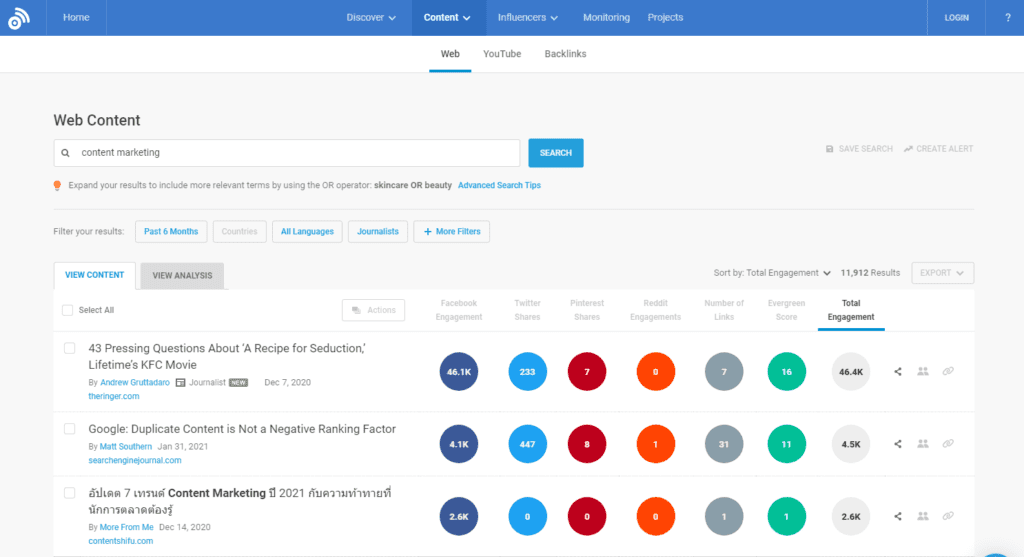
Tools like BuzzSumo help you find the most popular authors and thought leaders within your topic, so you can reach out for contributions or quotes.
You’ll be surprised how quickly you can build relationships and grow the reach of your content distribution strategy using these influencer networks.
e. Paid Distribution and Social Channels
Paid distribution and social ads can accelerate your content marketing strategy by placing your content in front of highly targeted audiences.
Most major ad platforms and social tools guide you step by step through campaign setup, so you can get basic campaigns running within a day.
Before investing heavily, consider the cost and the realistic return you expect from each paid channel.
Native advertising and sponsored content can get your content in front of many people, but they also carry the risk of looking like clickbait if not aligned with your brand and content marketing strategy.
Your goal should be to use paid distribution to support high‑value content assets, not to compensate for weak topics or low‑quality content.
How to Optimize Content Marketing Strategy for AI Search (2026)
In 2026, optimizing your content marketing strategy for AI search is just as important as traditional SEO. AI‑powered engines, AI Overviews, and conversational assistants pull answers from content that is clear, well‑structured, and easy to extract.
To make your content AI‑friendly:
- Use direct‑answer formatting: Start each major heading with a concise, self‑contained answer before elaborating. This helps AI systems capture key points.
- Structure content semantically: Use clear H2/H3 headings, bullet lists, tables, and FAQ sections so AI can understand topics and relationships.
- Add structured data and schema: Implement FAQ, article, and relevant schema markup to improve extractability and visibility in AI overviews and rich results.
- Cite statistics and sources: Include current data, references, and quotes to strengthen E‑E‑A‑T and make your content more reliable for AI citation.
- Keep content fresh and authoritative: Update key pages regularly, add case studies and real examples, and maintain consistent expertise across your pillar‑cluster content.
Tools like Semrush and AI‑assisted writing platforms can help you track AI overviews, analyze SERP features, and fine‑tune your content marketing strategy for both search engines and AI‑driven discovery.
Want to Make Your Content Ready for AI Search?
Use WordPress SEO plugins, internal linking tools, and AI content tools to structure your content marketing strategy for AI overviews and rich results in 2026.
12. Check and Optimize Content Performance

If you implement your content marketing strategy and distribution plan correctly, you should start seeing traffic, engagement, and leads increase over time.
That upward shift in traffic and interactions is an early signal that your content strategy is working.
Traffic, conversions, and sales are the lifeblood of online content. When people consistently visit your site, read your blog posts, watch your videos, and take action, your content marketing strategy is doing its job.
To make sure your efforts remain effective, you need to monitor performance using clear content marketing KPIs:
- Article and page views.
- Organic search traffic and rankings.
- Social shares, comments, and engagement.
- Email open and click‑through rates.
- Lead generation and conversion rates.
- Revenue influenced or directly driven by content.
By tracking these metrics regularly, you can see which topics, formats, and channels deliver the best results and refine your content marketing strategy accordingly.
This continuous optimization loop—plan, create, distribute, measure, improve—is what ultimately turns your content into a reliable growth engine for your business.
Tips to Improve Your Content Marketing Campaigns
As mentioned earlier, organic and paid search are often the first touchpoints potential customers have with a business, especially when they are researching a problem or solution.
This makes landing pages, blog posts, and other entry points critical parts of your content marketing strategy, because they serve as the first impression, capture leads, and move visitors into your funnel.
To consistently improve your content marketing campaigns, you need to focus on a few research‑backed actions that impact audience growth, content quality, processes, and measurement.
Five Actions to Boost Your Content Marketing (Based on Research)
- Concentrate on growing and nurturing your audience over time.
- Get better at producing successful content that aligns with your goals and audience needs.
- Make your content processes and workflows more efficient and predictable.
- Set practical, realistic goals for what content marketing can achieve in your business.
- Commit to a long‑term content marketing strategy instead of short‑term campaigns only.
a. Use Landing Pages to Target Specific Products or Offers
Landing pages are standalone web pages designed to drive focused traffic from search, email, ads, or social campaigns. Visitors “land” on these pages after clicking a link, and the page then guides them toward a specific action such as signing up, downloading, or purchasing.
Within your content marketing strategy, landing pages play a vital role in improving conversions from marketing campaigns and minimizing the cost per lead or sale. They are ideal for content marketing because you can connect blog posts, webinars, and other content assets to landing pages that are optimized for clear calls to action and form fills, capturing qualified leads more efficiently.
Marketers have been using landing pages for most inbound campaigns, including email, webinars, and paid ads, to leverage better conversions and lead capture. When you combine strong content with targeted landing pages, your content marketing strategy becomes much more effective at turning attention into revenue.
b. Use Audience Segmentation
Many first‑time marketers send generic messages to broad audiences to save time, but this usually leads to low engagement and poor ROI.
Audience segmentation uses a more refined approach: it organizes contacts into smaller groups so you can give each segment the content they truly want.
When a subscriber feels like a message was written specifically for them, they are far more likely to open, read, and act on it. Segmentation is what enables this level of personalization in your content marketing strategy.
A common starting point is to create a customer persona (a mock‑up personality) representing your ideal profitable customer action—including details like location, marital status, interests, and online behavior.
You can then use demographic and behavioral data to segment audiences by age, income level, job type, geographic position, and engagement patterns.
This is one of the simplest and most effective ways to improve the results of your content marketing campaigns and email workflows.
c. Find the Right Audience
To improve your content marketing strategy, you must know who your ideal customer really is and what they need.
Start by asking, “Who is currently receiving and responding to your marketing efforts, and who do you actually want to reach?”
Once you clearly define your target audience, deciding on media and budget allocations becomes much easier.
For example, if you explicitly target people in their 20s, you don’t need to advertise on every platform; you can focus on the channels they use most and skip those that don’t fit their habits. Doing this will help you:
- Save budget and reduce wasted impressions.
- Achieve better ROI from your content and campaigns.
- Make your content marketing strategy more focused and effective.
You can further refine your approach by surveying or interviewing segments of your audience to ask about their content preferences, challenges, and expectations.
d. Run A/B Tests on Content and Campaigns
A/B testing gives you a structured way to discover what works and what doesn’t in your content marketing strategy by comparing two variations of a page, email, or asset. Small changes to your successful content, landing pages, and posting schedule can produce significant improvements in click‑through and conversion rates.
Here are a few content strategy elements you can test:
- Posting schedule and frequency: Many bloggers publish on weekdays, yet social engagement often spikes on weekends. Test different days and times to see when your audience is most active.
- Content types: The best‑performing content types (how‑to guides, reviews, tutorials, case studies) will depend on your niche and business goals. A/B tests can show which formats drive more traffic, leads, or sales.
- Headlines: Studies like CoSchedule’s analysis of 1 million headlines show that high‑emotion headlines are more likely to be shared and clicked. By testing different headline styles, you can significantly increase content visibility.
- Content length: Experimenting with post length can yield different outcomes; longer posts (1,500–2,000+ words) often perform better in search engine rankings and provide more value than short 800‑word posts in competitive niches.
Continuous testing and iteration help you refine your content marketing strategy over time rather than relying on guesses.
e. Use Native Ads Strategically
Native advertising is a form of content marketing that allows advertisers to place useful content in front of broader audiences by blending sponsored pieces into the look and feel of a platform.
The goal and philosophy are similar to content marketing: you publish valuable content that readers actually want, but you pay to amplify its reach.
Native ads are essentially paid content that appears alongside natural content in feeds, recommendation widgets, or editorial sections.
The fundamental requirement is that the content fits the targeted environment seamlessly and appeals to the site’s general audience, not just to your brand message.
Used correctly, native advertising can become a powerful part of your content distribution strategy, helping you promote pillars, guides, and case studies to new audiences without relying solely on organic reach.
f. Use Competitor Analysis
To keep your content marketing strategy effective in 2026, you need to invest time in planning, reviewing, and optimizing it regularly.
Competitor analysis shows you which topics, formats, and keywords are working in your niche, and tools like Semrush make this process far easier.
Semrush is an all‑in‑one digital marketing suite that includes professional tools for SEO, PPC, competitor analysis, and keyword research.
Bloggers, content creators, and digital marketers use it to drive more website traffic, uncover content and keyword gaps, and grow revenue.
You can Get SEMrush 14 days Free trial and use it to support a data‑driven content marketing strategy:
- Setting Your Goals and KPIs: Clearly define goals and KPIs for your successful content; without goals, you don’t have a real plan.
- Researching Your Audience Personas: Use analytics and audience insights to build buyer personas so you know exactly who you’re creating content for.
- Running Content Audits: The Semrush Content Audit Tool helps you map your site’s content inventory and provides performance data to inform your plan and decisions.
- Prioritizing Content Optimization: Once your audit is complete, identify which pages to update, expand, or consolidate first for maximum impact.
- Finding Content and Keyword Gaps: Look for topics and keywords your competitors cover that you don’t, and plan new content to fill those gaps within your successful content strategy.
- New Content Planning: Use Semrush’s keyword and topic tools to plan new content pieces with strong search demand and low‑to‑medium competition.
- Building a Content Framework: You can use Semrush SEO content marketing strategy templates to create repeatable frameworks your writers can follow to produce optimized, rank‑ready content quickly.
- Determining Success: By tracking KPIs for each piece (traffic, rankings, conversions), you can evaluate how well your content marketing strategy is working and refine it over time.
g. Create Catchy, High‑Impact Headlines
Sites like BuzzFeed and Upworthy generate millions of visitors primarily because their headlines are compelling and curiosity‑driven, even when the content format is simple.
In your content marketing strategy, headlines play a crucial role in attracting clicks and shares across search, social, and email.
Headlines fail when they don’t match the great content in the article or when they are misleading or irrelevant to the theme. Tools like a headline analyzer can help, but you should also follow proven headline best practices:
- Use numbers with specific details in your headline to promise clear value.
- Build a distinct, compelling argument that differentiates your content.
- Grab people’s attention with emotional or curiosity-driven language while staying honest.
- Use battle‑tested headline formulas (how‑to, list, question, benefit‑driven).
- Monitor the performance of your headlines over time and refine them based on click‑through and engagement data.
If you are looking for the best SEO tool to take your online campaigns and content marketing strategy to the next level, Semrush is an excellent all‑in‑one platform for bloggers and agencies. You can read this detailed SEMrush review to understand features, pros, and pricing before starting your trial.
Frequently Asked Questions (FAQs) on Content Marketing Strategies 2026
What is a content marketing strategy?
A content marketing strategy is a documented plan for using blogs, videos, emails, and other content to attract a specific audience and drive profitable actions. It aligns your goals, buyer personas, content pillars, and distribution channels so every piece of content supports measurable business outcomes.
Why is content marketing important for businesses?
Content marketing is important because it builds trust, authority, and long‑term relationships with your audience. Instead of pushing ads, you provide useful information that helps people solve problems, making them more likely to choose your brand when they are ready to buy.
How do you create a content marketing strategy in 2026?
To create a content marketing strategy in 2026, define clear goals, research your audience, build buyer personas, choose content pillars, and plan an editorial calendar. Then create and distribute content across the right channels, track KPIs like traffic and conversions, and refine your approach based on data.
What types of content work best in a content marketing strategy?
The best content types depend on your audience and goals, but common high‑performing formats include how‑to guides, long‑form blog posts, videos, case studies, checklists, and infographics. Mixing tactical content (step‑by‑step) with strategic content (frameworks and trends) usually delivers stronger results.
How do you measure content marketing ROI?
You measure content marketing ROI by comparing the revenue influenced or generated by content with the total cost of creating and promoting it. Track metrics like traffic, leads, conversions, and sales, then use a simple formula: (Revenue−Investment)÷Investment to see how profitable your content is.
How often should you publish content for SEO and growth?
For most blogs and businesses, publishing at least one high‑quality, optimized post per week is a good baseline. Consistency matters more than volume, so choose a realistic schedule and stick to it. Over time, regular publishing helps improve rankings, domain authority, and audience trust.
What are content marketing KPIs you should track?
Key content marketing KPIs include organic traffic, keyword rankings, time on page, bounce rate, social shares, email opens and clicks, leads generated, and conversions. Monitoring these metrics helps you understand which topics and formats work best and where to improve your content strategy.
How can tools like Semrush help with content marketing strategy?
Tools like Semrush help you plan and optimize your content marketing strategy by providing keyword research, competitor analysis, content audits, and topic ideas. They show what your audience searches for, reveal gaps compared to competitors, and offer SEO templates to create rank‑ready content faster.
Conclusion: Build a Content Marketing Strategy That Actually Works in 2026
Creating a successful content marketing strategy in 2026 is not about publishing more content; it is about publishing the right content for the right audience at the right time.
When you combine clear goals, buyer personas, a strong content pillar strategy, and a documented content marketing plan, every article, video, and email serves a specific purpose in your funnel.
By auditing existing content, setting measurable content marketing KPIs, and choosing the best content types and channels for your audience, you turn content from a random activity into a predictable growth engine.
A data‑driven content distribution strategy—using SEO, email marketing, influencers, native ads, and social media—ensures your content marketing efforts actually reach and convert the people you care about most.
As you refine your content marketing strategy framework, remember to measure content marketing ROI, run A/B tests, and continually improve headlines, landing pages, and content quality based on performance data.
Tools like Semrush, content marketing strategy templates, and SEO content guidelines can help you find keyword gaps, optimize existing assets, and plan new content that ranks, engages, and sells.
If you follow the steps in this guide—deciding content types, identifying resources, developing content, planning distribution, and tracking results—you will have a modern, practical content marketing strategy in 2026 that attracts your ideal audience, builds authority, and drives profitable customer action for your business.
Turn This Content Marketing Strategy into Real Results
You now know how to build a content marketing strategy in 2026. The next step is implementation: planning content pillars, publishing consistently, and tracking KPIs. Use my favorite tools and resources to execute faster and smarter.