
Are you tired of YouTube’s unpredictable algorithm, sudden demonetization, and never-ending ads? You are not alone — and in 2026, more creators and viewers than ever are actively searching for the best YouTube alternatives.
Over the past few years, YouTube has become increasingly frustrating for content creators. Channels get demonetized overnight without warning. Original creators are buried under algorithm-driven recommendations. Copyright strikes hit even the most careful uploaders. And for viewers, the ad experience has gone from tolerable to unbearable.
The good news? The video platform landscape in 2026 is richer than it has ever been. Whether you are a solo creator looking to monetize your passion, a gamer wanting better revenue splits, a business needing professional video hosting, or simply a viewer craving an ad-free YouTube alternative, there is a platform built specifically for you.

In this guide, we cover the 20 best YouTube alternatives in 2026, with honest pros, cons, monetization details, and pricing — so you can make the right switch without wasting time.
💡 Quick Answer — Best YouTube Alternatives in 2026
The best YouTube alternatives in 2026 are Rumble, Vimeo, Odysee, Dailymotion, Twitch, Kick, TikTok, and Wistia — each best suited for different creator types, niches, and goals. Read on to find the perfect platform for your needs.
Why Look for YouTube Alternatives in 2026?
YouTube’s dominance hasn’t made it more creator-friendly — in many ways, it’s done the opposite. Here’s why more creators are diversifying in 2026:
- Stricter content policies & copyright strikes — Even educational content and commentary are being flagged, with little transparency or recourse
- Unpredictable monetization — Creators can lose their income stream overnight due to demonetization without warning
- Algorithm dependency — Discovery is controlled entirely by YouTube, leaving creators at the mercy of algorithm shifts
- Ad overload for viewers — Non-Premium viewers now face 5–6 ad interruptions per video, driving audience fatigue
- Rise of niche platforms with better revenue shares — Platforms like Kick offer a 95/5 split versus YouTube’s standard 55% AdSense share
- Creator demand for decentralization — Blockchain-based platforms like Odysee give creators true ownership of their content and channel
- Short-form video dominance — TikTok, Instagram Reels, and YouTube Shorts have changed how audiences consume content, and dedicated short-form platforms offer better native reach
Quick Platform Comparison
| Platform | Best For | Monetization | Ads | Free Plan |
| Rumble | Free speech & independent creators | ✅ Yes (60/40 split) | Minimal | ✅ |
| Vimeo | Professionals & businesses | ✅ Yes (subscriptions, PPV) | ❌ No | ✅ Limited |
| Odysee | Decentralized / crypto creators | ✅ Crypto (LBC) | Minimal | ✅ |
| Twitch | Live streamers & gamers | ✅ Yes | ✅ | ✅ |
| Kick | Gamers & live streaming | ✅ 95/5 split | Minimal | ✅ |
| TikTok | Short-form viral content | ✅ Creator Fund | ✅ | ✅ |
| Wistia | B2B marketers & business | ✅ Lead gen | ❌ No | ✅ Limited |
| Nebula | Premium educational creators | ✅ Subscription share | ❌ No | ❌ |
| Dailymotion | International & general content | ✅ Yes | ✅ | ✅ |
| BiliBili | Asian & multilingual audiences | ✅ Yes | ✅ | ✅ |
20 Best YouTube Alternatives 2026
We have handpicked and reviewed 20 of the best YouTube alternatives in 2026 based on monetization potential, audience size, content freedom, ease of use, and platform growth.
Whether you are a gamer, a business marketer, an independent creator, or someone simply looking for an ad-free viewing experience, this list covers the right platform for every need.
Each review includes key features, pros and cons, pricing, and monetization options so you can make a confident, informed decision without wasting time testing platforms that do not fit your goals.
1. Rumble
Best for Free-Speech & Independent Creators
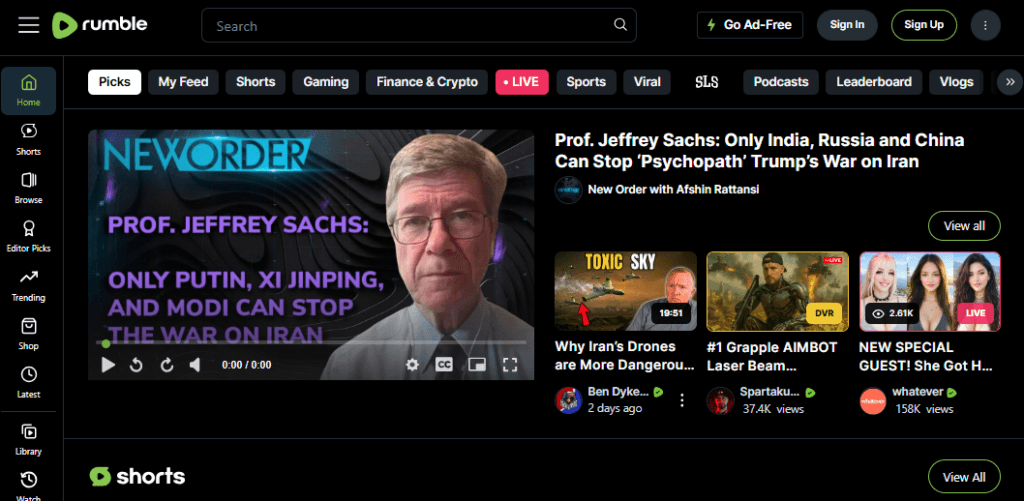
Rumble has emerged as the fastest-growing alternative to YouTube for creators who prioritize free expression and fair monetization. Unlike YouTube’s complex partner thresholds, Rumble offers instant monetization after uploading just one licensed video.
Key Features:
- 60/40 revenue split in favor of creators (higher than YouTube’s 55%)
- Licensing and syndication deals with media partners like Yahoo and MSN
- Viral video bonuses ranging from $1,000 to $100,000 for high-performing content
- Live streaming capabilities
- Cross-platform embedding via the Rumble Player
Monetization Options:
- Ad revenue sharing (estimated $2–$10 per 1,000 views, depending on niche)
- Exclusive/non-exclusive licensing deals
- Creator Program offering up to 90% revenue share for top streamers
Pros:
- Instant monetization — no subscriber threshold
- Higher revenue share than YouTube
- Minimal censorship for news, political, and commentary content
- Strong audience for conservative, independent, and political content
Cons:
- Smaller overall audience than YouTube
- Exclusive licensing limits cross-posting to YouTube
- Less diverse content discovery outside news/political niches
Pricing: Free to join. Revenue-based earnings — no upfront subscription needed.
Who Should Use It: Independent creators, journalists, political commentators, and anyone who has been demonetized or restricted on YouTube.
2. Vimeo
Best for Professionals, Agencies & Businesses
Vimeo has evolved far beyond a simple video hosting platform. In 2025, it launched Vimeo Streaming — a Netflix-style white-label subscription platform that already helps creators earn $429 million per month.
Key Features:
- Ad-free video hosting with customizable player
- Pay-per-view and subscription monetization tools
- White-label branded streaming apps (iOS, Android, web)
- Advanced analytics and piracy protection
- AI-powered translations for global reach
Monetization Options:
- Subscription channels (monthly/annual memberships)
- Pay-per-view video sales
- Tiered membership with exclusive content access
- Lead generation for B2B use cases
Pros:
- Completely ad-free — premium viewer experience
- Full brand control and white-label options
- Supports pay-per-view and subscription models
- Professional-grade privacy and embed controls
Cons:
- Paid plans required for serious use (free plan is very limited)
- No built-in organic discovery like YouTube
- Higher cost for advanced features
Pricing: Free (limited), Starter at ~$12/month, Standard at ~$20/month, Advanced plans available.
Who Should Use It: Filmmakers, agencies, coaches, course creators, fitness studios, and businesses wanting a branded video experience without ads.
3. Odysee
Best for Decentralized & Crypto-Rewarded Creators
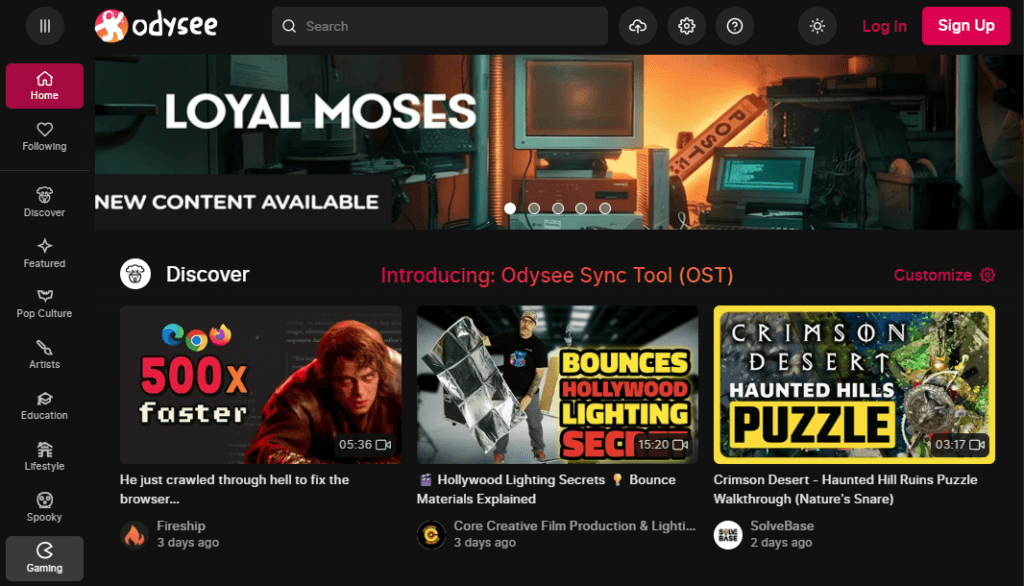
Odysee is built on the LBRY blockchain protocol, meaning your channel effectively lives in a cryptocurrency wallet — no central authority can delete it. It positions itself as a true successor to YouTube, not just an alternative.
Key Features:
- Blockchain-based content storage — censorship-resistant by design
- Cryptocurrency tipping and monetization via LBRY Credits (LBC)
- Peer-to-peer content distribution network
- Familiar YouTube-like interface for easy adoption
Monetization Options:
- LBC cryptocurrency tips from viewers
- Paid channel memberships and subscriptions
- Video sales (pay-to-watch gating)
- Boosting your content via LBC staking for better discovery
Pros:
- True content ownership — stored on blockchain
- Earn cryptocurrency directly from your audience
- Minimal censorship, strong free speech stance
- Free to use with no subscriber thresholds
Cons:
- Smaller audience than mainstream platforms
- Crypto earnings can be volatile in value
- Less polished discovery algorithm
Pricing: Free.
Who Should Use It: Independent creators, privacy advocates, political commentators, and anyone interested in crypto-based creator economies.
4. Dailymotion
Best for International Reach & General Content

Dailymotion is one of the oldest YouTube alternatives, now owned by Vivendi and serving a massive international audience. It’s particularly strong in Europe and the Middle East, making it valuable for creators targeting non-English audiences.
Key Features:
- Supports videos up to 4GB and 60 minutes in length
- Embeddable player with monetization
- Multi-language content discovery
- Partner program for monetization
Monetization Options:
- Ad revenue sharing via the Dailymotion Partner Program
- Embeddable player ad revenue on external sites
Pros:
- Strong international audience (especially Europe, MENA)
- Supports long-form content
- Established platform with decades of history
Cons:
- Smaller overall audience than YouTube
- Limited creator tools compared to modern platforms
- Ad revenue CPMs are lower than those of YouTube
Pricing: Free.
Who Should Use It: Creators targeting international or non-English speaking audiences, media publishers, and news outlets.
5. Twitch
Best for Live Streaming & Gaming Communities
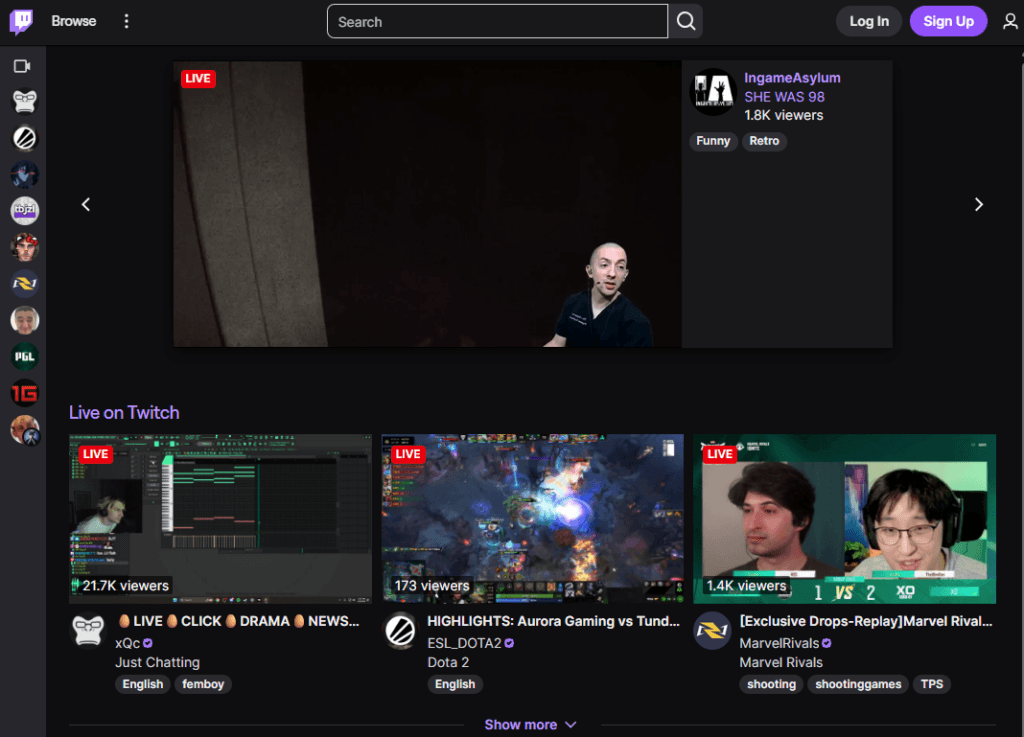
Twitch remains the undisputed home for live gaming content, with a passionate community built around real-time interaction. Unlike older posts suggest, Twitch does allow VOD (Video on Demand) uploads of past streams, making it a hybrid live + archive platform.
Key Features:
- Industry-leading live streaming infrastructure
- VOD archives of past streams (stored for 14–60 days depending on account type)
- Channel Points, Raids, Hype Trains — unique community interaction tools
- Clip system for shareable highlight moments
Monetization Options:
- Subscriptions ($4.99, $9.99, $24.99/month tiers)
- Bits (virtual currency cheers from viewers)
- Ad revenue sharing for Affiliates and Partners
- Brand sponsorships
Pros:
- Massive built-in gaming audience
- Real-time community interaction
- Strong subscription and tipping culture
Cons:
- 50/50 revenue split (worse than Kick’s 95/5)
- Discovery outside your niche is difficult
- VODs expire — not ideal for evergreen content
Pricing: Free to stream. Affiliate and Partner programs unlock monetization.
Start with Twitch Now
Who Should Use It: Gaming streamers, esports creators, IRL streamers, and communities built around live interaction.
6. Kick
Best for Gamers Wanting Better Revenue Splits
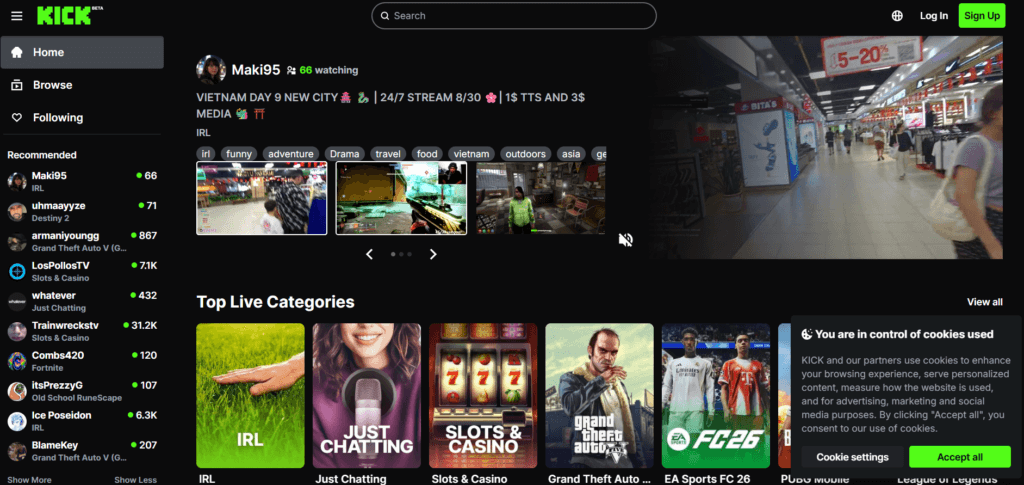
Kick burst onto the scene with a revolutionary 95/5 revenue split — meaning creators keep $4.75 of every $5 subscription. Backed by Trainwreck and with major creator migrations from Twitch, Kick saw a 1,500% viewership growth in 2023 and has continued to scale.
Key Features:
- Industry-best 95/5 subscription revenue split
- Live streaming with clip creation
- Low-latency streaming
- Less restrictive content moderation than Twitch
Monetization Options:
- Subscriptions (95% to creator)
- Channel gifting and donations
- Ad revenue
- Brand deals
Pros:
- Best revenue split of any major live streaming platform
- More relaxed content policies than Twitch
- Fast-growing audience and creator base
Cons:
- Smaller audience than Twitch
- Still building its discovery and clip ecosystem
- Content moderation concerns in some categories
Pricing: Free.
Who Should Use It: Gaming streamers frustrated with Twitch’s 50/50 split who want to maximize subscription income.
7. TikTok
Best for Short-Form Viral Content
In 2026, TikTok is the #1 short-form video platform globally, fundamentally reshaping how audiences discover content. Its algorithm is uniquely powerful — even accounts with zero followers can go viral with the right video.
Key Features:
- Algorithm-driven discovery (For You Page) independent of follower count
- Videos up to 10 minutes; short clips from 15 seconds
- TikTok LIVE for real-time streaming
- Robust editing tools built into the app
Monetization Options:
- TikTok Creator Fund and Creativity Program (RPM-based)
- LIVE gifting
- TikTok Shop (direct product sales)
- Brand partnerships and sponsored content
Pros:
- Unmatched organic discovery potential
- Enormous global user base, especially the 18–34 demographic
- Multiple monetization streams, including e-commerce
Cons:
- Creator Fund RPM is notably lower than YouTube AdSense
- Ongoing regulatory scrutiny in some countries
- Short-form format not suitable for all content types
Pricing: Free.
Who Should Use It: Lifestyle creators, entertainers, educators, brands targeting younger audiences, and anyone who thrives in short-form storytelling.
8. Wistia
Best for B2B Marketers & Businesses

Wistia is not a public video platform — it’s a professional video hosting solution built specifically for business marketing. It eliminates the competitive video recommendations that YouTube shows on your embedded videos, keeping viewers focused on your brand.
Key Features:
- Branded video player (no YouTube branding or competitor ads)
- Email capture gates — collect leads directly from videos
- Heat maps and viewer engagement analytics
- A/B testing for video thumbnails and CTAs
- HubSpot, Marketo, and Salesforce integrations
Monetization Options:
- Lead generation via email capture forms
- Sales pipeline acceleration through CRM integrations
- Subscription channels for gated content
Pros:
- Zero competitor ads or distracting recommendations
- Best-in-class analytics for business video
- Seamless CRM integration for lead tracking
Cons:
- Not a discovery platform — no organic audience
- Paid plans can be expensive for small teams
- Not suitable for entertainment or personal creators
Pricing: Free (3 videos), Pro starts at ~$19/month, Advanced plans available.
Who Should Use It: SaaS companies, digital marketing agencies, B2B brands, course creators, and businesses using video for sales and lead generation.
9. Nebula
Best for Premium Educational Creators
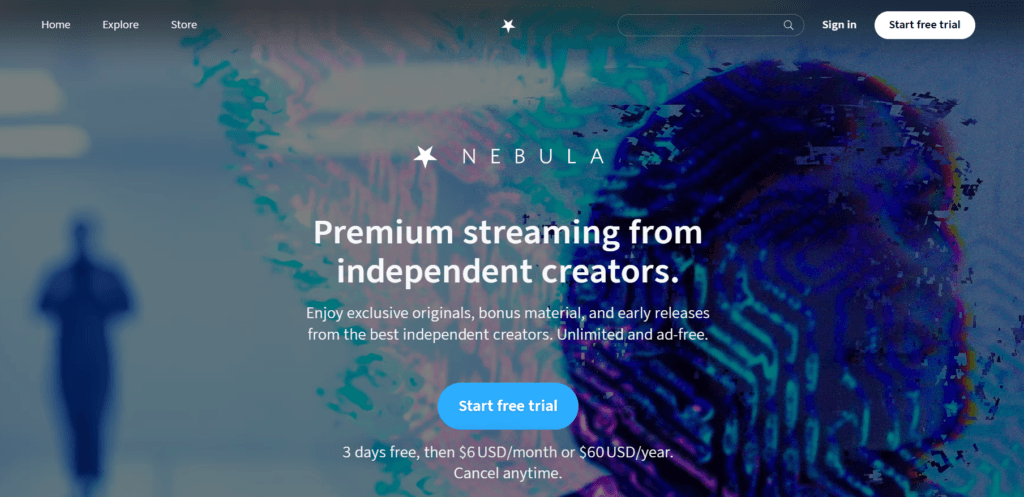
Nebula is a creator-owned streaming service launched in 2019 by the Standard Broadcast agency, built specifically for educational and thoughtful creators who want an alternative to YouTube’s algorithm. It has grown to over 680,000 paying subscribers and a valuation exceeding $150 million.
Key Features:
- Ad-free viewing experience
- Exclusive original content from 375+ curated creators
- Creators earn a share of subscription revenue
- Bonus and extended content (“Nebula Originals”) beyond what’s on YouTube
Monetization Options:
- Revenue share from Nebula’s subscription base
- Creator-owned content with full rights retention
Pros:
- Completely ad-free — premium content experience
- Creator-owned and operated platform
- Attracts a highly engaged, educated audience
Cons:
- Invite/application-only for new creators (curated)
- No free plan for viewers
- Smaller reach than YouTube — supplement, not replacement
Pricing: ~$5/month for viewers. Free for accepted creators.
Who Should Use It: Educational YouTubers, video essayists, documentary makers, and creators building a loyal premium audience.
10. PeerTube
Best for Privacy & Decentralized Hosting
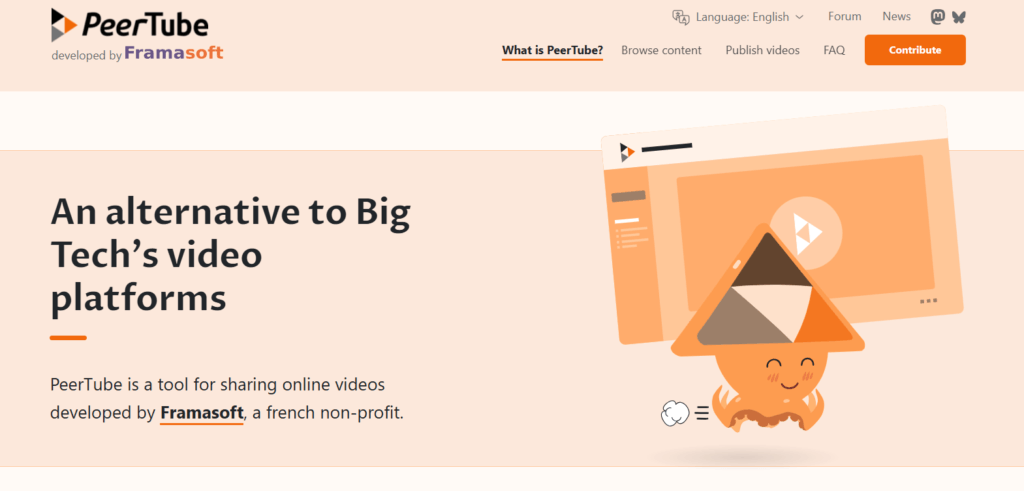
PeerTube is an open-source, federated video hosting platform — meaning anyone can host their own instance (server), and all instances connect through the Fediverse (the same network as Mastodon). There’s no central company controlling your content.
Key Features:
- Self-hosted or join an existing instance
- Federation with other PeerTube servers for wider reach
- No advertising by default
- Full source code available (open-source)
Monetization Options:
- Integration with Liberapay or Patreon for donations
- Instance administrators can set up their own monetization rules
Pros:
- Maximum privacy — no data tracking by default
- True ownership and censorship resistance
- Free and open-source
Cons:
- Requires technical knowledge to self-host
- Very small audience compared to mainstream platforms
- No built-in monetization system
Pricing: Free (open-source).
Who Should Use It: Developers, privacy advocates, open-source communities, and creators who want complete control over their video infrastructure.
11. BiliBili
Best for Asian & Multilingual Audiences
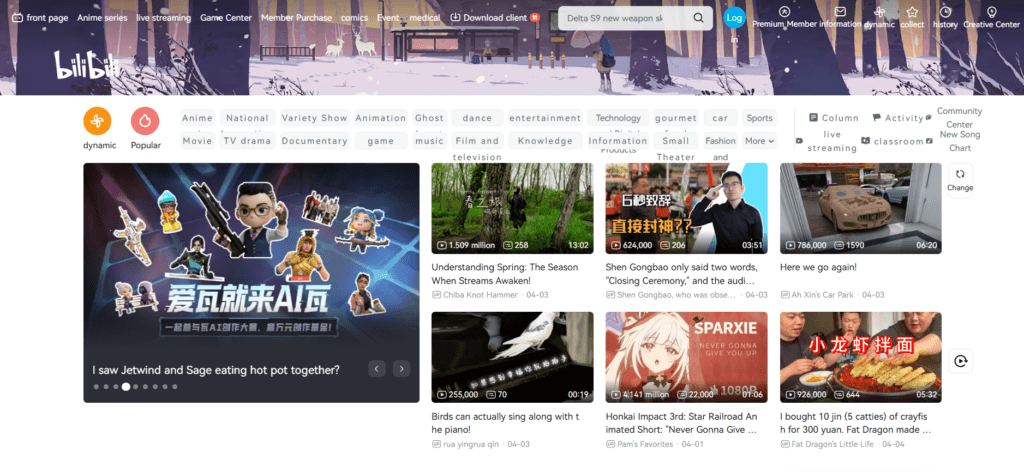
BiliBili is China’s premier video platform — the equivalent of YouTube for a generation of Chinese internet users. With 389 million monthly visits to bilibili.com alone and a growing international presence through bilibili.TV represents a massive untapped audience for global creators.
Key Features:
- Danmaku (rolling on-screen comments) — a unique interactive feature
- Strong communities in anime, gaming, technology, and lifestyle
- BiliBili International (bilibili.tv) for non-Chinese audiences
- Trending globally with 75+ million visits to bilibili.tv
Monetization Options:
- Creator monetization via the Charge (paid membership) feature
- Virtual gifting during live streams
- Brand partnership opportunities in the Asian market
Pros:
- Enormous, highly engaged audience (especially 18–35 demographic)
- Unique interactive video format (Danmaku)
- Gateway to the Chinese and Asian markets for international brands
Cons:
- The platform is primarily Chinese-language
- Content moderation follows Chinese regulations
- Monetization for international creators is more complex
Pricing: Free.
Who Should Use It: Anime creators, gaming content creators, tech reviewers, and brands targeting Asian audiences.
12. Instagram Reels
Best for Short-Form & Influencer Growth
Instagram Reels replaced IGTV (discontinued by Meta in 2022) and has become one of the most powerful short-form video formats for influencer growth and brand awareness. The Reels algorithm actively pushes content to non-followers, making discovery organic and fast.
Key Features:
- Up to 90-second short-form video format
- Reels algorithm pushes to non-followers for organic discovery
- Music, effects, and editing tools built in
- Seamless integration with Instagram Stories and Feed
Monetization Options:
- Brand partnerships and sponsored posts
- Instagram Subscriptions (paid fan memberships)
- Shopping tags for product sales
- Reels Play Bonus (invite-only program in select markets)
Pros:
- Massive existing Instagram audience
- Strong discovery for new creators
- Best-in-class influencer marketing ecosystem
Cons:
- Algorithm changes can dramatically impact reach
- Direct ad revenue sharing is limited vs. YouTube
- Content format constrained to short-form
Pricing: Free.
Who Should Use It: Lifestyle creators, fashion, beauty, food, fitness, and any creator building an influencer brand on social media.
13. LinkedIn Video
Best for B2B Thought Leadership
LinkedIn Video has quietly become one of the most valuable content formats for B2B creators in 2026. Videos on LinkedIn get 5x more engagement than other content types, and the professional audience intent makes it uniquely valuable for consultants, agencies, and SaaS brands.
Key Features:
- Native video upload (up to 10 minutes)
- LinkedIn Live for real-time broadcasting
- Professional audience targeting through industry, role, and company filters
- High-visibility in LinkedIn’s algorithm for video content
Monetization Options:
- Lead generation via LinkedIn Sales Navigator
- Consulting and service inquiries directly from video views
- Sponsored content partnerships
Pros:
- High-intent professional audience
- Strong organic reach for video content
- Ideal for establishing thought leadership and personal brand
Cons:
- Not a general-purpose video platform
- Direct monetization (ad revenue) is not available
- Less suited for entertainment content
Pricing: Free (LinkedIn Premium starts at ~$40/month for enhanced features).
Who Should Use It: Consultants, agency owners, SaaS founders, HR professionals, and B2B marketers building authority in their industry.
14. Facebook Watch
Best for Leveraging Existing Social Audiences
Facebook Watch allows creators and publishers to upload and monetize video content through Facebook’s vast social graph. While its standalone video discovery has limitations, it excels as a distribution channel for creators who already have an active Facebook following.
Key Features:
- In-Stream Ads for video monetization
- Facebook Live integration
- Cross-posting with Instagram
- Stars (virtual tipping) during live streams
Monetization Options:
- In-Stream Ads (requires 10,000 followers + 600,000 total minutes viewed)
- Fan Subscriptions
- Stars during live broadcasts
Pros:
- Huge existing user base (3+ billion users)
- Strong social sharing and virality potential
- Cross-platform integration with Instagram
Cons:
- Video reach has declined significantly without paid promotion
- High monetization thresholds for In-Stream Ads
- The aging demographic compared to TikTok and YouTube
Pricing: Free.
Who Should Use It: Creators and brands with an existing Facebook audience, news publishers, and anyone cross-posting from Instagram.
15. Brightcove
Best for Enterprise Video Management

Brightcove is the gold standard for enterprise video hosting — used by major media companies, broadcasters, and Fortune 500 brands. It’s not a public video platform; it’s a powerful B2B infrastructure tool for organizations that need full control over video delivery at scale.
Key Features:
- Cloud-based video hosting with CDN delivery
- Advanced API for custom integrations
- Live streaming, OTT delivery, and VOD management
- Detailed analytics and audience insights
- DRM (Digital Rights Management) and security controls
Monetization Options:
- SSAI (Server-Side Ad Insertion) for seamless ad experiences
- Subscription and PPV integration for OTT channels
- Custom monetization via API
Pros:
- Enterprise-grade reliability and security
- Full API customization
- Supports any monetization model at scale
Cons:
- Expensive — not suitable for individual creators
- Requires technical integration and setup
- No built-in audience or discovery
Pricing: Custom enterprise pricing (typically $500–$2,000+/month).
Who Should Use It: Media companies, broadcasters, e-learning platforms, and enterprises needing professional video infrastructure.
16. DTube
Best for Crypto-Rewarded Uploads
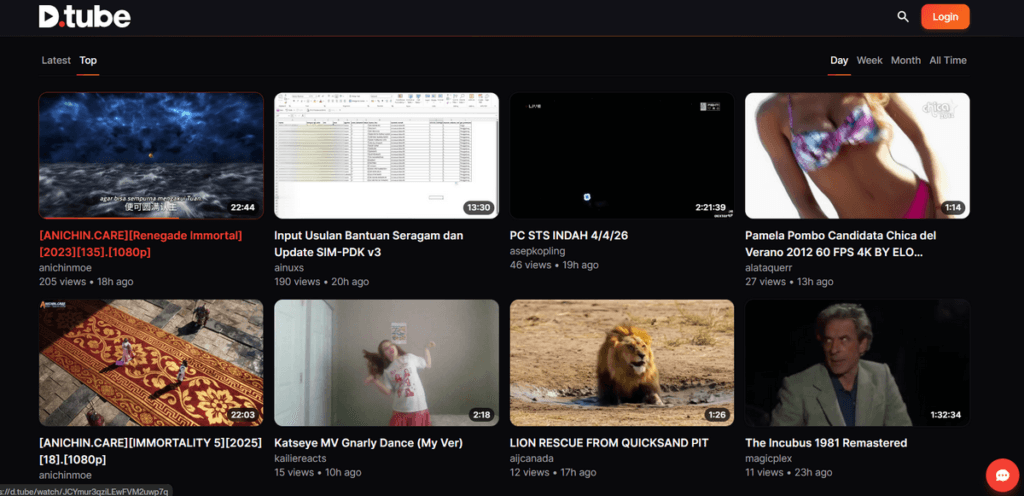
DTube is a decentralized video platform running on the Hive blockchain (formerly Steem). Every upvote on your video earns you cryptocurrency, creating a unique attention-economy monetization model where community engagement directly equals earnings.
Key Features:
- Hive blockchain-based content storage
- Upvote-based earnings in HIVE tokens
- No central moderation
- IPFS (InterPlanetary File System) for distributed storage
Monetization Options:
- HIVE cryptocurrency from video upvotes
- Staking and delegation opportunities
Pros:
- Truly decentralized — no central censorship
- Earn crypto directly from community engagement
- Free to use
Cons:
- Very small active user base
- Crypto earnings depend on market conditions
- Slow content delivery compared to mainstream platforms
Pricing: Free.
Who Should Use It: Crypto enthusiasts, Web3 creators, and privacy advocates wanting maximum decentralization.
17. Veoh
Best for Long-Form Content (Movies & Series)
Veoh is one of the few platforms that supports very long-form content without restrictions on video length — making it a natural home for independent filmmakers, full TV episodes, and documentary-style content that exceeds YouTube’s standard limits.
Key Features:
- Unlimited video length and file size
- Supports HD video uploads
- No strict content length limits
Monetization Options:
- Ad-supported viewing
- Limited partnership opportunities
Pros:
- Ideal for long-form content creators
- No file size restrictions
- Simple upload process
Cons:
- Small and aging audience
- Limited modern creator tools
- Monetization options are basic
Pricing: Free.
Who Should Use It: Independent filmmakers, documentarians, and content creators with long-form video that doesn’t fit YouTube’s format restrictions.
18. VEVO
Best for Official Music Videos
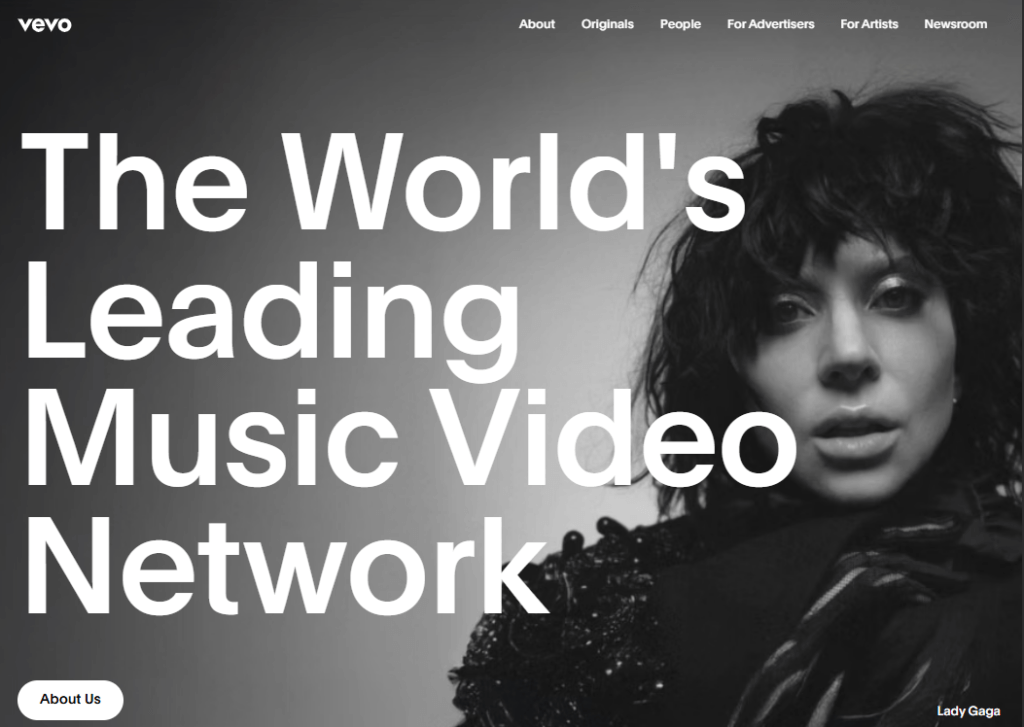
Overview: VEVO is the premium music video platform owned by the music industry’s major labels (Universal Music Group, Sony Music). It’s not a general creator platform — it exclusively hosts official music content — but it’s the world’s leading destination for music video consumption.
Key Features:
- Official music video hosting for major and independent labels
- High-quality HD and 4K content standards
- Distribution across YouTube, Roku, Apple TV, and smart TVs
- VEVO curated playlists and charts
Monetization Options:
- Ad revenue sharing (managed through label partnerships)
- Licensing revenue from platform distribution
Pros:
- Premium branding for official artists
- Multi-platform distribution built in
- VEVO certification carries credibility for music acts
Cons:
- Requires a label or distributor relationship
- Not open to independent creators without a label deal
- Extremely niche — music content only
Pricing: Requires label/distributor partnership.
Who Should Use It: Signed musicians, independent artists with a music distributor, and record labels managing official video catalogs.
19. Flickr Video
Best for Photography Communities & Short Clips

While primarily known as a photo-sharing platform, Flickr supports short video uploads (up to 3 minutes) and serves a dedicated community of photographers and visual artists. It’s a niche choice for creators whose primary audience is the photography world.
Key Features:
- Video uploads up to 3 minutes for Pro accounts
- Strong photography-focused community
- Organizing content in albums and galleries
- Moderate to strong privacy controls
Monetization Options:
- Minimal — Flickr is not a monetization platform
- Driving traffic to external portfolios or products
Pros:
- Tight-knit, engaged visual arts community
- Excellent for building a photography + video portfolio
- Strong privacy and organizational tools
Cons:
- Very short video length limit (3 minutes)
- No direct monetization system
- Small audience outside photography circles
Pricing: Free (limited), Flickr Pro at ~$7.99/month.
Who Should Use It: Photographers, videographers, and visual artists who want to share short video work within a professional photography community.
20. Internet Archive
Best for Educational & Public Domain Content
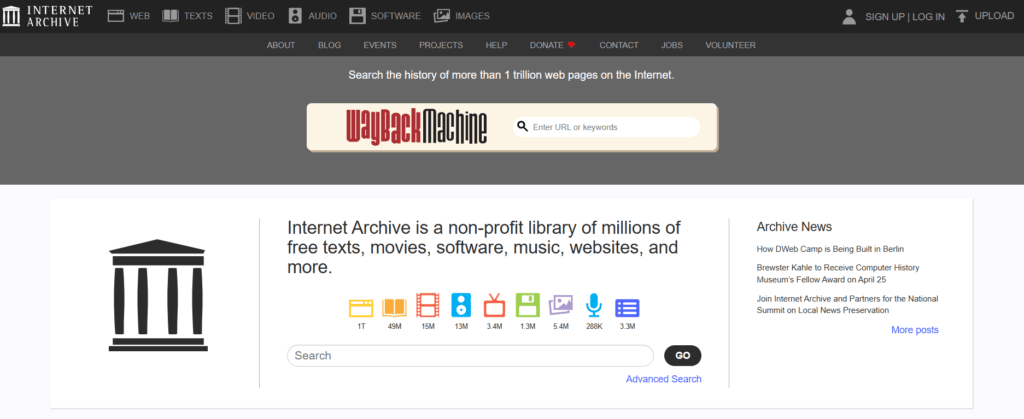
The Internet Archive (archive.org) is a non-profit digital library that hosts millions of free movies, documentaries, historical footage, and public domain video content. It’s not a social video platform, but it’s an invaluable resource for educators, researchers, and archivists.
Key Features:
- Free unlimited upload and storage
- Permanent archiving — content stays online indefinitely
- Public domain and Creative Commons licensing options
- Wayback Machine integration for historical preservation
Monetization Options:
- None — the Archive is a non-profit public resource
Pros:
- Completely free with unlimited storage
- Permanent archival — content is never taken down
- Ideal for preserving educational and historical content
Cons:
- Zero monetization
- No audience or discovery features
- Not suitable for commercial content
Pricing: Free.
Start with Internet Archive Now
Who Should Use It: Educators, researchers, historians, documentary filmmakers, and non-profit organizations archiving important content.
YouTube Alternatives by Use Case
Finding the right platform starts with knowing your content type and audience. Here’s a quick reference:
- Best for Gamers: Twitch (community), Kick (revenue split)
- Best for Business & B2B: Wistia (lead gen), Vimeo (branding), LinkedIn Video (thought leadership), Brightcove (enterprise)
- Best for Music: VEVO (official music videos)
- Best for Free Speech / Independent Creators: Rumble, Odysee, PeerTube, DTube
- Best Platforms That Pay Creators: Rumble (60/40 split), Kick (95/5 split), Odysee (crypto rewards), Nebula (subscription share)
- Best for Short-Form Content: TikTok, Instagram Reels
- Best for International Audiences: Dailymotion (Europe/MENA), BiliBili (Asia)
- Best for Education: Nebula, Internet Archive, PeerTube
How to Choose the Right YouTube Alternative
With 20 platforms to choose from, the decision comes down to five key factors:
- Define your niche and content type — Gaming, education, business, music, and short-form all have natural platform homes. Don’t fight the format.
- Check the monetization model — Are you optimizing for ad revenue (Rumble, Kick), subscriptions (Nebula, Vimeo), crypto (Odysee, DTube), or lead generation (Wistia)?
- Evaluate audience size and demographics — A smaller platform with your exact target audience beats a massive platform where you’re invisible.
- Consider censorship and copyright policies — If you’ve faced strikes on YouTube, platforms like Rumble and Odysee offer significantly more leniency.
- Test embed and analytics capabilities — For business use, you need a player you can embed on your site with proper analytics — Vimeo and Wistia excel here.
Can Any Platform Replace YouTube in 2026?
Honestly? Not yet. YouTube’s dominance is built on three near-unassailable advantages: the largest video catalog in the world, deep Google integration for search discovery, and 2+ billion monthly logged-in users. No single alternative platform comes close to matching all three simultaneously.
That said, YouTube’s grip on creators is weakening. Rumble’s instant monetization, Kick’s 95/5 revenue split, and Odysee’s censorship-resistant blockchain infrastructure are all genuine competitive advantages in specific niches. The smarter play in 2026 is not to replace YouTube — it’s to diversify away from dependence on it.
The winning strategy for creators in 2026 is a multi-platform approach: upload to YouTube for search discovery and ad revenue, cross-post to Rumble or Odysee for monetization diversification, repurpose into short-form for TikTok and Instagram Reels, and use Wistia or Vimeo for any business-facing content. This protects your income from a single algorithm change or demonetization event and builds resilient, platform-independent audiences.
Frequently Asked Questions on Best Alternatives for YouTube 2026
What is the best YouTube alternative in 2026?
The best overall YouTube alternative depends on your goal. For monetization, Rumble (60/40 revenue split) and Kick (95/5 split) lead the pack. For professionals and businesses, Vimeo and Wistia are top choices. For free speech and decentralization, Rumble and Odysee dominate.
Which YouTube alternative pays creators the most?
Kick offers the highest revenue split at 95/5 on subscriptions, making it the best-paying platform for live streamers. For on-demand content, Rumble’s Creator Program can reach up to 90% revenue share for qualifying creators.
Is Rumble a good alternative to YouTube?
Yes — especially for news, political, and independent content creators. Rumble offers instant monetization with no subscriber threshold, a 60/40 revenue split favoring creators, and significantly less content censorship than YouTube.
What is the best ad-free YouTube alternative?
Vimeo (for professionals and business), Nebula (for premium educational content), and Internet Archive (for public domain content) all offer completely ad-free video experiences.
What platform is growing fastest as a YouTube competitor?
Rumble continues to grow rapidly for independent content, while Kick saw 1,500% viewership growth driven by its superior revenue model. TikTok remains the #1 fastest-growing video platform globally for short-form content.
Is Vimeo free to use?
Vimeo offers a limited free plan, but serious use requires a paid plan starting at around $12/month. For business-grade features, including subscription channels and branded apps, advanced plans are needed.
What replaced IGTV?
Instagram Reels replaced IGTV after Meta discontinued the dedicated IGTV format in 2022. Reels now serves as Instagram’s primary short-form video feature with superior algorithm-driven discovery.
Can I earn money on Odysee?
Yes — creators earn LBRY Credits (LBC) cryptocurrency through viewer tips, paid subscriptions, and video sales on Odysee. Earnings depend on your audience engagement and the current value of LBC.
What is the best YouTube alternative for kids?
Dailymotion (with appropriate content filters), Vimeo (for educational content), and Facebook Watch (with parental controls) are the safest mainstream alternatives for family-friendly content creators.
Which YouTube alternative has the least censorship?
Odysee and Rumble have the most permissive content policies among major platforms, owing to their decentralized infrastructure and free-speech positioning, respectively. PeerTube offers near-total censorship resistance as a self-hosted option.
Final words on Best YouTube Alternatives 2026
In 2026, the smartest video creators aren’t choosing between YouTube and its alternatives — they’re using multiple platforms simultaneously to protect their income, reach new audiences, and take advantage of better monetization terms.
Whether you’re a gamer who deserves more than a 50/50 revenue split, a business marketer who needs ad-free branded video, or an independent creator tired of overnight demonetization, there’s a platform on this list built specifically for you.
The era of YouTube as a monopoly is over. The era of the multi-platform creator strategy has begun.
Which platform are you planning to try first? Drop your answer in the comments below — and if you’re already using any of these YouTube alternatives, share your experience!

This Video Marketing Tips ! Are great .. Thank you for sharing ..
Is Vimeo paying to content creators?
No Siva. Vimeo is not paying anything. But you can use these services to sell your video courses. It has lots of security features than YouTube.