
Search engines are the gateways to information, products, and services. Every time someone types a query into Google, Bing, or other search engines, they rely on sophisticated systems. These systems deliver the most relevant and useful answers.
For businesses, bloggers, and creators, mastering search engine optimization (SEO) is the key to being discovered online. SEO plays a crucial role in search engine marketing. This includes both SEO and paid advertising strategies. These strategies aim to maximize online visibility. SEO is also a core component of search engine marketing. It involves both SEO and paid advertising strategies. The goal is to maximize online visibility.
Before diving into the techniques, it’s important to understand a few key terms. These terms will help you grasp essential SEO concepts.
Search engines use search engine crawlers (also called spiders or bots) that scan billions of web pages. These crawlers analyze website content, links, and technical aspects, storing information in massive indexes.
When a user searches, search engine algorithms rank and display the most relevant search results. These are the listings that appear on the search engine results pages (SERPs).
This guide will also touch on more technical aspects of SEO, such as website structure and crawlability. Mobile-friendliness is essential for SEO. Google uses mobile-first indexing. This means the mobile version of a site is prioritized when determining rankings.
The ultimate goal of Search engine optimization is to enhance the visibility of your website pages. As a result, they appear higher in organic search results. Unlike paid ads, this visibility is earned through strategy and consistency.
In this guide, we’ll explore the SEO fundamentals, from on-page SEO and technical SEO to off-page SEO and local SEO. Whether you are a complete beginner, this beginner’s guide will help you build a foundation for successful SEO. If you want to polish your SEO knowledge, it will assist you as well.
Search Engine Optimization for Beginners Guide 2025
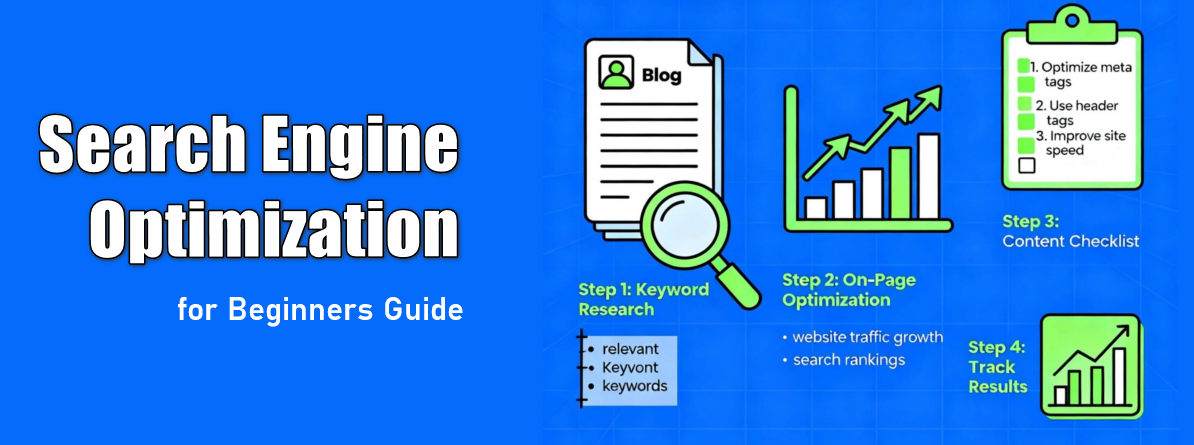
Search engine optimization (SEO) is the process of improving the visibility of website pages in search engine results pages (SERPs).
For beginners, SEO may seem complex. However, understanding the basics is essential. Doing so helps drive organic search traffic.
It also improves user experience. Ultimately, it leads to achieving long-term SEO success.
Importance of SEO for Beginners
- SEO helps rank websites higher in search engine results, making it easier for users to discover your content.
- Effective SEO ensures that your website pages meet user intent and provide relevant content for your audience.
- A strong SEO foundation supports all digital marketing efforts, from content creation to local SEO, technical optimization, and off-page strategies.
- Beginners who learn SEO gain skills to analyze search traffic. They optimize on-page elements and track ranking factors. This helps them build a successful SEO strategy over time.
What You Will Learn in This Guide
In this Search Engine Optimization for Beginners guide to SEO, you will learn:
- How search engines work and how they rank relevant pages.
- The essentials of keyword research, on-page SEO, off-page SEO, and technical SEO.
- How to create website content that aligns with user intent and improves organic search results.
- Practical strategies for local SEO and using SEO tools to monitor and enhance performance.
- How to avoid common SEO mistakes and leverage emerging trends, including AI in SEO, for SEO success.
By following this guide, SEO beginners can develop the skills to optimize website pages. They can attract more search traffic. This helps build a strong foundation for ongoing SEO success.
What is Search Intent?
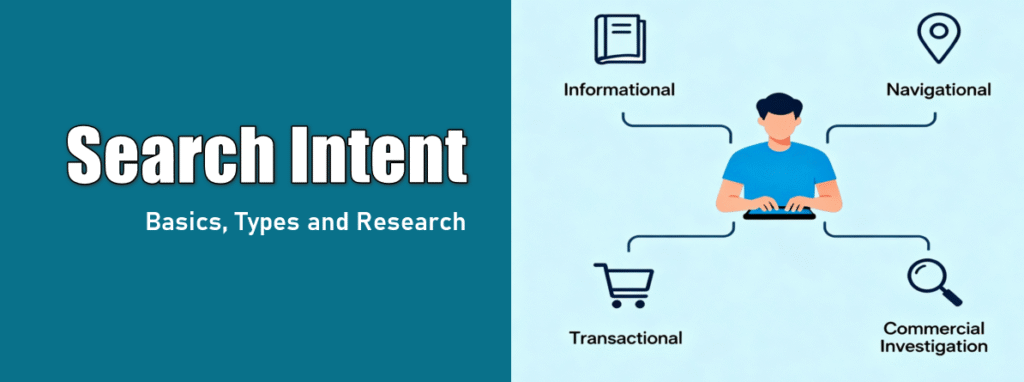
At the heart of every search query is user intent—the reason why someone is searching online. This is known as search intent, and it is a key factor in search engine optimization SEO.
Understanding search intent allows you to create relevant pages and website content. This content matches what users are really looking for. It improves both engagement and organic search results.
User engagement metrics are increasingly recognized as important ranking factors. Enhancing user engagement is key to achieving better SEO outcomes.
Types of Search Intent
- Informational Intent
- Users want to learn something or find answers.
- Example: “What is SEO?”
- For this intent, creating detailed guides, tutorials, or blog posts helps satisfy their need for knowledge.
- Navigational Intent
- Users are looking for a specific website, page, or brand.
- Example: “Google Search Console login.”
- Ensuring your website pages are optimized with clear on-page SEO elements is important. Proper URL structure also helps users reach the right page quickly.
- Transactional Intent
- Users are ready to take action, such as buying, signing up, or subscribing.
- Example: “Best SEO tools subscription.”
- For this intent, optimizing meta descriptions, title tags, and call-to-action content ensures your page converts visitors into customers or leads.
- Commercial Intent
- Commercial intent means users are searching with the goal to buy or compare products and services.
- These searches are valuable for marketers because they indicate strong interest in making a purchase.
- Content for commercial intent should focus on in-depth reviews, comparisons, and clear calls to action.
- An example of a commercial intent search is: “best wireless headphones for gym 2025”.
Why Search Intent Matters
Understanding search intent is crucial for creating good SEO and achieving SEO success:
- Content that matches user intent encourages longer visits and higher engagement.
- It reduces bounce rates and signals to search engines that your content is valuable.
- Pages aligned with search intent are more likely to rank websites higher in search engine results pages (SERPs).
Role of Keyword Research
Keyword research connects search intent with content creation. Using SEO tools like Google Search Console, Ahrefs, or SEMrush, you can analyze search volume, competition, and relevant keywords. This helps you:
- Identify opportunities for better organic search results.
- Create website content and blog posts that directly address what your audience is looking for.
- Select the right keywords to attract targeted search traffic. Long-tail keywords tend to have lower difficulty. They also have higher conversion rates. The query is more specific, making them a valuable focus for keyword research.
- You can find the profitable keywords to increase review (High CPC Keywords guide)
By understanding the way search engines interpret search intent, you can create content that meets user needs. It also improves your SEO strategy. This approach builds authority and drives measurable SEO success over time.
What is On-Page SEO?
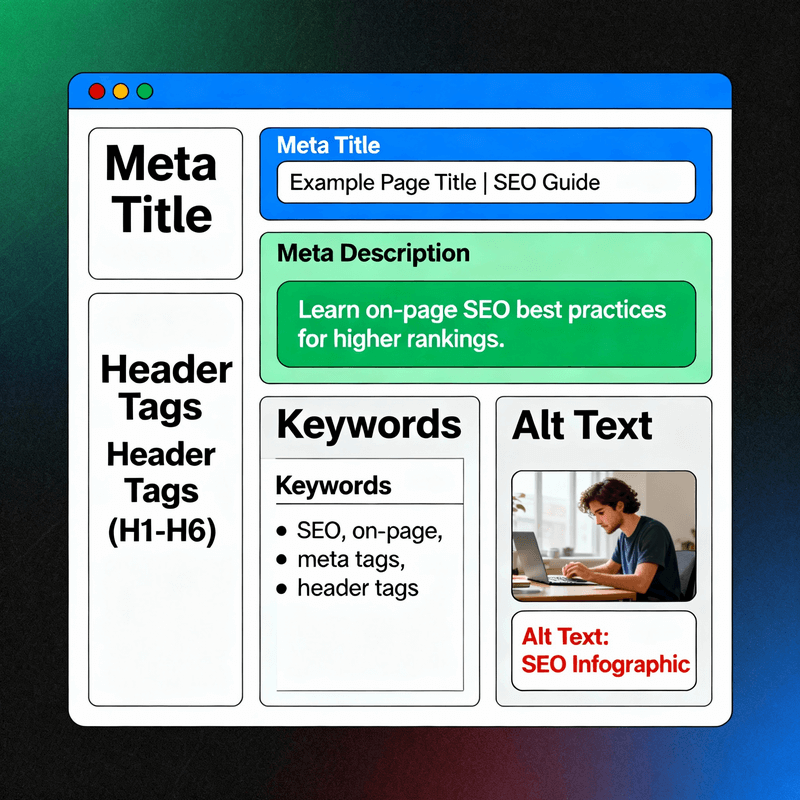
On-page SEO is the foundation of search engine optimization. It focuses on optimizing elements on your website pages that you have direct control over.
By improving on-page elements, you can make your content more visible in search engine results pages (SERPs). This will attract organic search traffic. It will also enhance overall SEO success.
Key Elements of On-Page SEO
- Title Tag
- The title tag is the clickable headline that appears in search engine results pages.
- Include your target keywords naturally while keeping it concise and compelling.
- A well-optimized title tag signals to search engines and users what the page is about, improving click-through rates.
- Meta Description
- The meta description is a brief summary of your page content displayed under the title in search results.
- Keep it under 160 characters, include relevant keywords, and make it appealing to encourage clicks.
- Although not a direct ranking factor, a strong meta description can improve organic search results by driving more traffic.
- Header Tags (H1, H2, H3)
- Header tags structure your content and improve readability for users and search engine crawlers.
- Use H1 for the main page title, H2 for sections, and H3 for subsections.
- Proper headings make it easier for search engines to understand page content and relevance for specific target keywords.
- URL Structure
- A clean, short, and keyword-rich URL structure helps search engines and users understand what a page is about.
- Use hyphens to separate words and avoid unnecessary characters.
- Logical URLs contribute to better indexing and are a part of good SEO fundamentals.
- Canonicalization helps prevent duplicate content issues. It specifies a preferred URL for content. This ensures search engines focus on the right version of a page.
- Content Optimization
- Focus on creating content that is useful, original, and answers user intent.
- Include relevant keywords naturally, but avoid keyword stuffing.
- High-quality content improves engagement, search traffic, and helps rank websites higher.
Internal Links & Navigation
- Internal links connect your website pages, guiding both users and search engine crawlers through your site.
- Linking to other pages spreads authority, improves indexing, and enhances your SEO strategy.
- A well-organized navigation and URL structure make it easier for visitors to find information. This organization helps search engines rank your content.
Media Optimization
- Images, videos, and infographics should include image alt text describing the media.
- Optimized media improves accessibility, enhances user experience, and ensures search engines understand your visuals.
- Reducing file sizes, using descriptive filenames, and including relevant keywords in media can further boost SEO success.
Why On-Page SEO Matters
Effective on-page SEO makes your website pages understandable for users. It also ensures clarity for search engines. This improves search results, increases organic search traffic, and enhances overall SEO performance.
Combined with off-page SEO and technical SEO, on-page optimization is essential for building a strong, sustainable SEO strategy. You can find more details on my On-Page SEO checklist January 2026
What is Meta Descriptions and How to Optimize it?
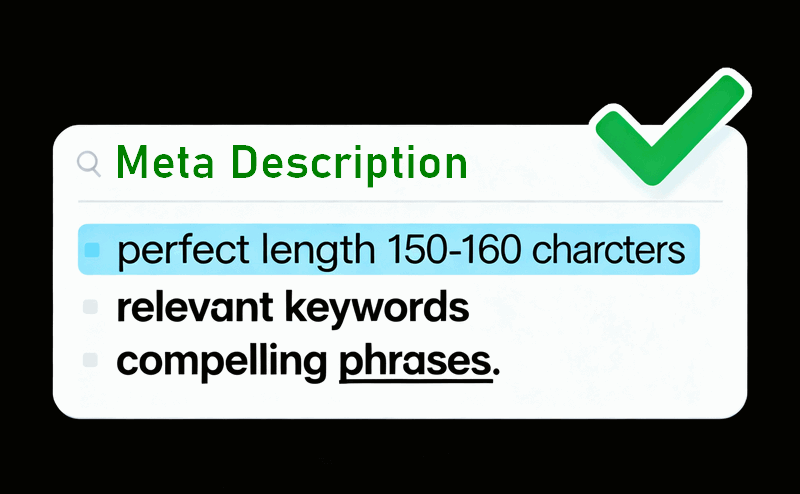
A meta description is a short piece of text. It is about 150–160 characters. This text appears under your page title in search engine results.
Think of it as a small “ad copy” for your blog post. It tells readers what the page is about. It encourages them to click. While Google sometimes rewrites descriptions, having a well-written one improves your chances of getting more visitors.
Why Meta Descriptions Matter
- They increase click-through rate (CTR). Even if your page ranks lower, a compelling description can attract more clicks. It can attract more clicks than higher-ranked pages.
- They summarize your content: Users quickly understand if your article answers their query.
- They add SEO value indirectly: A higher CTR sends a positive signal to search engines about your page’s relevance.
Tips for Writing Better Meta Descriptions
- Keep it short and clear – Aim for 150–160 characters. Longer texts may get cut off.
- Include your target keyword naturally. This approach makes it easier for Google to connect your page to their search query. Users can also find your page more easily.
- Make it reader-friendly – Write like you’re talking to the reader, not just to search engines.
- Show benefits or solutions – Tell users what they’ll learn or gain by reading your post.
- Add a call to action (CTA) – Simple phrases like “Learn more,” “Discover tips,” or “Find out how” encourage clicks.
Example of a Good Meta Description
If your article is about “Best Blogging Tips for Beginners,” create a meta description like this: “
Discover simple blogging tips for beginners. Grow your blog, improve SEO, and attract more readers in 2025. Start blogging smarter today.”
What is Off-Page SEO?
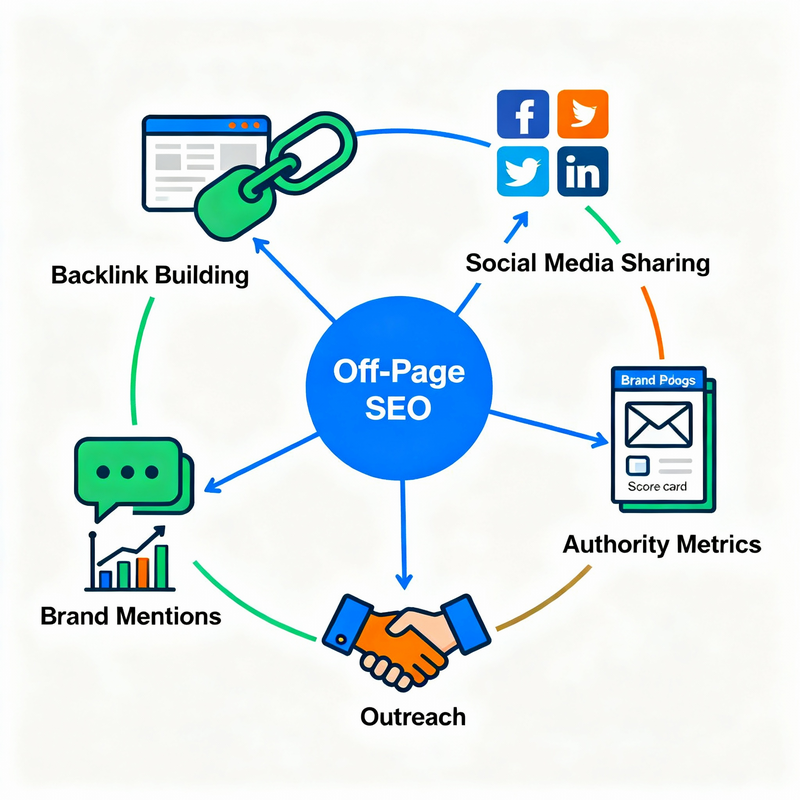
On-page SEO focuses on optimizing elements within your website pages. Off-page SEO deals with external factors that influence how search engines perceive your site. Essentially, it’s about improving your site’s authority, credibility, and trustworthiness through signals from other sources on the web.
For beginners, understanding off-page SEO is crucial for a complete SEO strategy. Even perfectly optimized pages need external validation to rank higher in search engine results pages (SERPs).
Key Features of Off-Page SEO Techniques
- Building Backlinks
- Backlinks, also called inbound links, are links from other websites pointing to your content.
- High-quality backlinks are one of the most powerful ranking factors in SEO fundamentals. They signal to search engines that your content is valuable. These links indicate that your content is trustworthy.
- Not all links are equal: links from authoritative, relevant, and reliable resources matter most. Avoid black hat SEO tactics like buying links, which can harm your site.
- Social Signals
- While social media activity doesn’t directly affect rankings, shares, likes, and mentions can boost visibility and drive organic search traffic.
- Active social engagement also increases the chances that other websites will link to your content, strengthening your SEO success.
- Brand Mentions and Reviews
- Online mentions of your brand can help search engines. Even without a direct link, they associate your website with authority in your niche.
- Positive reviews, especially for local businesses, improve trust and can impact local search rankings. Consistency in name, address, and phone number (NAP) across directories also contributes to your local SEO efforts.
- External Links from Relevant Pages
- Being referenced on relevant pages or included in resource lists enhances your website’s credibility.
- Collaborating with bloggers, industry experts, and influencers can create natural opportunities for these valuable external links.
Why Off-Page SEO Matters
Off-page SEO is not just about links; it’s about building relationships, authority, and trust in your niche. While it may take longer to see results compared to on-page SEO, it is essential for successful SEO.
A strong off-page presence signals to search engines that your website pages are authoritative and relevant. This helps you rank websites higher. It also attracts more search traffic over time.
Building Relationships with Other Websites

Good SEO isn’t just about creating content. It’s not only about building backlinks. It’s also about forming strong relationships with other websites in your niche.
These connections help your site gain authority, credibility, and visibility in search engines. This is essential for successful SEO. It’s also crucial for attracting organic search traffic.
Why Relationships Matter
Other websites may link to your web pages or reference your content. This action signals to search engines that your site is trustworthy. It also indicates that your site is valuable. This can improve your ranking factor, increase search traffic, and establish your site as a reliable resource for readers.
Key Ways to Build Relationships
- Guest Blogging
- Writing articles for other websites in your industry allows you to reach new audiences and earn inbound links naturally.
- Make sure your content is high-quality, relevant, and includes target keywords where appropriate.
- Broken Link Building
- Check relevant pages for broken or outdated links.
- Reach out to the site owners and suggest your content as a replacement. This helps them maintain their site while giving you a valuable external link.
- Resource Pages
- Many websites maintain lists of reliable resources for their audience.
- Getting your site included on these pages boosts off-page SEO. It drives search engine traffic. It also positions your website as a trusted authority.
- Influencer Collaboration
- Partner with influencers or SEO specialists in your niche to share your content or co-create resources.
- Influencer mentions can increase your site’s reach, build credibility, and improve your SEO strategy over time.
Benefits of Building Website Relationships
- Improves your off-page SEO by earning high-quality external links.
- Enhances your website’s authority and trustworthiness in your industry.
- Drives search traffic from other sites and social mentions.
- Supports a long-term SEO journey by creating sustainable connections with authoritative other websites.
Creating an SEO Strategy
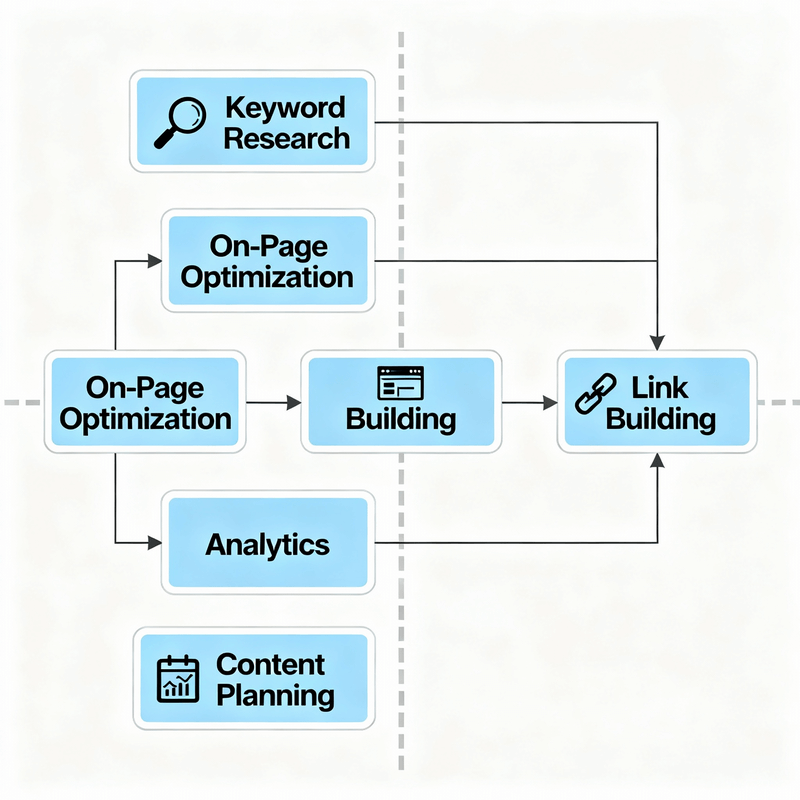
A well-planned SEO strategy is the foundation of successful SEO. It helps you organize all your efforts. These include on-page SEO, off-page SEO, technical SEO, and content creation.
As a result, your website pages can rank higher in search engine results pages (SERPs). This will attract organic search traffic consistently.
For beginners, a clear strategy ensures you don’t miss any important steps while building your online presence.
Key Elements of a Strong SEO Strategy
- Keyword Research
- Start by identifying target keywords that match your audience’s search intent.
- Use SEO tools like Google Search Console or other keyword research tools to find high-volume and relevant terms.
- Understanding search intent ensures your website content answers user questions, making your pages more likely to rank.
- On-Page SEO
- Focus on optimizing page SEO elements such as meta tags, title tags, header tags, image alt text, and internal links.
- Make sure your website content is structured, easy to read, and includes relevant keywords naturally.
- Proper URL structure and logical internal linking help search engine crawlers navigate your site and understand your content hierarchy.
- Off-Page SEO
- Build high-quality external links from relevant pages and authoritative other websites.
- Engage in strategies like guest blogging, influencer collaborations, and resource page outreach to increase your website’s authority and credibility.
- Off-page SEO strengthens your site’s reputation and helps search engines recognize your content as trustworthy.
- Technical SEO
- Ensure your site is optimized for page speed, mobile friendliness, and browser caching.
- Implement structured data to make your website pages easier for search engines to index and understand.
- Fix errors, avoid duplicate content, and maintain a secure HTTPS connection to improve SEO success.
- Using HTTPS is important because it secures visitors’ data and is a minor ranking signal.
Setting Clear SEO Goals
A good SEO strategy starts with measurable goals:
- Increase organic search traffic to your web pages.
- Improve visibility for new pages or blog posts.
- Ensure your business appears for relevant local or industry searches.
- Track ranking factors and adjust your approach based on results.
Flexibility and Adaptation
Search engines update algorithms frequently, so a strong SEO strategy must be flexible. Regularly reviewing performance through Google Search Console and other SEO tools allows you to make adjustments.
Staying informed about trends, evolving SEO fundamentals, and user behavior ensures your SEO journey continues successfully.
Understanding Ranking Factors
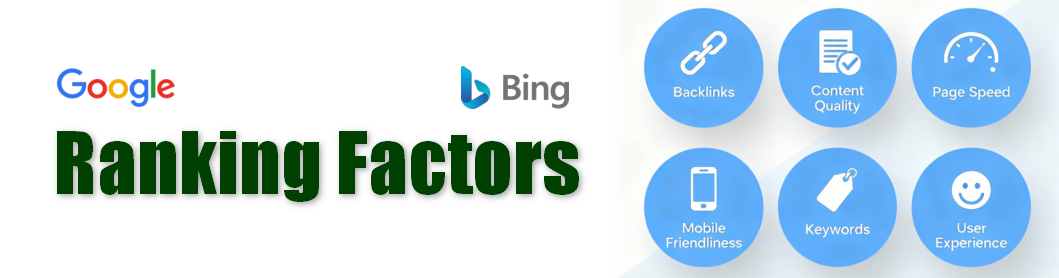
When you are starting your SEO journey, it’s important to understand the factors influencing search engine rankings. Comprehending these elements helps you know why search engines rank one page higher than another.
These elements are called ranking factors. Search engines like Google Search use them to decide which website pages appear first in search engine results pages (SERPs).
Knowing these factors helps you improve your SEO strategy, create relevant pages, and drive more organic search traffic.
Key Ranking Factors
- Content Quality
- High-quality content is the most important factor in SEO ranking.
- Content should be useful, relevant, and original, addressing the user’s search intent.
- Avoid duplicate content, and aim to provide more value than other web pages targeting the same keywords.
- Including target keywords naturally, along with related terms, helps search engines understand your page’s topic.
- The quality of content is crucial for SEO; creating content that is 10x better than competitors is a recommended strategy.
- Backlinks and Authority
- Inbound links from reliable resources and authoritative other websites signal to search engines that your content is trustworthy.
- The quantity and quality of these external links contribute significantly to your site’s overall SEO success.
- Building relationships through guest blogging, collaborations, or resource page mentions strengthens this factor.
- User Experience (UX)
- How visitors interact with your site affects rankings. Pages that are easy to navigate, fast to load, and mobile-friendly provide better UX.
- Metrics like time on page, bounce rate, and internal links structure help search engines determine if your content is helpful.
- Page speed and smooth URL structure are crucial technical SEO elements that impact user experience.
- Technical SEO Factors
- Search engines use search engine crawlers to index your website pages efficiently.
- Important technical elements include SSL encryption, structured data, browser caching, and fixing broken links.
- A technically sound website makes it easier for search engines to rank websites higher. This ensures your SEO strategy is effective.
- On-Page Optimization
- On-page SEO elements are crucial. They include title tags, meta description, header tags, and image alt text. These elements help search engines understand your page’s content.
- Proper optimization improves visibility for the right target keywords and helps your pages compete for relevant searches.
- User Intent and Relevance
- Search engines increasingly prioritize user intent. A page that perfectly matches what the user is looking for will perform better in organic search results.
- Understanding search intent and aligning your content creation accordingly ensures your web pages meet user needs.
Why Ranking Factors Matter for Beginners
Even as a beginner, knowing these ranking factors allows you to focus on the areas that really impact SEO success:
- Producing high-quality, relevant website content.
- Building off-page SEO through trustworthy external links.
- Improving technical SEO to ensure your pages are accessible and fast.
- Optimizing on-page elements to make your content clear for both users and search engine crawlers.
By understanding and applying these factors, you can create a SEO strategy. This strategy helps your site gradually rank websites higher. It also attracts consistent search traffic over time.
Improving Search Results
The ultimate goal of search engine optimization (SEO) is to improve your search results. It aims to make your website pages more visible to users in search engine results pages (SERPs).
Improving search results means not only getting your pages to rank higher. It also involves attracting the right organic search traffic that engages with your content.
For beginners, focusing on key elements can make this process more manageable.
Key Ways to Improve Search Results
- Optimize On-Page SEO Elements
- Ensure your page SEO includes optimized title tags, meta descriptions, header tags, and image alt text.
- Use target keywords naturally in your content and include relevant keywords to help search engines understand your page topic.
- Proper URL structure and internal links also help search engine crawlers navigate your site effectively.
- Create High-Quality, Relevant Content
- Website content should match the user intent behind each search query.
- Content that is useful, original, and well-structured improves engagement. It increases the likelihood of being shared or linked to by other websites. This boosts your off-page SEO.
- Updating new pages regularly keeps your site fresh and relevant for search engines.
- Build High-Quality Backlinks
- Backlinks from reliable resources and authoritative sites remain one of the most important ranking factors.
- Focus on building relationships with relevant websites through guest blogging, collaborations, and mentions in resource pages.
- This strengthens your site’s credibility and helps rank websites higher.
- Improve Technical SEO
- Factors like page speed, mobile friendliness, SSL encryption, and browser caching play a critical role in search results.
- Fixing broken links and using structured data makes it easier for search engine crawlers to index your website pages.
- Technical improvements not only help search engines but also enhance the user experience, which contributes to SEO success.
- Monitor Performance and Adjust
- Use tools like Google Search Console to track your search engine results and see which pages perform best.
- Analyze search traffic, CTR, and rankings to make informed adjustments to your SEO strategy.
- Continuous improvement ensures your content stays relevant and competitive in organic search results.
Why Improving Search Results Matters
Even with well-written content, optimized pages, and quality backlinks, results are not guaranteed overnight.
Focus on both on-page and off-page SEO. Maintain a technically sound website. Align your content with user intent. By doing so, you gradually enhance your SEO fundamentals.
Over time, these efforts lead to higher visibility, better search engine results, and more consistent organic search traffic.
Local SEO for Local Businesses

For local businesses, optimizing for local SEO is essential. It helps attract nearby customers. It also ensures appearance in search engine results pages (SERPs) for relevant local queries.
Local SEO emphasizes strategies for your business to appear. It ensures visibility when users search for products or services in a specific location. This approach increases organic search traffic. It also boosts SEO success.
This targeted approach improves your visibility in local searches. It also drives more qualified traffic to your website or physical store.
By optimizing for local SEO, businesses can connect with potential customers. This happens at the exact moment they are looking for what you offer in their area. This enhances the chances of conversion. It also helps in building lasting customer relationships.
Implementing local SEO tactics involves several steps. Optimize your Google My Business profile. Ensure consistent business information across online directories. Also, create location-specific content. These actions can significantly enhance your online presence.
Local SEO helps level the playing field for small businesses. It allows them to compete with larger companies. This is achieved by focusing on community relevance and local engagement.
For any business aiming to thrive in their local market, understanding local SEO principles is essential. Applying these principles is a critical component of a comprehensive digital marketing strategy.
Key Elements of Local SEO
- Google My Business (GMB) Optimization
- Claiming and verifying your Google My Business listing ensures your business appears on Google Search and Google Maps.
- Add accurate information such as business name, address, phone number (NAP), website URL, hours of operation, and relevant categories.
- Encourage satisfied customers to leave reviews, as online reviews are a strong ranking factor for local SEO.
- Local Keyword Research
- Identify target keywords combined with your location, like “SEO services in Mumbai” or “best coffee shop near me.”
- Use SEO tools and Google Search Console to find high search volume local terms.
- Align your website content with user intent to ensure your pages meet local search needs.
- Consistent NAP Information
- Keep your Name, Address, and Phone number consistent across all other websites, directories, and social platforms.
- Inconsistent NAP can confuse search engine crawlers and hurt your rankings.
- Local Citations and Backlinks
- Listing your business in trusted local directories and niche-specific websites helps increase authority and visibility.
- Earning inbound links from local sites or partners strengthens your off-page SEO and builds credibility for your business.
- Creating Local Content
- Develop website pages and blog posts that focus on local news, events, or case studies relevant to your area.
- Include relevant keywords and phrases that local customers are searching for.
- Adding structured data and meta tags for local content helps search engines understand and display your business more effectively.
Why Local SEO Matters
Local SEO ensures your business appears in front of customers who are ready to take action. These actions could include visiting your store, calling for services, or making a purchase.
Optimize on-page elements to improve search visibility. Build relationships with other websites. Maintain consistent NAP and target local keywords. These steps can help your business rank websites higher in local searches. They attract consistent organic search traffic.
Local SEO is essential for any SEO beginners. It is a crucial part of a complete SEO strategy. This is especially true for businesses relying on nearby customers. Even small adjustments can have a significant impact on visibility.
Updating your GMB listing is one such adjustment. Another is creating location-focused content, both of which contribute to SEO success.
Beginner’s Guide to SEO

For SEO beginners, understanding the fundamentals of search engine optimization is crucial. This knowledge is the first step toward building a website that ranks higher in search engine results pages (SERPs). It also attracts consistent organic search traffic.
A beginner’s guide to SEO focuses on practical techniques. These techniques cover on-page SEO, off-page SEO, technical SEO, and content creation. They help new users gain essential SEO knowledge. This guidance helps them start their SEO journey successfully.
Key Components for SEO Beginners
- Keyword Research
- Begin with identifying target keywords and relevant keywords that match user intent.
- Use SEO tools like Google Search Console to analyze search volume and competition for each keyword.
- Focusing on the right keywords ensures your website pages meet the needs of your audience and improves SEO success.
- On-Page SEO Basics
- Optimize on-page elements like title tags, meta description, headers, and image alt text. This helps search engines understand your content better.
- Proper URL structure, internal links, and structured data make it easier for search engine crawlers to index your web pages.
- Avoid duplicate content and ensure your page content is relevant and readable.
- Off-Page SEO for Beginners
- Build relationships with other websites to earn external links and improve your site’s credibility.
- Engage in guest blogging, mention exchanges, and collaborations with authoritative sites to strengthen your SEO strategy.
- Social signals and positive online reviews also contribute indirectly to SEO fundamentals and organic search results.
- Technical SEO Awareness
- Beginners should pay attention to page speed, mobile friendliness, browser caching, SSL encryption, and fixing broken links.
- These technical SEO aspects ensure search engines can access your website pages efficiently. They also ensure that users have a smooth browsing experience.
- Creating Useful and Relevant Content
- Focus on creating content that is helpful, informative, and matches search intent.
- Use SEO basics like target keywords naturally within your blog post or website content.
- Consistently publishing high-quality content is crucial for long-term SEO success.
Tips for SEO Beginners
- Track performance using Google Search Console and other SEO tools to monitor search results and search traffic.
- Stay updated on changes in search engine algorithms to adapt your SEO strategy.
- Focus on providing value to users first; good SEO starts with user intent and relevant, reliable content.
- Include local SEO strategies if your business appears in a specific geographic area to attract nearby customers.
Why a Beginner’s Guide Matters
A beginner’s guide to SEO helps new users understand all the methods and steps required to rank websites higher.
It equips beginners with SEO knowledge to create website pages that are optimized for both search engines and readers.
Beginners can start their SEO journey confidently by combining on-page SEO, off-page SEO, technical SEO, and content creation. They will improve organic search results. Over time, they will achieve SEO success.
SEO Tools for Every Beginner Should Know
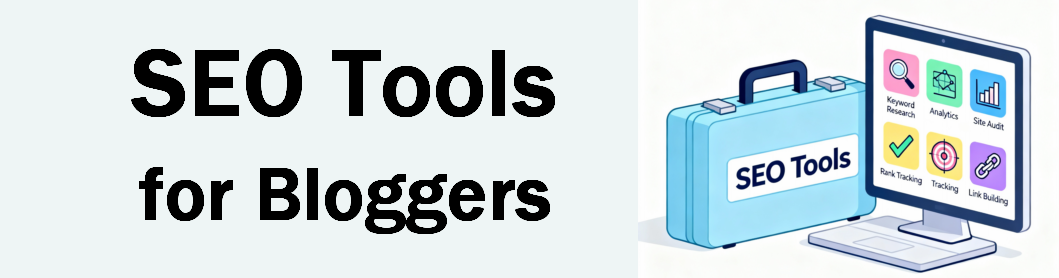
For SEO beginners, using the right SEO tools is essential to create a structured, effective, and measurable SEO strategy.
The right tools help analyze search traffic, monitor search engine results, optimize website pages, and improve overall organic search results.
When beginners understand and apply these tools, they can build a foundation for SEO success. They can gradually advance in their SEO journey.
Key SEO Tools for Beginners
- Google Search Console
- Helps track how your website pages perform in Google Search.
- Provides insights into search volume for target keywords, indexing issues, and search engine results pages (SERPs) performance.
- Beginners can use it to understand user intent and identify opportunities to improve on-page SEO and technical SEO.
- Google Search Console is a free tool. It helps webmasters monitor and optimize their site’s performance in Google Search. This makes it an essential resource for SEO beginners.
- SEMrush & Ahrefs
- These tools are excellent for keyword research and analyzing your competitors.
- They track inbound links, ranking factors, and organic search traffic trends.
- These tools help SEO beginners identify relevant keywords. They also allow users to monitor how website pages perform compared to others in the industry.
- Moz
- Offers insights into page SEO, on-page elements, and link equity.
- Beginners can use Moz to understand the strength of external links, track SEO progress, and prioritize improvements for SEO success.
- Rank Math SEO (for WordPress users)
- Guides beginners in optimizing meta tags, title tags, meta descriptions, and other on-page SEO basics.
- Helps improve readability, keyword usage, and overall content optimization.
- Ensures that website pages are better aligned with search engine algorithms.
- Using an SEO plugin for WordPress can significantly simplify the implementation of SEO best practices.
How Beginners Can Use SEO Tools
- Understand User Intent: Use tools to find what users are searching for and choose the right keywords for your content.
- Identify Technical Issues: Tools help detect slow page speed, broken links, duplicate content, or mobile friendliness issues.
- Monitor Progress: Track changes in organic search traffic, search engine results, and ranking factors to measure SEO success.
- Optimize Content Continuously: Evaluate website pages and update meta descriptions, title tags, and internal links based on insights from tools.
Why Using SEO Tools Matters
Even beginners can achieve good SEO results by consistently using SEO tools. They allow you to make informed decisions, focus on relevant keywords, and improve your SEO strategy over time.
Combining these tools with on-page SEO, off-page SEO, and technical SEO ensures a strong foundation for long-term SEO success. This practice helps rank websites higher in search engine results pages.
Role of AI in SEO
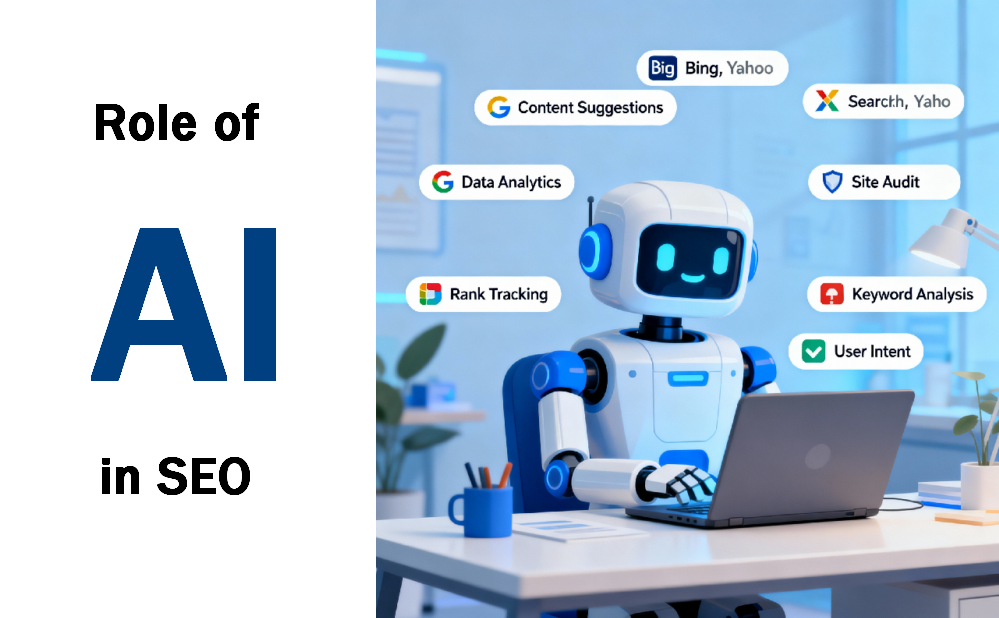
Artificial Intelligence (AI) is transforming the way search engine optimization works, making it more precise, efficient, and adaptable.
For SEO beginners, understanding the role of AI in SEO is essential. It helps improve organic search results.
It also assists in creating relevant content. AI supports building a modern SEO strategy.
How AI Impacts SEO
- Understanding User Intent
- AI helps search engines better understand user intent, allowing them to deliver relevant pages in search engine results pages (SERPs).
- For website pages, this means content must be high-quality, structured, and aligned with user needs.
- Beginners can use AI-powered SEO tools to identify target keywords and optimize content for better engagement and search traffic.
- Content Creation and Optimization
- AI tools assist in creating website content that is SEO-friendly, structured, and uses relevant keywords naturally.
- They can suggest on-page SEO improvements like meta descriptions, title tags, internal links, and headers to match search engine algorithms.
- AI-driven insights also help avoid duplicate content, keyword stuffing, and other common SEO mistakes.
- SEO Analytics and Insights
- AI simplifies tracking search traffic, ranking factors, and organic search results.
- Tools powered by AI can analyze website pages for performance issues, page speed, and mobile friendliness, providing actionable recommendations.
- This enables SEO beginners to make data-driven decisions and refine their SEO strategy effectively.
- Voice Search and Conversational Queries
- AI powers voice search assistants like Google Assistant, Siri, and Alexa.
- Optimizing website content for natural, conversational queries ensures SEO success in emerging search trends.
- Using long-tail keywords and structured content increases the chance of appearing in organic search results from voice searches.
- Predictive SEO and Automation
- AI can predict trends, search volume changes, and ranking factors that will impact website pages.
- Automation of repetitive tasks, like meta tag optimization and internal link building, saves time and ensures consistency across a website.
- Beginners can leverage AI tools to stay ahead, maintain good SEO, and gradually rank websites higher.
Why AI is Important for Beginners
Incorporating AI into your SEO journey allows beginners to:
- Understand user intent more effectively.
- Optimize website pages for organic search results and search traffic.
- Track performance, detect issues, and adjust SEO strategy in real time.
- Create high-quality, relevant, and structured content with less effort.
- Stay updated with evolving search engine algorithms and emerging SEO trends.
By embracing AI, even SEO beginners can create a more efficient, data-driven strategy. This approach is results-oriented. It improves their chances to achieve long-term SEO success. It also boosts their visibility in search engine results pages.
Avoiding Common SEO Mistakes
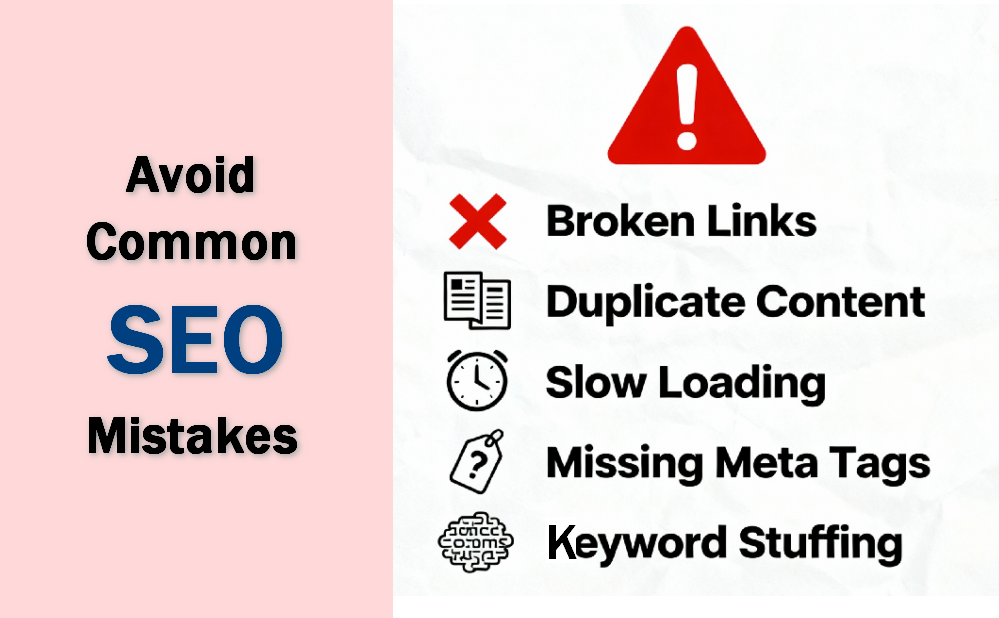
Even SEO beginners can unintentionally make mistakes. These mistakes can prevent their website pages from ranking well in search engine results pages (SERPs).
Understanding common pitfalls is crucial for building a successful SEO strategy. Knowing how to avoid them leads to long-term SEO success.
Common SEO Mistakes to Avoid
- Duplicate Content
- Publishing the same website content on multiple web pages or copying from other sites can confuse search engine crawlers.
- Duplicate content reduces the chances of your pages ranking higher in organic search results. It can harm your overall SEO effectiveness.
- Always create unique content that provides value to users and aligns with search intent.
- Keyword Stuffing
- Overloading target keywords in your content can make it difficult to read and negatively affect SEO performance.
- Instead, use relevant keywords naturally throughout your website pages, meta descriptions, title tags, and on-page elements.
- Focus on writing helpful content that matches user intent while supporting your SEO strategy.
- Ignoring Mobile Users
- Mobile friendliness is a critical ranking factor because most searches are performed on mobile devices today.
- A website that isn’t optimized for mobile can hurt user experience, reduce search traffic, and lower SEO success.
- Ensure responsive design, fast page speed, and easy navigation for all devices.
- Broken Links
- Internal links and external links must work properly. Broken links frustrate users and signal search engines that your site may be unreliable.
- Regularly check your website pages for broken links and fix or remove them to maintain SEO effectiveness.
- Proper linking also supports on-page SEO, user experience, and overall site authority.
- Neglecting Local SEO
- For local businesses, failing to optimize for local SEO can reduce visibility to nearby customers.
- Make sure your business name, address, and phone number (NAP) are consistent across other websites and local directories.
- Engage in local citations, reviews, and Google My Business optimization to boost organic search traffic for local queries.
- Ignoring Technical SEO Aspects
- Beginners sometimes overlook technical SEO, including structured data, browser caching, URL structure, and SSL encryption.
- Technical issues can prevent search engine crawlers from indexing your website pages, affecting rankings in search engine results.
- Regular audits and fixes improve page SEO, organic search results, and overall SEO success.
Benefits of Avoiding SEO Mistakes
By carefully avoiding these common errors, SEO beginners can:
- Improve the performance of website pages in search engine results pages (SERPs).
- Increase organic search traffic consistently.
- Ensure a better user experience for visitors.
- Build long-term authority and trust for their SEO strategy.
- Achieve good SEO without relying on shortcuts like black hat SEO techniques.
Avoiding these mistakes creates a strong foundation for your SEO journey. It allows you to focus on creating content and optimizing on-page elements. You can also implement effective off-page SEO strategies that will drive results over time.
SEO Trends for Beginners

Even as a beginner, understanding emerging SEO trends is essential. This knowledge helps you stay competitive in search engine results pages (SERPs). It also aids in building a successful SEO strategy.
Adapting to these trends ensures that your website pages continue to attract organic search traffic and meet evolving user intent.
Key SEO Trends for Beginners
- Voice Search Optimization
- More users are using smart assistants like Siri, Google Assistant, and Alexa to search with natural language queries.
- To optimize for voice search, include conversational keywords and long-tail phrases in your website content.
- Creating website pages that answer common questions clearly helps improve organic search results and enhances SEO success for beginners.
- AI-Driven Search
- AI-powered search engines now prioritize user intent and relevant pages over just matching exact keywords.
- This makes creating high-quality, useful website content more important than ever.
- Beginners should focus on SEO fundamentals. These include on-page SEO, technical SEO, and off-page SEO. This ensures that search engines understand and rank their pages correctly.
- User Experience Signals
- Page speed, mobile friendliness, and clear on-page elements are increasingly critical ranking factors.
- Slow-loading pages or poorly structured website content can reduce search traffic and negatively impact SEO success.
- Optimizing your website pages for a smooth, fast, and mobile-friendly experience is beneficial. It helps search engines recognize your site as trustworthy. It also showcases your site as useful.
- Structured Data & Rich Snippets
- Adding structured data (like schema markup) helps search engines better understand the content and context of your website pages.
- Proper use of structured data can display rich snippets in search engine results, making your pages more attractive and clickable.
- This trend helps SEO beginners increase click-through rates while reinforcing a strong SEO strategy.
- Content that Meets Evolving User Intent
- Search engines are now better at evaluating whether website content satisfies user intent.
- Creating relevant pages that answer questions thoroughly and provide value ensures your content stays visible in organic search results.
- Including target keywords naturally, along with supporting meta descriptions, internal links, and on-page elements, strengthens your SEO fundamentals.
Why Following SEO Trends Matters
Staying updated on SEO trends ensures your SEO strategy remains effective, even as search engines evolve.
For SEO beginners, this means your website pages can attract more organic search traffic. They will align with user intent. This approach helps achieve long-term SEO success.
Understanding trends helps beginners. They should combine this awareness with solid on-page SEO. Adding off-page SEO and technical SEO will help too. By doing so, beginners can gradually build authority and visibility in search engine results pages (SERPs).
Building a Beginner-Friendly SEO Checklist
For SEO beginners, having a step-by-step SEO checklist is essential. It helps stay organized. It ensures all SEO fundamentals are covered. It also helps track progress in improving organic search results.
A checklist helps beginners focus on the right tasks. It helps optimize website pages. This process gradually ranks websites higher in search engine results pages (SERPs).
Step-by-Step SEO Checklist for Beginners
- Keyword Research
- Start by finding target keywords. Identify relevant keywords that match user intent. Use SEO tools like Google Search Console, SEMrush, or Ahrefs for this task.
- Consider search volume and competition to select the best keywords for each website page.
- Proper keyword research ensures your content aligns with what people are searching for, which is the foundation of good SEO.
- Using a professional keyword tool is recommended to gain insights into search volume and keyword difficulty.
- On-Page SEO
- Optimize title tags, meta descriptions, headers, URL structure, and internal links.
- Include target keywords naturally in your website content and ensure meta tags and on-page elements are clear and descriptive.
- Proper on-page SEO helps search engines understand your website pages, improving organic search traffic.
- Content Creation
- Create high-quality website content that satisfies user intent and answers relevant questions.
- Use target keywords and relevant keywords naturally without keyword stuffing.
- Include images with alt text, structured content, and internal links to other relevant pages. This will enhance both user experience and SEO performance.
- Technical SEO
- Check page speed, mobile friendliness, SSL encryption, structured data, and fix broken links.
- Ensure your website pages are properly indexed by search engine crawlers.
- Technical optimizations support good SEO by making your website pages fast, secure, and easy to navigate.
- Off-Page SEO
- Build inbound links from authoritative other websites through guest blogging, resource pages, or collaborations.
- Promote your content on social media and relevant platforms to increase visibility and credibility.
- Off-page efforts strengthen your SEO strategy, improve organic search results, and help rank websites higher.
- Local SEO
- For local businesses, optimize NAP information such as name, address, and phone number. Create and update your Google My Business listing. Build local citations.
- Encourage positive reviews to improve credibility and search engine results in your area.
- Local SEO optimization drives targeted search traffic to local business pages and enhances SEO success.
- Tracking and Analytics
- Google Analytics is a powerful website analytics tool that tracks and reports website traffic and user behavior.
- Monitor search traffic, ranking factors, and search engine results using SEO tools like Google Search Console and analytics platforms.
- Track which target keywords are performing well and identify areas where website pages need improvement.
- Consistent tracking allows SEO beginners to make informed adjustments to their SEO strategy.
- Review and Update
- Regularly audit website pages to refresh content, fix technical issues, and update meta descriptions, title tags, and internal links.
- Keep your SEO strategy flexible and adapt to changes in search engine algorithms.
- Continuous updates help maintain good SEO, improve organic search results, and sustain long-term SEO success.
Benefits of Using a Beginner-Friendly SEO Checklist
Following this comprehensive checklist ensures that SEO beginners can:
- Build a solid foundation for search engine optimization.
- Improve organic search results systematically.
- Align website pages with user intent and search engine algorithms.
- Track progress effectively and adapt their SEO strategy over time.
- Gradually rank websites higher in search engine results pages (SERPs), driving more search traffic and ensuring SEO success.
Beginners can approach search engine optimization in a practical way. They can do this by combining on-page SEO, off-page SEO, technical SEO, and local SEO into one structured checklist. This approach is organized and results-driven.
Frequently Asked Questions on Search Engine Optimization (SEO) Guide for beginners 2025
What is search engine optimization (SEO) for beginners?
SEO for beginners involves improving your website. The goal is to rank higher in search engine results pages (SERPs). This process attracts more organic traffic.
Why is SEO important for beginners?
SEO helps beginners make their website visible to people searching online. It increases traffic and improves credibility in search engines like Google and Bing.
What are the basic elements of SEO for beginners?
The basics include keyword research. On-page SEO involves title tags, meta descriptions, and headers. Off-page SEO focuses on backlinks. Technical SEO involves site speed and mobile friendliness. Content optimization is also essential.
How can beginners do keyword research?
Beginners can use free tools like Google Search Console. They can also use paid SEO tools. These tools help find high search volume and relevant keywords that match user intent.
What is on-page SEO?
On-page SEO involves optimizing elements on your website pages. These elements include title tags, headers, content, and meta descriptions. It also involves URL structure and internal links to improve search rankings.
What is off-page SEO for beginners?
Off-page SEO involves actions taken outside your website. These actions include building backlinks from other websites, social media mentions, and online reviews. These strategies help to increase your site’s authority.
How long does it take for SEO to work for beginners?
SEO results usually take a few weeks to months. Consistent effort in optimizing content, building links, and improving technical SEO is necessary for visible results.
Can beginners do SEO without technical knowledge?
Yes. Beginners can start with simple on-page SEO, keyword research, and creating quality content. Over time, they can learn technical SEO aspects like site speed and structured data.
What is the role of content in SEO for beginners?
Creating relevant, useful, and original content helps attract visitors. It satisfies search intent. It also earns backlinks. These elements are all crucial for SEO success.
How can beginners track SEO performance?
Beginners can track SEO using Google Search Console, analytics tools, and SEO software. These tools help monitor traffic, rankings, and website performance. They can then adjust their strategy accordingly.
Conclusion
Search engine optimization (SEO) is both an art and a science. It involves the core SEO fundamentals, such as on-page SEO, off-page SEO, technical SEO, and local SEO. It also includes ongoing learning, experimentation, and adaptation to changes in search engine algorithms.
A well-planned SEO strategy ensures that your website pages can compete effectively in search engine results pages (SERPs). By understanding search intent, you increase the chances of attracting the right organic search traffic. Use the right keywords and create relevant pages with high-quality website content.
Building credibility through reliable resources, quality inbound links, and strong off-page SEO practices further strengthens your website’s authority. Meanwhile, on-page elements simplify the process for search engine crawlers. Meta descriptions, title tags, internal links, and structured data help them understand your pages better. These elements also aid in ranking your pages.
Remember, SEO stands for more than just rankings—it’s about creating meaningful connections with your audience. High-quality content that meets user intent improves engagement. It drives consistent traffic. It helps your business or blog build long-term authority in your niche.
For beginners, the key is to start small. Focus on mastering the SEO basics. These include keyword research, on-page optimization, and creating useful website pages. Over time, you can expand into more advanced areas. Consider exploring technical SEO and local SEO. Track performance with Google Search Console or other SEO tools.
This search engine optimization guide for beginners is designed to be your first step in a successful SEO journey. Apply these strategies consistently. Keep up with evolving best practices. You’ll create a sustainable system for improving your search results. This will increase search traffic and achieve long-term SEO success.