
Starting a blog today can feel confusing, especially if you’re a beginner with no prior experience in content creation, SEO, or WordPress.
Many people want to start blogging but struggle with questions such as what niche to choose, how to write effective blog posts, or how to increase blog traffic.
Blogging is not just about writing anymore. It involves strategy, keyword research, content planning, and understanding how search engines work. The good news is that you don’t need to be an expert to start.
In this complete blogging for beginners guide, you will learn how to start a blog step by step, choose the right niche, set up your blog using WordPress, create high-quality content, and monetize your blog. This guide gives you everything you need to build a successful blog in 2026.
What is Blogging for Beginners?
Blogging for beginners involves creating a blog, publishing content, and growing an audience by utilizing SEO and content strategies to drive traffic and generate income.
Before you start blogging, it’s important to understand what blogging actually means and how it works in today’s digital landscape.
Blogging has evolved from personal diaries to powerful platforms used by bloggers, marketers, and businesses to share information and generate income.
Blogging is the process of creating and publishing content on your blog site in the form of blog posts. These blog posts can educate, inform, or solve specific problems for readers. For a beginner, blogging involves writing content, optimizing it for SEO, publishing it on a blogging platform like WordPress, and promoting it to reach a wider audience.
For a deeper explanation, check out this complete guide on what is blogging and its benefits.
Purpose of your blog
Every successful blog starts with a clear purpose. Without defining the purpose of your blog, it becomes challenging to create consistent and meaningful content.
You may want to:
- build an audience
- share knowledge
- Promote services on your blog
- make money online
When you define your purpose clearly, it becomes easier to build your blog and stay focused on long-term goals.
Why people started blogging in 2026
Blogging in 2026 is more strategic than ever. People are not just blogging for fun; they are building assets that generate traffic and income.
Many bloggers start blogging to:
- Monetize your blog using affiliate links
- Grow your blog into a business
- build authority in a niche
- create multiple income streams
Why You Should Start Blogging Today
If you are still unsure whether blogging is worthwhile, understanding its benefits can help you decide whether to start. Blogging remains one of the most effective ways to create a long-term online presence.
1. Personal branding and growth
Blogging helps you position yourself as an expert. When people read your blog content regularly, they begin to trust your knowledge and insights.
Over time, your blog becomes your personal brand, helping you build an audience and stand out in your niche.
2. Passive income opportunities
One of the primary reasons people want to start blogging is the opportunity to earn money online.
You can monetize your blog through:
- affiliate program promotions
- sponsored post collaborations
- ads and digital products
With consistent effort, you can earn a commission and build passive income streams.
3. Blogging vs other online businesses
Compared to other online business models, blogging is a low-risk and scalable option.
Unlike freelancing or services, blogging allows you to:
- Create content once and generate traffic continuously
- build an entire blog that works for you
- grow without depending on clients
Blogging Fundamentals Every Beginner Should Know
Before diving into setup, understanding the basics of blogging helps you avoid confusion and make better decisions while building your blog.
1. Blogging platform overview
Choosing the right blogging platform is one of the first crucial steps in starting a blog.
Popular options include:
- WordPress (self-hosted WordPress)
- Blogger
- Wix
WordPress offers complete control, customization options, and enhanced SEO capabilities, making it the ideal choice for beginners.
2. Types of blog posts
Understanding different types of blog posts helps you create diverse and engaging content.
Common types include:
- how-to guides
- list articles
- tutorials
- product reviews
Each type serves a different purpose and helps attract different audiences.
3. How blogging actually works
Blogging works by publishing content that ranks in search engine results and drives traffic to your blog.
The process involves:
- keyword research
- creating content on your blog
- optimizing for SEO
- promoting your blog
Over time, your blog gains more visibility, and readers return to it regularly.
4. Applying the 80/20 Rule in Blogging for Faster Growth
The 80/20 rule in blogging, also known as the Pareto Principle, means that 80% of your results come from 20% of your efforts.
Instead of doing everything, successful bloggers focus only on activities that drive the most traffic, growth, and income.
For beginners, this principle helps you avoid wasting time and focus on what actually works.
What Does the 80/20 Rule Mean in Blogging?
In blogging, not all tasks are equally important. Some activities bring the majority of your results.
For example:
- 20% of your blog posts generate 80% of your blog traffic
- 20% of keywords bring the most search engine traffic
- 20% of content drives most affiliate income
Understanding this helps you prioritize your blogging efforts.
How to Apply the 80/20 Rule in Blogging
To grow your blog faster, focus on high-impact activities:
- Focus on High-Traffic Keywords: Use keyword research to identify topics with strong demand. Instead of writing random blog posts, create content that people are actively searching for.
- Create High-Quality Content: Instead of publishing many low-quality posts, focus on fewer but high-quality posts on your blog that solve real problems.
- Optimize Top-Performing Posts: Identify the blog posts that generate the most traffic and refine them further by updating content, adding internal links, and enhancing SEO.
- Prioritize SEO Over Random Promotion: SEO generates long-term traffic, whereas social platforms offer temporary spikes. Focus on optimizing your blog for search results.
- Focus on Monetization That Works: Instead of trying every method, double down on what works best: affiliate links, high-converting blog content, and a targeted audience.
Example of the 80/20 Rule in Action
Let’s say you have 50 blog posts:
- 10 posts bring most of your blog traffic
- 5 posts generate most of your income
👉 Your goal is to:
- Identify these posts
- improve them
- create similar content
Why the 80/20 Rule Matters for Beginners
If you’re just starting, you may feel overwhelmed by everything involved in blogging.
The 80/20 rule helps you:
- stay focused
- avoid burnout
- Grow your blog efficiently.
Instead of doing everything, you focus only on what moves the needle.
Step-by-Step Guide to Start a Blog for Beginners (Start a Blog the Right Way)
This is the most important section for beginners because it shows you exactly how to start blogging from scratch and build your blog the right way.
If you follow these steps carefully, you will not only create a new blog but also lay a strong foundation for growing your blog, driving traffic to it, and eventually monetizing it.
Whether you’re just starting or planning to start a blog for beginners, this step-by-step system gives you everything you need to move from idea to execution.
Step 1 – Choose Your Niche
Choosing the right niche is the most critical decision when you start blogging. Your niche determines the type of blog content you create, the audience you attract, and how you will monetize your blog in the future.
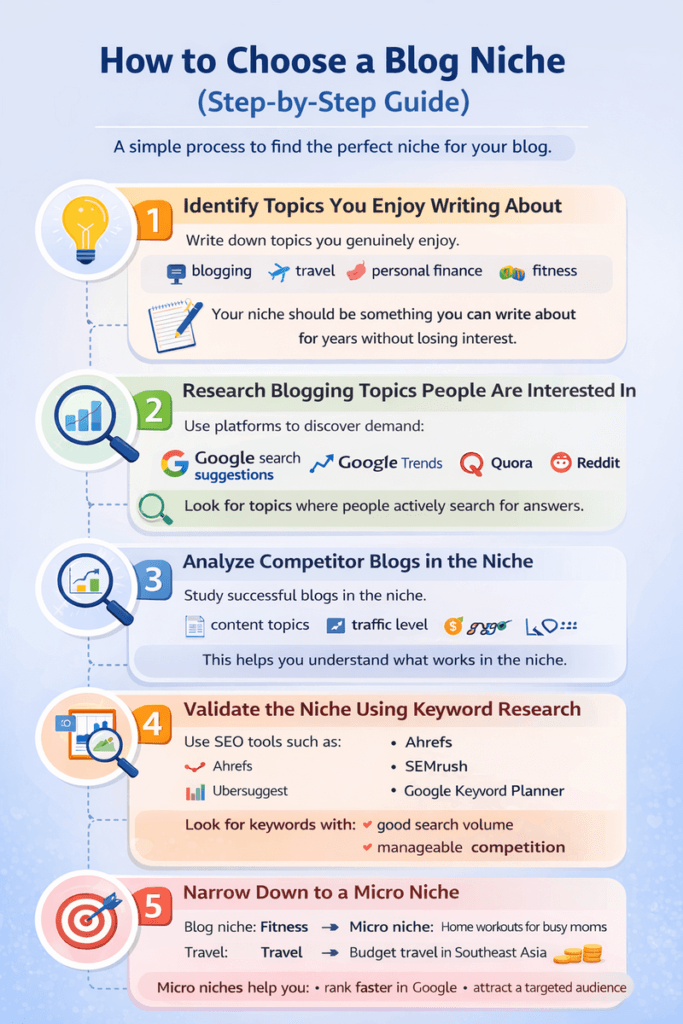
If your niche is too broad, it becomes difficult to stand out. If it is too narrow, you may struggle to build an audience.
The goal is to find a balance where people are actively searching for content, and you can consistently create high-quality content on your blog.
Niche ideas
If you’re unsure where to start, here are some proven blog niche ideas that work well:
- blogging and digital marketing
- technology and tools
- health and fitness
- personal finance
- education and career
- make money online
These niches have strong demand in search engine results and offer multiple ways to build a successful blog.
Profitable niches
A profitable niche is one where:
- People are actively searching for solutions
- products or services exist (affiliate program opportunities)
- You can create multiple blog posts consistently
To validate your niche:
- Check keyword research data
- analyze competitors
- See if people are willing to spend money
Ensure your niche allows you to utilize affiliate links, create sponsored post opportunities, or sell services on your blog.
If you’re unsure what to choose, explore these best blog niches for affiliate marketing that are proven to generate income.
Step 2 – Pick a Domain Name
Your domain name is the identity of your entire blog. It is what people will type to find your blog site, and it plays a big role in branding and trust.

A strong domain name helps people remember your blog, encourages them to return, and inspires them to recommend it to others.
Branding tips
When choosing a name for your blog:
- Keep it short and easy to spell
- Use niche-related keywords if possible
- avoid numbers and complex words
- Make sure it sounds like a brand
For example, a clear and simple domain name makes it easier to build an audience and grow your blog faster.
Also, ensure your domain is available on various platforms and social media sites to maintain consistency across your online presence.
Understanding the domain name impact on SEO can help you choose a name that supports long-term rankings.
Step 3 – Choose a Blogging Platform
Choosing the right blogging platform determines how flexible, scalable, and SEO-friendly your blog will be in the long run.

There are various platforms available, but not all are suitable for building a successful blog.
WordPress blogging for beginners
WordPress is the most recommended platform for beginners because it offers:
- full control over your blog site
- thousands of plugins and themes
- strong SEO capabilities
- scalability as your blog grows
A self-hosted WordPress setup is ideal if you want to start building a blog that can grow into a business.
While free WordPress options exist, investing in a self-hosted WordPress setup gives you better performance and control over your entire blog.
Step 4 – Get Hosting & Install WordPress
Once you have your domain name and platform, the next step is setting up a blog technically. This is where your blog becomes live on the internet.
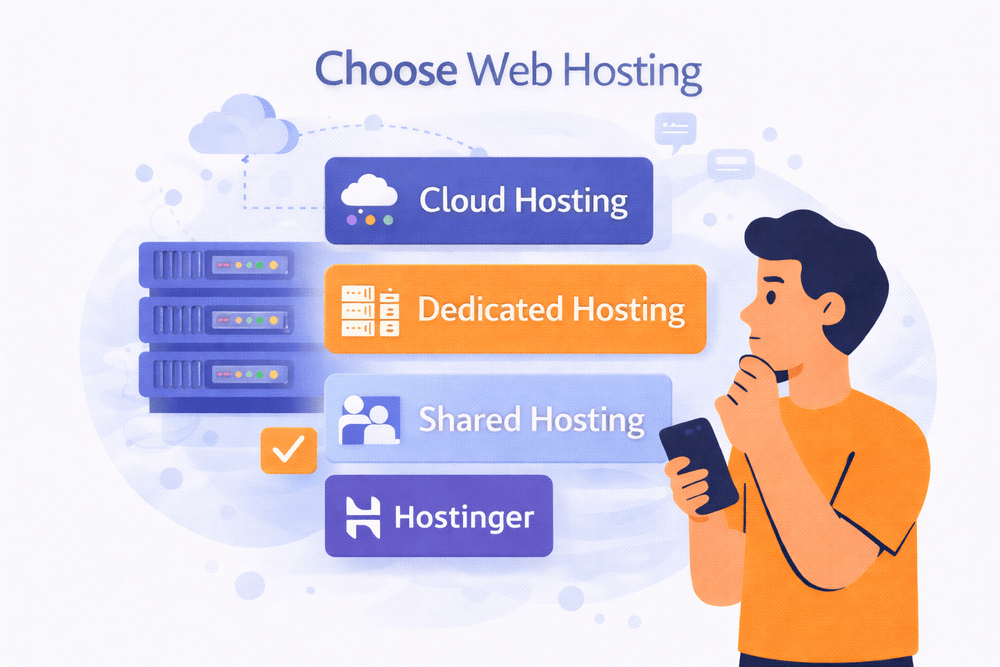
Blog setup step by step
Follow these steps to complete your blog setup:
- Choose a reliable web host
- Connect your domain name to hosting
- Install WordPress (usually one-click install)
- Log in to your WordPress dashboard
Your WordPress dashboard is where you will manage everything—from writing blog posts to customizing your blog and installing plugins.
At this stage, your new blog is officially created. Now you can start building and adding content to your blog.
Step 5 – Customizing Your Blog
After setting up your blog, the next step is to make your blog look professional and user-friendly. A clean design enhances the user experience and encourages readers to stay longer and engage with your blog.

Themes and Design
Your theme determines the appearance of your blog. Choose lightweight and fast-loading WordPress themes that:
- Improve speed
- Enhance readability
- Support SEO
Free themes are a good starting point, but premium themes often provide better customization options.
Customizing your blog
Now customize your blog according to your brand:
- Layout: keep it simple and clean
- Colors: use consistent branding
- Logo: create a simple logo for identity
- Navigation: make it easy to find content
Ensure your blog appears professional, as first impressions matter. A well-designed blog helps build trust and encourages users to explore your entire blog.
Choosing the best Google Fonts for blogs can significantly improve readability and engagement.
Step 6 – Install Essential Plugins
Plugins are essential tools that enhance the features and performance of your blog. They help automate tasks, improve SEO, and enhance user experience.
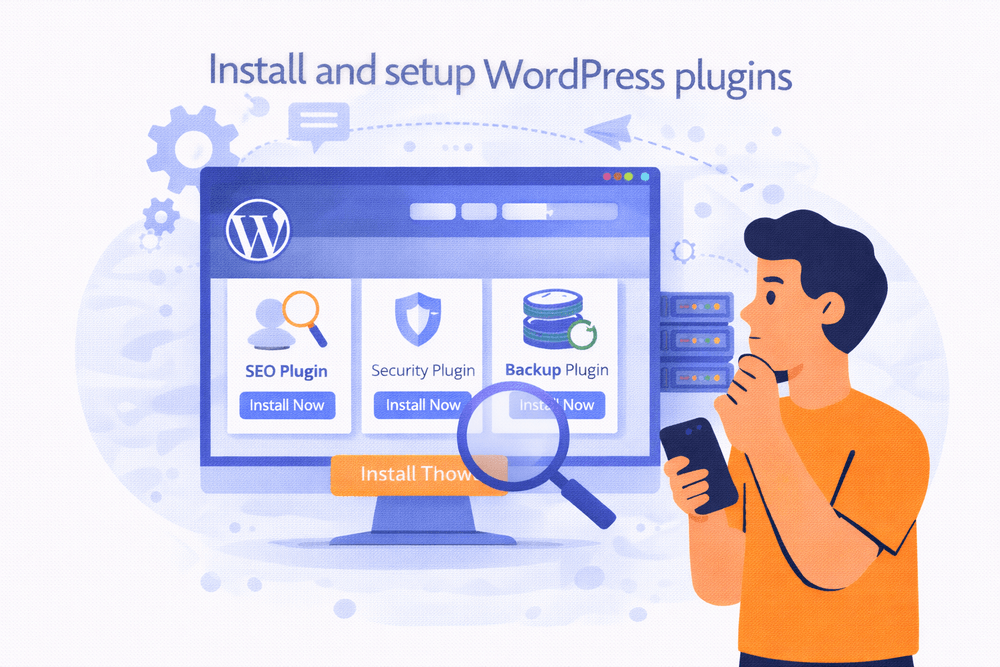
SEO tools
SEO plugins help your blog rank higher in search results and bring organic traffic.
Key benefits:
- optimize every blog post
- improve keyword usage
- Enhance on-page SEO
These tools are essential for blogging for beginners because they guide you in creating optimized blog content.
Performance tools
Speed and performance are critical factors for user experience and SEO.
Install plugins that:
- enable caching
- compress images
- improve loading speed
A fast blog helps reduce bounce rate, improves search engine rankings, and ensures visitors stay longer on your blog.
Final Tip for Beginners
When you start blogging, focus on completing these steps properly rather than rushing. Setting up a strong foundation will help you:
- Build your blog effectively
- Create high-quality content on your blog
- attract consistent blog traffic
- Grow your blog into a successful one
Once your setup is complete, you can confidently start writing, publishing your first blog post, and building your blogging journey step by step.
How to Write Blog Posts: A Beginner’s Guide for Blogging for Beginners
Writing blog posts is the foundation of blogging. No matter how good your design, tools, or SEO strategy is, your blog cannot grow without high-quality content.
Every successful blog is built on consistent, valuable, and well-structured blog posts that help readers find what they’re looking for.
If you want to build your blog, attract traffic to your blog, and keep readers coming back to your blog, you must learn how to write blog posts the right way from the beginning.
If you’re unsure where to start, follow this step-by-step guide to write a blog post.
1. Blog post structure
A clear structure makes your blog posts easier to read, understand, and more likely to rank in search engine results.
When readers land on your blog site, they should quickly understand your content without confusion.

A well-structured blog post includes:
a. Blog Post Introduction Strategy
The introduction is where you grab attention. It should:
- Identify the problem
- connect with the reader
- explain what they will learn
A strong introduction increases the chances that users will read your blog completely.
b. How to Use Headings in Blog Writing
Headings break your blog content into sections, making it easier to scan and understand. Most readers do not read every word—they scan headings first.
Use headings to:
- Organize your content
- highlight key points
- improve readability
This also helps search engines better understand your blog content.
c. Conclusion
The conclusion summarizes your blog post and reinforces the key message. It should:
- Recap the main points
- provide clarity
- encourage action
A strong ending leaves a lasting impression and improves engagement across your entire blog.
2. Content writing for blogs
Content writing for blogs is not just about writing—it is about solving problems. Every piece of content on your blog should answer a specific question or provide a solution.
To create high-quality content on your blog:
- understand your audience
- Focus on one topic per blog post
- Provide clear and actionable information
- avoid unnecessary fluff
Think of each blog post as a valuable piece of content that helps your readers. The better your content, the more people will read your blog, share it, and come back to your blog.
When you start writing, aim to create blog posts that:
- Easy to understand
- provide real value
- keep readers engaged
Over time, this approach helps you build an audience and grow your blog consistently.
3. Writing blog posts that rank
Writing blog posts is one thing, but writing blog posts that rank in search engine results is what brings long-term traffic.

To make your blog posts SEO-friendly and rank higher:
a. Use keyword research
Before writing any blog post, perform keyword research to understand what people are searching for. This ensures that your content aligns with real user intent.
Use keywords naturally in:
- title
- headings
- content
This helps search engines understand the content of your blog.
b. Optimize headings
Headings should include relevant keywords and clearly indicate the content of each section. Well-optimized headings improve both SEO and user experience.
c. Improve readability
Readable content performs better. To improve readability:
- Use short paragraphs
- avoid complex sentences
- Use bullet points where needed
When your content is easy to read, users spend more time on your blog, which in turn improves your rankings.
d. Focus on users and SEO
Always balance between users and search engines. Writing content solely for SEO can make it robotic, while writing for users only may reduce visibility.
The goal is to create content that:
- helps readers
- satisfies search engine requirements
Learning how to write SEO-friendly blog posts helps you rank faster and attract organic traffic.
SEO for Beginners Blogging
SEO (Search Engine Optimization) is the process of optimizing your blog so that it appears in search results when users search for related topics.
If you want consistent blog traffic without relying only on social platforms, SEO is essential. It helps your blog get discovered, brings targeted visitors, and supports long-term growth.
1. Keyword research basics
Keyword research is the starting point of SEO. It helps you understand what your audience is searching for and what topics you should create content on your blog.

When doing keyword research:
- Look for keywords with good search volume
- Choose low to medium competition keywords
- Focus on long-tail keywords
Keyword research helps you:
- Generate blog post ideas
- Align content with user intent
- Increase chances of ranking
Without keyword research, your blog content may not appear in search results at all.
Learn how to find long-tail keywords using Google Keyword Planner to target low-competition search terms.
2. On-page SEO tips
On-page SEO refers to optimizing individual blog posts to improve their ranking and attract more traffic.

To optimize your blog posts:
- Use keywords naturally throughout the content
- Write compelling titles that attract clicks
- Include internal links to other blog posts
- Optimize images and headings
Internal linking also helps readers navigate your entire blog and improves SEO performance.
A well-optimized blog post not only ranks better but also provides a better user experience.
3. SEO mistakes to avoid
Many beginners make common SEO mistakes that hinder their blog’s growth. Avoiding these mistakes will help you build a successful blog faster.
- Keyword Stuffing: Overusing keywords makes your content unnatural and can harm rankings. Always use keywords naturally.
- Low-quality Content: Thin or copied content does not perform well. Always focus on creating original, high-quality content on your blog.
- Ignoring Search Intent: Search intent is what users actually want when they search. If your blog post does not match their intent, it will not rank—even if it is optimized.
When you combine strong content writing with effective SEO, your blog posts will not only rank higher but also engage readers and drive consistent traffic to your blog.
Avoid these common blogging mistakes to avoid that can slow your blog growth.
Mastering these fundamentals is one of the most crucial steps for beginners in blogging, as it will significantly impact your ability to grow and build a successful blog over time.
Blogging Tools for Beginners to Start a Blog and Create Better Blog Posts
When you start blogging, using the right tools can save time, improve productivity, and help you build your blog faster. Many beginners struggle because they try to do everything manually, but smart bloggers use tools to simplify their workflow.
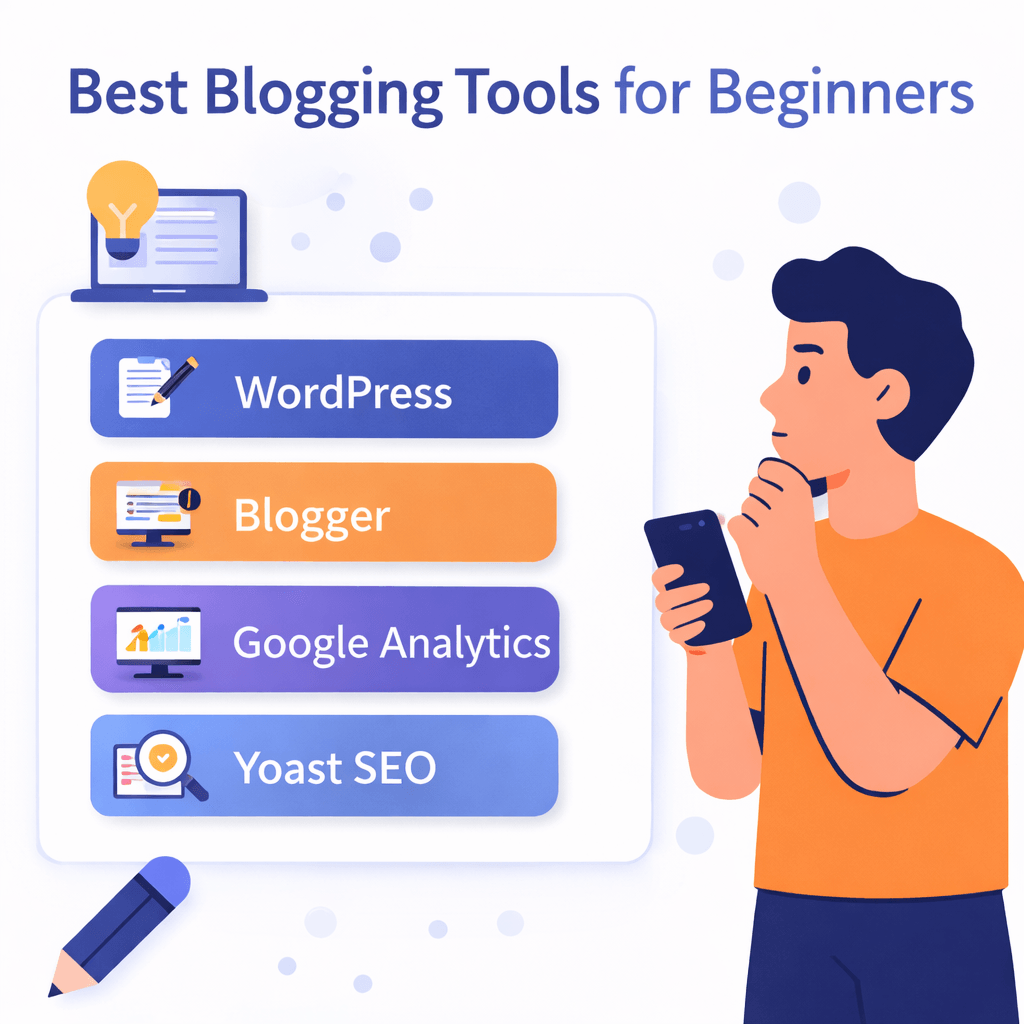
Whether you’re creating your first blog post or managing an entire blog, these tools help you create content, optimize SEO, track performance, and grow your blog efficiently.
1. Keyword research tools
Keyword research tools are essential for finding what people are searching for in search engine results. Without proper keyword research, your blog content may fail to reach the intended audience.
These tools help you:
- Discover blog post ideas
- Identify low-competition keywords
- understand search volume and trends
Using keyword research tools ensures that every blog post you publish targets a real audience. This is one of the most crucial steps for beginners in blogging because it directly affects your ability to drive traffic to your blog.
When you consistently use keyword research, you can:
- Create content on your blog that ranks
- build an audience faster
- Grow your blog strategically
If you are interested, try my free keyword research tool now.
2. Writing tools
Writing tools help improve the quality of your content and make your blog posts more professional. When you start writing, it’s easy to make grammatical mistakes or create unclear sentences.
Writing tools help you:
- improve grammar and readability
- enhance clarity
- structure your blog posts better
These tools are especially useful when you’re just starting and learning content writing for blogs. High-quality content on your blog increases engagement, keeps readers on your blog longer, and improves your chances of ranking higher.
Good writing also helps readers understand your message clearly, making them more likely to revisit your blog.
3. SEO plugins
SEO plugins are crucial for optimizing your blog posts and enhancing visibility in search engine results. If you are using WordPress, these plugins make SEO much easier for beginners.
SEO plugins help you:
- optimize every blog post
- manage meta titles and descriptions
- improve keyword placement
- analyze on-page SEO
They guide you step by step, ensuring your blog content follows SEO best practices. This is especially helpful when you’re learning SEO for beginner bloggers.
Using SEO plugins consistently helps:
- improve rankings
- increase organic traffic
- strengthen your entire blog
4. Analytics tools
Analytics tools help you understand how your blog is performing. Without tracking data, you won’t know what is working and what needs improvement.
These tools help you:
- track blog traffic
- Monitor user behavior
- Analyze which blog posts perform best
By using analytics tools, you can:
- Improve your content strategy
- Identify high-performing topics
- Optimize your blog for better results
Understanding your data is key to growing your blog and making informed decisions.
How to Grow a Blog: Traffic Strategies for Blogging for Beginners
Once your blog is set up and you start publishing content, the next step is to grow your blog and attract consistent traffic. Many beginners think that publishing blog posts is enough, but promotion is equally important.

To grow your blog successfully, you need a combination of SEO, social media, and audience-building strategies. These methods help attract new readers to your blog and encourage them to return.
1. Promote your blog with SEO
SEO is the most powerful and long-term way to drive traffic to your blog. Unlike social platforms, SEO brings consistent visitors from search engine results.
To promote your blog using SEO:
- target the right keywords
- optimize every blog post
- build internal links
- Focus on user intent.
SEO helps your blog content appear when people search for solutions. Over time, this builds organic traffic and helps you grow your blog without relying only on external promotion.
2. Social media promotion
Social media platforms are an excellent way to promote your blog and quickly reach a wider audience. When you share your blog content on social platforms, you increase visibility and engagement.
To use social media effectively:
- Share every new blog post
- create engaging captions
- Use visuals to attract attention
- interact with your audience
Social media is also a great way to:
- build an audience
- Drive initial traffic to your blog
- test which content performs best
It complements SEO and helps you grow your blog faster.
3. Email marketing basics
Email marketing is one of the most effective ways to build an audience and maintain a direct connection with your readers.
Instead of relying only on search engines or social platforms, email allows you to bring readers back to your blog whenever you publish a new blog post.
To start email marketing:
- create an email list
- offer a free guide or incentive
- Send regular updates
Email marketing helps you:
- build long-term relationships
- increase repeat visitors
- Grow your blog sustainably
4. Pinterest strategy (huge traffic source)
Pinterest is one of the most underrated platforms for growing your blog and driving consistent traffic to your site. Unlike social platforms where content disappears quickly, Pinterest works like a visual search engine, meaning your pins can generate traffic for months or even years.
For blogging for beginners, Pinterest is a powerful way to promote your blog without relying only on Google rankings.
To use Pinterest effectively:
- Create eye-catching pins for every blog post
- Use keyword-rich titles and descriptions
- link each pin back to your blog site
- Join group boards in your niche
Pinterest works especially well for niches like blogging, health, finance, and lifestyle. When used correctly, it can become a significant source of blog traffic, helping you grow your blog more quickly.
5. Quora and Reddit promotion
Quora and Reddit are powerful platforms where people actively search for answers and solutions. This makes them ideal for promoting your blog content and reaching a highly targeted audience.
Instead of directly promoting your blog, focus on providing value first.
To use these platforms effectively:
- Answer relevant questions in your niche
- provide detailed and helpful responses
- naturally include links to your blog posts
- engage with communities consistently
For example, if someone asks a question related to your blog content, you can provide a helpful answer and guide them to read your blog for more details.
This strategy helps you:
- drive targeted traffic
- build authority
- understand audience problems
When used consistently, Quora and Reddit can become a valuable traffic source, complementing SEO efforts.
How to Make Money Blogging: Turn Your Blog Posts into Income
Once you start generating traffic to your blog, the next step is to monetize it. Blogging is not just about creating content—it is also a way to make money online and build income streams.

There are multiple blog monetization methods you can use depending on your niche, audience, and traffic level.
1. Affiliate marketing
Affiliate marketing is one of the most popular ways to monetize your blog. You promote products or services using affiliate links and earn a commission when someone makes a purchase.
To succeed with affiliate marketing:
- Recommend relevant products
- Create honest reviews
- integrate affiliate links naturally
This method works well because you don’t need to create your own product. Many bloggers use affiliate programs to generate passive income.
2. Display ads
Display ads allow you to earn money based on the traffic your blog gets. When visitors come to your blog, ads are shown, and you earn revenue from impressions or clicks.
This method is simple because:
- No product creation is needed
- Income grows with blog traffic
However, to earn significantly, you need consistent and high blog traffic.
3. Selling products
Selling your own products is one of the most profitable ways to monetize your blog. Instead of earning small commissions, you can generate a higher income from your own offerings.
You can sell:
- ebooks
- online courses
- digital products
- services on your blog
This method helps you build a brand and increase revenue potential.
4. Blog monetization methods
The best strategy is to combine multiple monetization methods instead of relying on just one.
You can:
- Use affiliate links
- run ads
- sell products
- offer services
By diversifying income streams, you reduce risk and increase your earning potential. To grow your blog and monetize it successfully, focus on:
- creating high-quality content
- driving consistent traffic
- using the right tools
- applying multiple monetization strategies
With time, effort, and consistency, your blog can evolve into a powerful platform that attracts readers, builds a loyal audience, and generates income.
5. Email funnel monetization
Email marketing is not just for traffic—it is also one of the most effective ways to monetize your blog. An email funnel allows you to convert visitors into subscribers and then into customers.
Instead of relying only on blog traffic, you build a list of people who are interested in your content.
A simple email funnel looks like this:
- offer a free guide or lead magnet
- collect email subscribers
- Send valuable content regularly
- promote products or affiliate links
With email funnels, you can:
- promote affiliate programs
- sell your own products
- Drive repeat traffic to your blog.
Email monetization is powerful because you own your audience, unlike social platforms.
6. Digital product funnel
Creating and selling digital products is one of the most scalable ways to make money blogging. Instead of earning small commissions, you can generate a higher income by selling your own products.
A digital product funnel includes:
- creating a product (ebook, course, templates)
- promoting it through blog posts
- capturing leads via email
- converting readers into buyers
Examples of digital products:
- ebooks
- online courses
- blogging templates
- SEO guides
This method works best when you:
- understand your audience’s needs
- create high-value products
- build trust through your blog content
A well-optimized funnel can transform your blog into a consistent income-generating asset, helping you build a successful blog in the long term.
7. Realistic Earnings – Can You Make $1000 a Month with a Blog?
Yes, it is absolutely possible to earn $ 1,000 a month with a blog, but it depends on your niche, traffic, and monetization strategy. Blogging is not a get-rich-quick method—it requires consistent effort and smart execution.
Most beginner bloggers typically take 6–12 months to reach this milestone if they follow proper SEO and content strategies.
What You Need to Make $1000/Month
To reach $1000/month, your blog should have:
- 10,000–50,000 monthly visitors (depending on monetization method)
- A clear niche with buying intent
- Multiple income streams
Example Breakdown
You can combine different methods:
- Affiliate marketing → $500
- Display ads → $300
- Sponsored posts/services → $200
Total = $1000/month
Fastest Ways to Reach $1000
- Focus on high CPC niches (finance, blogging, software)
- Use keyword research to target ranking opportunities
- Publish high-quality blog posts consistently
- Optimize every blog post for SEO
Reality Check
- First 3 months → little to no income
- 6 months → small earnings
- 12+ months → scalable income
Consistency and strategy matter more than speed.
Beginner Blogging Mistakes to Avoid
When you start blogging, mistakes are common—but avoiding the right ones can save months of effort and help you grow your blog faster. Many beginners lose motivation because they don’t see results, often due to avoidable errors in niche selection, SEO, or consistency.
If you want to build a successful blog, it’s important to understand what not to do while setting up a blog and publishing content on your blog.
1. Choosing the wrong niche
Choosing the wrong niche is one of the biggest reasons why a new blog fails. Your niche determines your blog’s content, target audience, and how you will monetize it.
If you select a niche with no demand or low interest, it becomes difficult to:
- attract blog traffic
- build an audience
- Create multiple blog posts consistently.
To avoid this mistake:
- Validate your niche using keyword research
- Check search engine demand
- ensure monetization options like an affiliate program or services on your blog
A good niche should enable you to create high-quality content on your blog and gradually grow your audience over time.
2. Ignoring SEO
Ignoring SEO is a critical mistake that prevents your blog from appearing in search results. No matter how good your content is, if it is not optimized, people will not find it.
SEO helps:
- improve visibility in the search engine
- Drive organic traffic to your blog.
- Grow your entire blog consistently.y
Without SEO, you will rely solely on social platforms, which is not a sustainable approach in the long run.
To avoid this:
- Use keyword research before writing
- optimize every blog post
- Focus on search intent
3. Inconsistent posting
Inconsistent posting slows down your blog growth and affects audience trust. If you publish content randomly, readers may not return to your blog.
Consistency helps you:
- build an audience
- improve SEO rankings
- establish authority
Instead of posting frequently for a short time and stopping, focus on a realistic schedule.
For example:
- publish one blog post per week
- Create an editorial calendar.
- Stay consistent over time.
Consistency is the key to turning your new blog into a successful blog.
Blogging Tips for Beginners (Pro Tips)
Once you understand the basics, applying the right strategies can accelerate your blogging journey. These blogging tips for beginners will help you avoid common pitfalls and build your blog more effectively.
1. Focus on consistency
Consistency is one of the most important factors in blogging success. Publishing regularly helps search engines index your content and encourages readers to come back to your blog.
To stay consistent:
- Create a content plan
- Schedule blog posts in advance
- set realistic goals
Even if you’re just starting, consistency helps you:
- Grow your blog
- improve writing skills
- build long-term momentum
2. Write for users, not just SEO
While SEO is important, writing only for search engines can make your content robotic. The real goal is to help readers find what they’re looking for.
When writing blog posts:
- Focus on solving problems
- Keep language simple
- provide actionable insights
Search engines prioritize content that satisfies users. So, when you write for users first, SEO naturally improves.
3. Build authority
Authority is what makes your blog stand out in a crowded space. When readers trust your content, they are more likely to read your blog regularly and share it.
To build authority:
- Create high-quality content on your blog
- Stay consistent in your niche
- provide accurate and helpful information
Over time, authority helps you:
- rank higher in search results
- build an audience
- monetize your blog more effectively
Blogging Roadmap (0–90-Day Plan)
A clear roadmap helps beginners stay focused and avoid confusion. Instead of guessing what to do next, following a structured plan allows you to start building your blog step by step.
This 90-day plan is designed to help you move from setting up a blog to generating traffic and preparing for monetization.
1. First 30 days
The first 30 days are all about building the foundation of your blog.
Focus on:
- setting up a blog (domain name, web host, WordPress)
- customizing your blog
- installing essential plugins
- publishing your first blog
During this phase, your goal is not perfection but progress. Launch your blog and start creating content.
2. Next 60 days
Once your blog is live, the next phase is about consistency and learning.
Focus on:
- creating blog posts regularly
- performing keyword research
- learning SEO basics
- improving content writing
This stage helps you build momentum and start gaining visibility in search engine results.
3. Scaling phase
After the initial 60 days, your focus should shift toward growth and monetization.
Focus on:
- Growing traffic to your blog
- promoting your blog on social platforms
- building an email list
- monetizing your blog
This is where your blogging efforts start showing results, and your blog begins to grow into a long-term asset.
How Long Does It Take to Succeed in Blogging?
One of the most common questions beginners ask when they want to blog is how long it actually takes to see results. When you start your blog, it’s natural to expect quick traffic and income. However, blogging isn’t a shortcut to instant success—it’s a long-term process that rewards consistency, patience, and smart strategy.
If you’re creating a blog for the first time, it’s essential to understand that growth occurs step by step. Your first post will not bring massive traffic, and your blog will not become successful overnight. However, with the right approach, your blogging endeavors can become a valuable long-term asset.
Realistic Blogging Timeline
Most blogs follow a predictable growth pattern when you start a new journey:
- 3–6 months: You begin gaining initial traction. Your content starts appearing in search results, but traffic is still low.
- 6–12 months: You see steady growth in blog traffic as your content ranks better.
- 12+ months: Your blog becomes more stable, and you can start to monetize your blog effectively and build a successful blog.
This timeline may vary, but it reflects how blogging works in reality.
What Determines Your Blogging Success Speed
How fast your blog grows depends on several important factors:
- Niche competition: Highly competitive niches take longer to rank
- Content quality: High-quality content on your blog performs better
- SEO strategy: Proper optimization improves visibility
- Consistency: Regular publishing builds momentum
If you start by creating valuable content and follow a structured approach, you can steadily grow your blog from zero to a thriving presence.
Beginner Reality Check
If you’re just starting, remember:
- Your first blog will not be perfect
- Your first post is only the beginning
- Your blog’s successful journey depends on long-term effort
Many beginners quit early because they expect fast results. However, blogging is a great way to build something meaningful if you stay consistent and continually improve.
How to Speed Up Your Progress
To grow faster when you start blogging:
- Focus on keyword research before writing
- publish content consistently
- Optimize every blog post for SEO
- learn from what works and improve
Even if blogging isn’t easy in the beginning, staying consistent will help you build your blog and achieve long-term success.
Future of Blogging in 2026
Blogging continues to evolve in response to changes in technology, search engines, and user behavior. To stay competitive, you must understand where blogging is heading and adapt accordingly.
Whether you’re planning to start your blog or already running one, keeping up with trends will help you grow faster and build a successful blog in the future.
1. AI + SEO
AI is transforming how bloggers create content, research topics, and optimize their blog posts. Today, many bloggers start by creating drafts using AI tools to save time and improve productivity.
AI tools help you:
- generate blog post ideas quickly
- improve content structure
- speed up the writing process
However, relying only on AI is not enough. To make your blog successful, you must:
- Add personal insights
- ensure accuracy
- maintain originality
When you combine AI with SEO effectively, you can create content more efficiently without compromising quality. This approach helps you start building your blog more efficiently, especially if you’re just starting.
2. Content trends
The future of blogging is shifting from quantity to quality. Publishing more blog posts is no longer enough—what matters is how helpful your content is.
Key trends shaping blogging in 2026 include:
- creating helpful content that solves real problems
- focusing on user intent rather than just keywords
- producing high-quality content on your blog
Search engines now prioritize content that truly helps users find what they’re looking for. This means every piece of content should provide value, clarity, and depth.
If you want to blog like successful creators, focus on:
- Understanding your audience
- delivering practical solutions
- improving content quality over time
Blogging is evolving, but the core principle remains the same—provide value. If you adapt to new trends, stay consistent, and focus on quality, your blog can grow steadily.
Whether you’re going to start today or already working on your blogging endeavors, remember that success comes from continuous improvement. Take your blog seriously, keep learning, and start by creating content that genuinely helps people.
With the right approach, blogging is an effective way to build an audience, expand your online presence, and create long-term opportunities.
FAQ SECTION
How do beginners start blogging?
Beginners start blogging by choosing a niche, selecting a domain name, and setting up a blog using platforms like WordPress. After setup, they create blog posts, optimize them for SEO, and promote content through social media or search engines to gain traffic.
Can I start blogging with no experience?
Yes, anyone can start blogging with no experience. Many beginner-friendly platforms and tools simplify the process. By learning the basics of content writing, SEO, and maintaining consistency, beginners can gradually improve and build a successful blog over time.
Is blogging still profitable in 2026?
Blogging remains profitable in 2026 when combined with SEO, quality content, and monetization strategies. Bloggers can earn through affiliate marketing, ads, sponsored posts, and digital products, especially in high-demand niches with consistent traffic.
How much money can a beginner blogger make?
A beginner blogger may earn little or nothing initially, but income can grow over time. Within 6–12 months, some bloggers begin earning through ads or affiliate programs. Earnings vary widely depending on the niche, traffic, and monetization strategies employed.
What should a beginner blog about?
Beginners should blog about topics they are passionate about or have knowledge of. Choosing a niche with high audience demand, such as blogging, tech, health, or finance, increases the chances of success and helps build authority faster.
How often should I post on my blog?
Consistency matters more than frequency. Beginners should aim to publish at least one high-quality blog post per week. Maintaining a regular schedule helps build audience trust and improves SEO rankings over time.
Do I need technical skills to start blogging?
No advanced technical skills are required to start blogging. Platforms like WordPress make it easy to set up and manage a blog. Basic skills, such as writing, formatting, and using plugins, are sufficient to get started.
Start Your Blogging Journey Today
If you’re ready to start your blog, now is the perfect time. Choose your niche, set up WordPress, and publish your first blog post today.
The sooner you start a Blog and grow faster.
Conclusion
Blogging for beginners may seem overwhelming at first, but once you understand the process, it becomes much easier to start and grow. From choosing a niche and setting up WordPress to writing blog posts, applying SEO, and utilizing the right tools, each step plays a crucial role in building a successful blog.
If you want to start a blog, the most important step is to take action. Even if you begin with a free trial or basic setup, what matters is moving forward and learning along the way. You don’t need to be perfect—just name your blog, set it up, and publish your first blog posts.
As you continue blogging for beginners, your skills will improve, your blog posts will rank better, and your blog will start attracting consistent traffic. Over time, you can grow your blog, build an audience, and monetize it using various strategies.
Remember, blogging isn’t about quick results—it’s about building something valuable. Blogging is a great way to share knowledge, help others, and create long-term income opportunities through your blog posts.
If you stay consistent, continue to improve, and focus on creating high-quality blog posts, your journey in blogging can become a successful, long-term asset. Now is the perfect time to start a blog and build something that grows with you.